Back on Earth: NASA welcomes Artemis II astronauts after historic 10-day lunar odyssey | WATCH
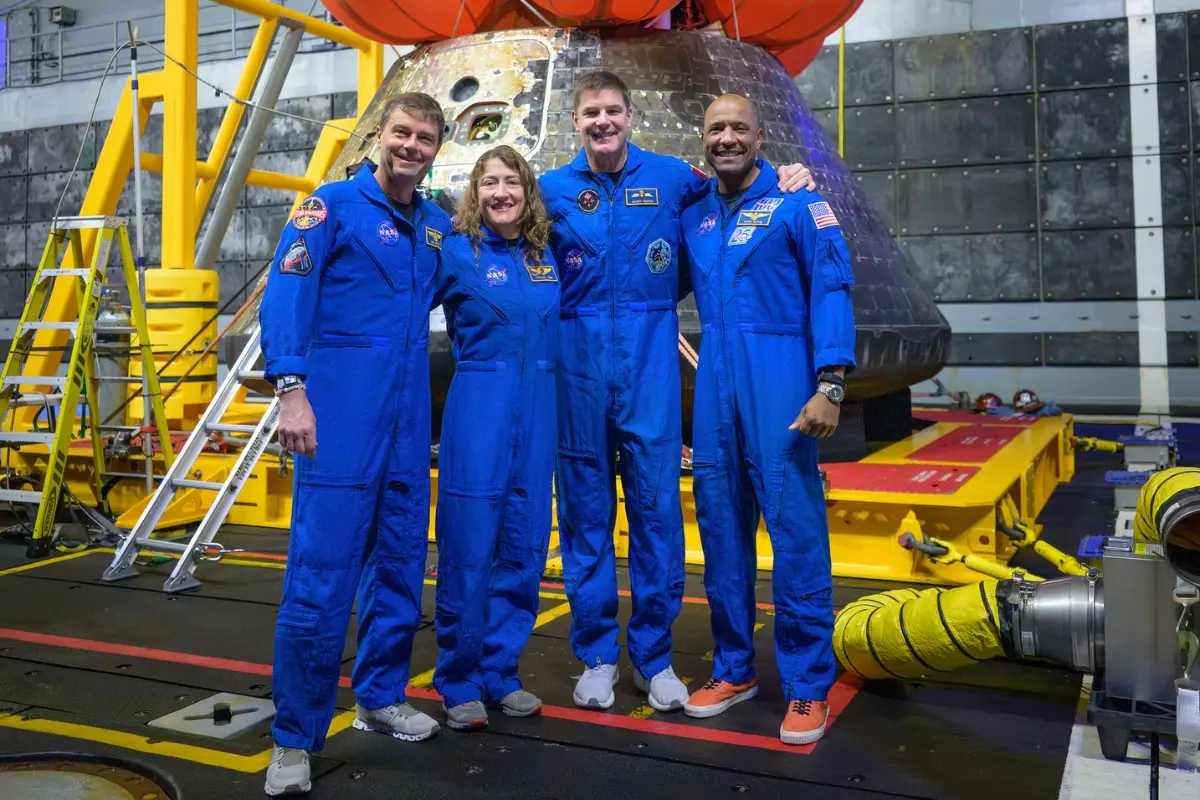
Houston: Fresh from a record-breaking odyssey that rekindled humanity's presence in deep space, the four astronauts of the Artemis II mission were honoured with a boisterous homecoming on Saturday, celebrated by hundreds of individuals who facilitated NASA’s triumphant return to lunar orbit.
The crew touched down at Ellington Field, situated near the Johnson Space Centre and Mission Control, having flown in from San Diego following their offshore splashdown the previous evening. After private reunions with their families, the explorers addressed an audience composed of space agency personnel, military leaders, and members of Congress.
“The long wait is over. After a brief 53-year intermission, the show goes on,” NASA Administrator Jared Isaacman declared as he introduced the crew to a standing ovation.
A Poignant Return to Base
The homecoming of Commander Reid Wiseman and his international team carried historical weight, coinciding with the 56th anniversary of the Apollo 13 launch. Reflecting on the emotional and physical toll of the mission, Wiseman noted that while launching feels like "the greatest dream on Earth," the reality of space travel fosters a deep longing for home.
“It's a special thing to be a human, and it's a special thing to be on planet Earth,” Wiseman said, remarking to his fellow travellers that they are now "bonded forever."
The crew’s pilot, Victor Glover, expressed his affection for the assembled crowd and his family, while mission specialist Christina Koch described the psychological impact of seeing the world against the void of the cosmos.
“Honestly, what struck me wasn't just Earth, it was all of the blackness around it. Earth was just this lifeboat hanging undisturbably in the universe," Koch observed. "Planet Earth, you are a crew.”
Scientific and Historic Milestones
During the 10-day voyage, the Artemis II mission surpassed the distance records set by the Apollo era, reaching a maximum distance of 252,756 miles (406,771 kilometres) from Earth. As they executed a slingshot manoeuvre behind the lunar far side, the astronauts witnessed sights never before seen by human eyes and documented a new "Earthset" photograph—a modern successor to the iconic 1968 "Earthrise" image.
The mission was not without its practical difficulties; the crew reportedly managed a malfunctioning waste management system, a detail NASA officials vowed to rectify before the next phase of exploration.
The Path to the South Pole
The success of this flight—the first manned lunar mission since Apollo 17 in 1972—is considered a prerequisite for the agency’s ambitious timeline. NASA is currently readying Artemis III for next year, a mission focused on docking manoeuvres in Earth’s orbit. These steps are designed to culminate in the Artemis IV mission in 2028, which aims to land two astronauts near the lunar south pole.
Canadian Space Agency President Lisa Campbell praised Jeremy Hansen, the first Canadian to reach lunar vicinity, stating he represents "the best of what it means to be Canadian." Hansen, in turn, credited the rigorous safety standards of the launch teams, thanking them for their "bravery" in delaying the mission until conditions were perfect.
“When you look up here, you're not looking at us. We are a mirror reflecting you," Hansen told the workforce. "And if you like what you see, then just look a little deeper. This is you.”
With inputs from AP