From melting ice to orange rivers: the Arctic is transforming faster than expected
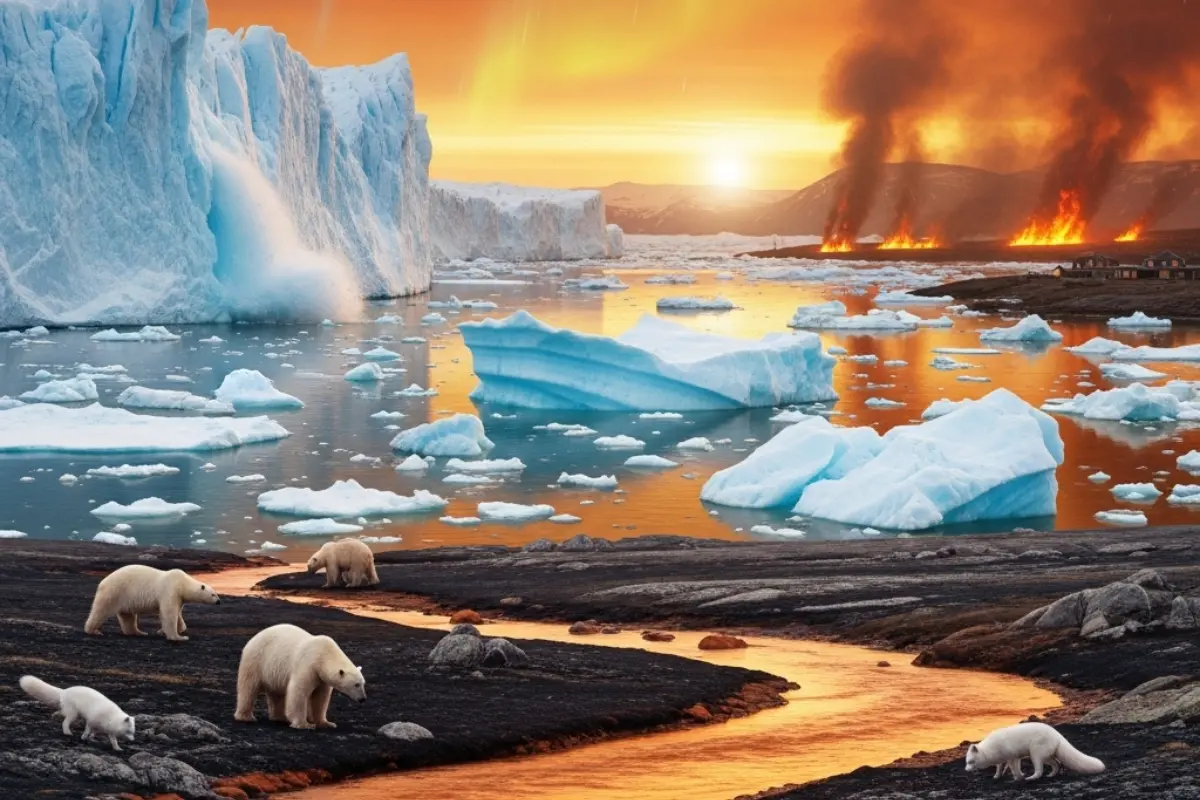
The past year marked the highest Arctic air temperatures since records began 125 years ago. Autumn 2025 was the warmest ever recorded, with summer and winter among the hottest on record. Overall, the Arctic continues to warm more than twice as fast as the global average.
Extreme precipitation reshapes the Arctic water cycle
Rising temperatures increase evaporation and meltwater, leading to record rainfall and snowstorms. The Arctic experienced its highest annual precipitation in 2025, with spring ranking as the wettest on record. Atmospheric rivers — long, narrow plumes of moisture — caused many of these extreme events.
Snow and ice losses accelerate warming
Snow cover is shrinking, with spring melt leaving June snowpacks at half the size of the 1960s. Sea ice reached its lowest maximum coverage in March since satellite records began, while minimum ice in September was the 10th lowest. Greenland’s ice sheet and mountain glaciers continue losing mass, contributing to sea-level rise and local hazards such as glacial lake outburst floods.
Record-warm oceans fuel storms and ecosystem shifts
Arctic Ocean surface temperatures in August 2025 were among the highest ever measured. Warm seas intensified storms like Ex-Typhoon Halong, which devastated parts of western Alaska. Atlantification — intrusion of warmer Atlantic waters — is reshaping marine ecosystems, altering phytoplankton production and increasing harmful algal blooms.
Warmer oceans and shrinking ice are allowing southern marine species to migrate north, while Arctic species decline. On land, tundra greenness hit its third-highest level in 26 years, driven by longer growing seasons, although browning from wildfires and extreme weather is rising. Alaska and Canada saw extensive wildfires, with over 18,600 square kilometres burned in 2025 alone.
Permafrost thaw turns rivers orange
Thawing permafrost releases iron and minerals into rivers, creating rust-colored waterways that threaten fish habitats and drinking water. More than 200 Arctic Alaska watersheds now show this discoloration, affecting subsistence livelihoods and ecosystem health.
Indigenous groups, such as those on St. Paul Island, have established observation networks tracking environmental conditions like mercury levels, fish habitat, and coastal erosion. These local systems complement scientific research while maintaining community control over data.
The Arctic’s rapid changes underscore the interconnected threats of climate change, biodiversity loss, and pollution. What happens in the far north affects communities, economies, and ecosystems worldwide, highlighting the urgency of climate action and resilience planning.
(With inputs from The Conversation)