Annular solar eclipse on February 17: Can India see the rare ‘ring of fire’? Details inside
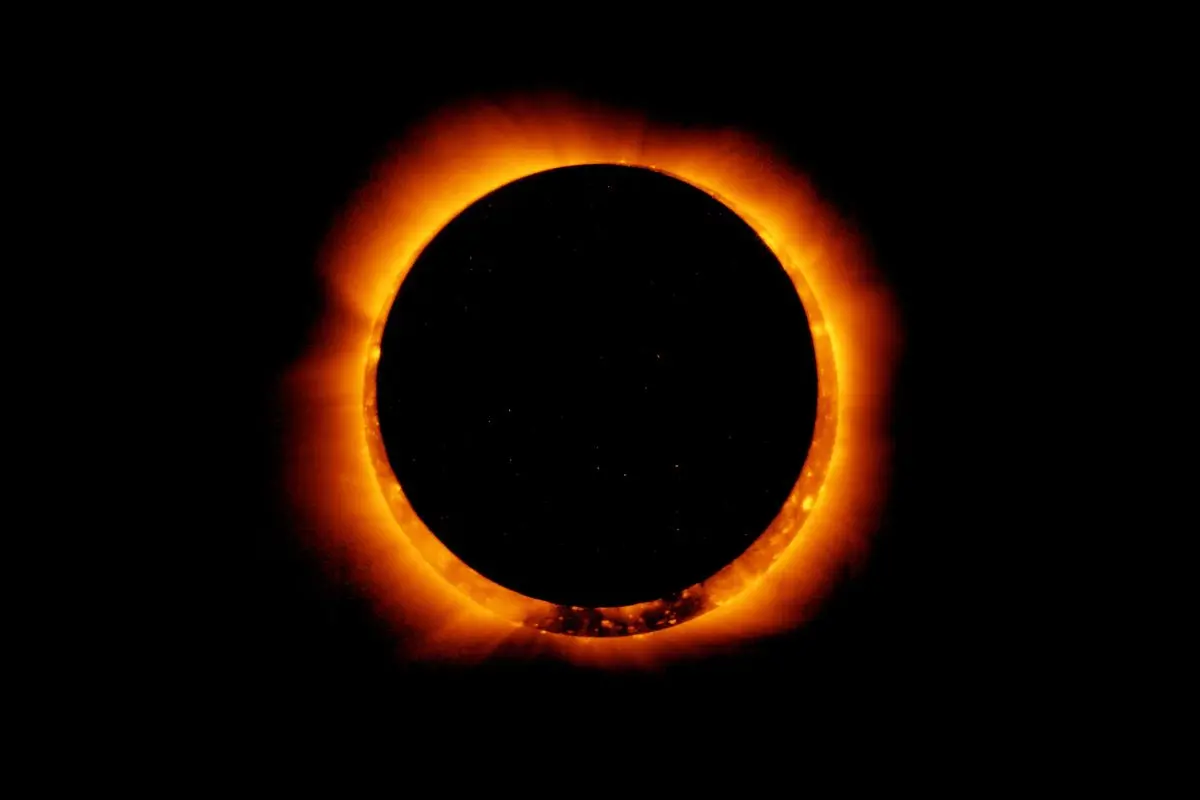
The first major astronomical event of 2026 is set to unfold this month, as an annular solar eclipse, often described as a “ring of fire”, will take place on Tuesday, 17 February. The spectacle, however, will largely remain out of sight for most of the world, including India.
According to astronomical forecasts, the eclipse will begin at 07:01 UTC (12:31 pm IST), with the central path sweeping across remote parts of Antarctica. Only limited regions of the Southern Hemisphere will witness any phase of the event.
Where the ‘ring of fire’ will be visible
The dramatic annular phase – when the Moon covers the centre of the Sun, leaving a bright halo – will be seen almost exclusively from Antarctica, which hosts only a handful of scientific research stations.
Outside the frozen continent, parts of Argentina and South Africa may catch a partial eclipse shortly after sunrise. Skywatchers in those areas will see only a portion of the Sun being obscured.
For the rest of the world, including all of India, the event is not expected to be visible.
What is an annular solar eclipse?
An annular solar eclipse occurs when the Moon moves directly between the Earth and the Sun but is too far from Earth to completely cover the solar disc. As a result, instead of total darkness – as seen during a total solar eclipse – observers witness a glowing ring encircling the Moon's silhouette.
This “ring of fire” forms because the Moon appears slightly smaller than the Sun when it is near apogee, the farthest point in its orbit. Reports indicate that during this eclipse, the Moon will obscure roughly 96% of the Sun, producing a ring that could last up to 2 minutes and 20 seconds, according to Forbes.
People are warned not to view the eclipse without certified solar filters. Regular sunglasses do not offer adequate protection.
Next annular solar eclipses
The next annular solar eclipse is forecast for February 2027, with visibility extending across Chile, Argentina, Uruguay, Brazil, Côte d’Ivoire, Ghana, Togo, Benin, and Nigeria.
Further ahead:
- 2028: An annular eclipse will be visible from the Galápagos Islands, Ecuador, Peru, Brazil, Suriname, French Guiana, Morocco, and Spain.
- January 2030: Another “ring of fire” event will be observable from Algeria, Tunisia, Libya, Greece, Turkey, Russia, Kazakhstan, China, and Japan.
Paired eclipse to follow
Astronomers note that eclipses often occur in pairs. Roughly two weeks after the February 17 annular eclipse, a total lunar eclipse will take place, visible across North America, including the United States.