Meet Abidur Chowdhury, the Apple designer who unveiled the iPhone 17 Air
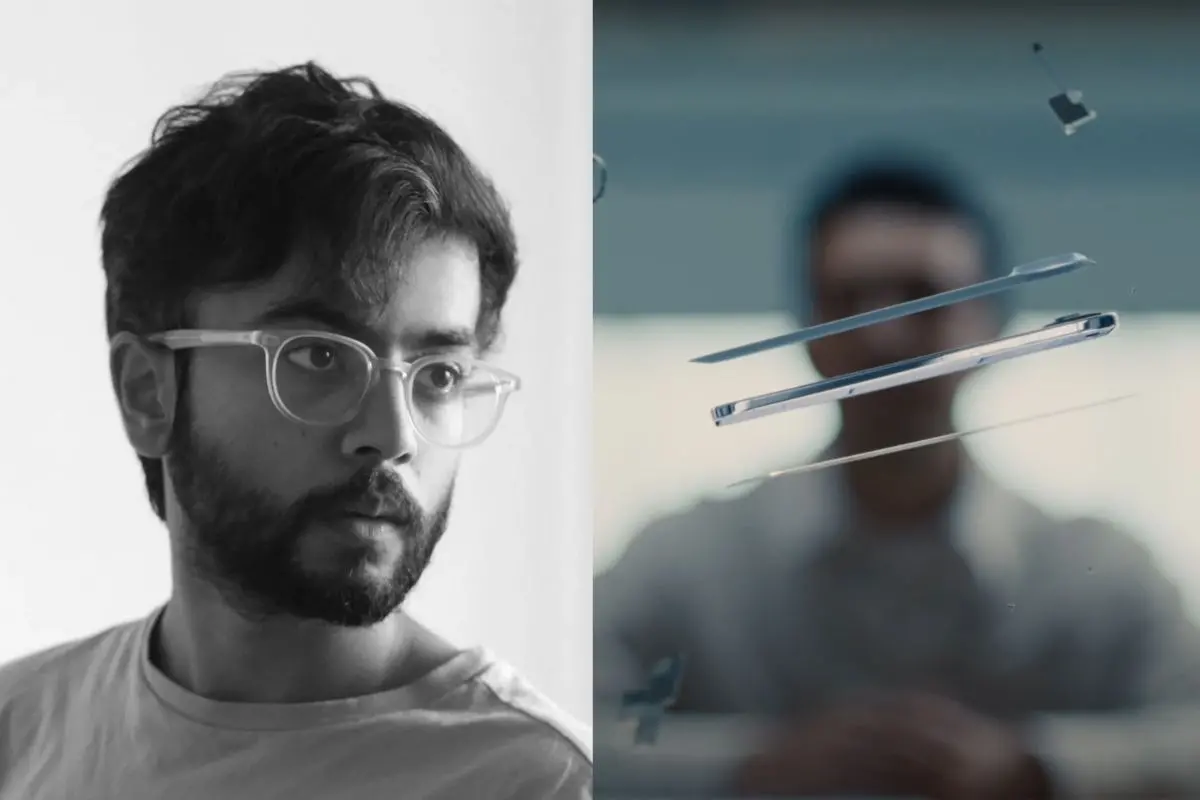
At Apple’s much-anticipated annual launch event on September 9, the spotlight unexpectedly shifted to a London-born designer who presented one of the company’s boldest products yet, the iPhone Air. Introducing what Apple calls its thinnest smartphone to date, Abidur Chowdhury stood on stage in Cupertino to reveal a device that combines cutting-edge engineering with a sleek titanium finish.
“It’s the thinnest iPhone ever, with the power of Pro inside. A paradox you have to hold to believe,” Chowdhury said, summing up the device’s futuristic appeal.
Who is Abidur Chowdhury?
Abidur Chowdhury was born and raised in London, England, and is now based in San Francisco, California, where he works as an industrial designer for Apple.
According to multiple reports, Chowdhury is of Bangladeshi origin, a detail that has added to the growing curiosity about the Apple designer who introduced the iPhone Air at its launch event.
On his personal website, he describes himself as someone who enjoys solving problems, learning new skills and is most excited by “creating innovative products people can’t bear to be without.”
Chowdhury earned his bachelor’s degree in Product Design and Technology from Loughborough University in the UK. His student years were marked by several awards and accolades, including the 3D Hubs Student Grant for product design, the James Dyson Foundation Bursary, the New Designers Kenwood Appliances Award, and first place in the Seymour Powell Design Week competition. In 2016, he also received a prestigious Red Dot Design Award for his “Plug and Play” project.
From London studios to Silicon Valley
Before joining Apple, Chowdhury gained experience through internships at Cambridge Consultants and Curventa, and later worked as an industrial designer at Layer Design in London. Between 2018 and 2019, he ran his own consultancy, Abidur Chowdhury Design, collaborating with design agencies, innovative firms and start-ups to create products, experiences and design strategies.
He relocated to California in January 2019 to join Apple’s industrial design team in Cupertino. For nearly seven years, Chowdhury has been involved in designing some of the company’s most advanced devices, culminating this year in the unveiling of the ultra-slim iPhone Air.
The iPhone Air: A new era of thin design
Apple describes the iPhone Air as “the most power-efficient iPhone ever made” while offering “fantastic all-day battery life.” Measuring just 5.5 mm thick, the handset pairs a titanium frame with Ceramic Shield front and back, houses a powerful 48-megapixel fusion main camera alongside an 18-megapixel centre stage front camera, and features a 6.5-inch OLED panel with 1–120Hz ProMotion adaptive refresh rate.
The device is powered by the A19 Pro chip, delivering Pro-class performance in a remarkably slim form. Battery-saving software enables all-day use despite a reduced battery size.
Apple has priced the iPhone Air at Rs. 1,19,900 for the 256GB model.
“We wanted to make an iPhone that feels like a piece of the future,” Chowdhury said at the launch, reinforcing Apple’s vision for compact yet powerful technology.
Part of a bigger line-up
Alongside the iPhone Air, Apple also introduced the iPhone 17, iPhone 17 Pro and iPhone 17 Pro Max. All models feature upgraded cameras, larger displays and the new Apple A19 Pro chip. Multiple storage configurations and colour options will be offered in the Indian market, with pre-orders opening soon.