I want to potray Africa as it is: Doreen Baingana on writing as a woman of colour| Interview
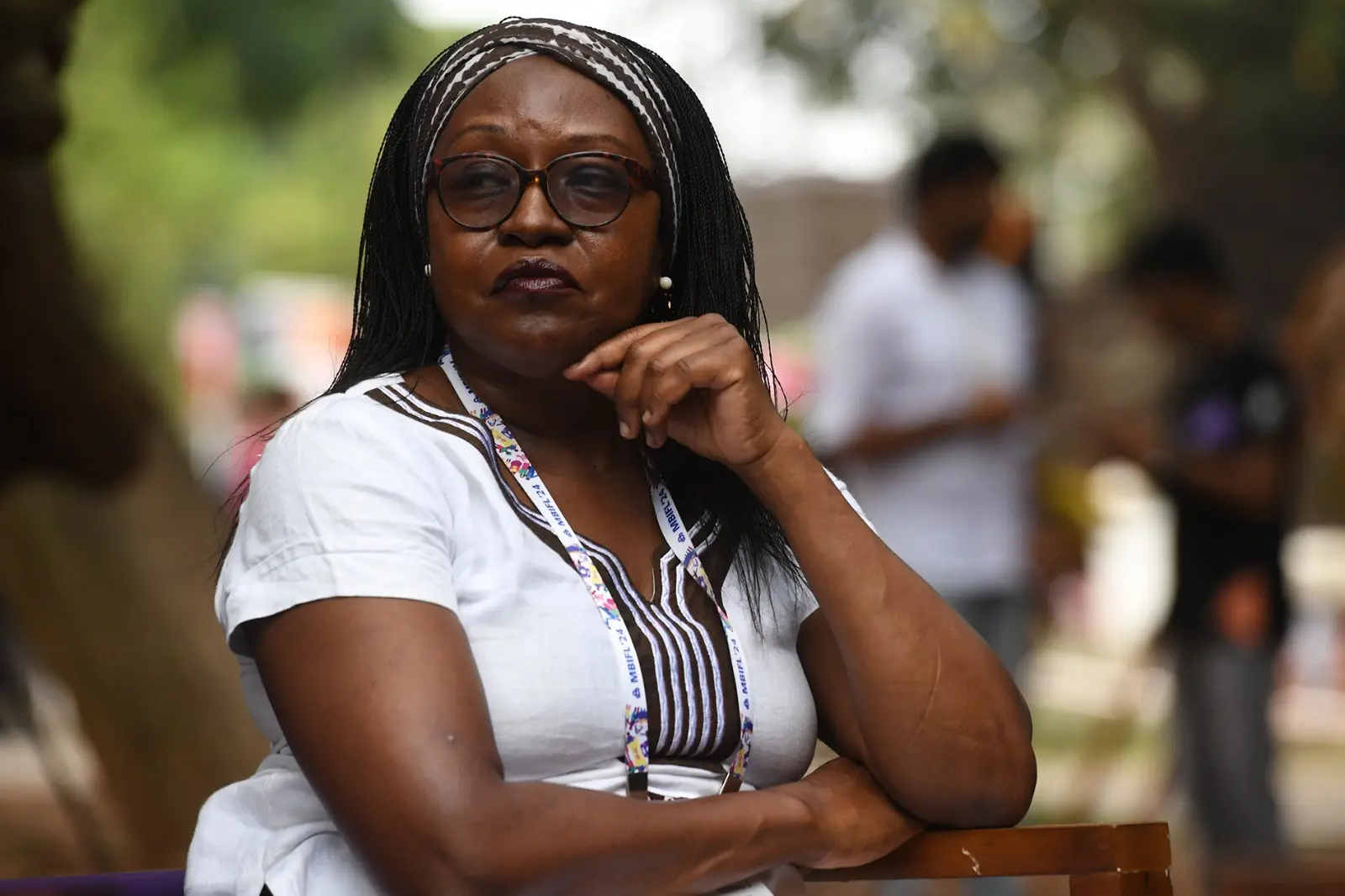
Doreen Baingana is a Ugandan writer known for her debut novel, ‘Tropical Fish: Tales from Entebbe’. The book is a collection of interconnected short stories that explore the lives of three sisters in Uganda growing into women during turbulent times. Baingana's work often delves into the impact of political and social changes in defining family and identity. Baingana speaks with Mathrubhumi.com on writing as a woman of colour.
What inspired you to write "Tropical Fish: Tales from Entebbe," and how did you come up with the idea for the interconnected short stories?
Initially, they were separate stories. When I was putting them all together, I realised that all three characters seemed to come from similar backgrounds. So I decided to make them all sisters, make it linked, just to show how we can all come from one place but lead very different lives. I explore that in the stories. I also wanted to explore how girls become women. It’s a whole journey. From little innocent girls who are not yet gendered, suddenly they have to begin seeing themselves as a woman. The process of this transformation through lived experiences is very interesting.
Would you say that your personal experiences influenced the stories that you write?
It does to a certain extent. But more than that, it's the stories that I read in the papers and otherwise about Africa that move me to write. The idea of Africa and Uganda that is usually propagated is as someplace that is diseased, poor, and ignorant. These are the stereotypes and my own experience of Africa was not that. I lived a life that any girl would have lived in any other part of the world. I wanted to deal with these misconceptions. I wanted to portray what Africa is.
How do you approach portraying complex themes such as family dynamics, identity, and societal changes in your work?
The beauty of storytelling or fiction is that all these things can be analysed within it. They say God is in the details. For that, you have to go down to the senses. What did I smell, hear, touch? By writing this down, we can make the reader also sense the same and experience the story from the inside out. The language that we use also adds another dimension to the story.
How do you navigate the balance between fiction and reality when addressing political and social issues in your writing?
This is always a difficult part of writing. I am working on a historical fiction novel right now. It is based on a real-life woman rebel. The information I have are facts but I have to present it as fiction. We go through fiction to bring out the emotions within a story.
How has your perspective as a Ugandan writer influenced the way you approach storytelling and representation in your work?
Unfortunately, my grandparents became Christians really early so I didn’t have that traditional upbringing of having stories told to me by my ancestors. But the kind of education that I had, many of the oral stories were taught to us as history. I was always aware of our oral tradition. So when writing I always think about what I can bring in from oral tradition. When I write a draft, I read it out loud to hear how it sounds. Because of my education, I write in English. But I believe we are still too influenced by Western literary traditions. Hence, I try to add vernacular words to bring the flavor of that particular place.
Is it difficult to find your unique voice in this postcolonial context?
I think the awareness of that difficulty is the first step. I am not just going to mimic Western writing. I am always aware of my voice, I feel it in my bones and I can try to tap into that. There is a space of mystery from a blank page to a written one. There is much that you know and much that you don’t. That creates your unique voice.
Can you share your thoughts on the representation of African women in literature, and how your work contributes to this portrayal?
There was a time in the '60s when most of the African writers were men. They were also largely political as they were involved in the struggle for independence. Women are always considered as the carrier of culture, the representation of culture. The greatest text from Ugandan literature is considered to be ‘Song of Lawino’ by Okot p'Bitek. It discusses the clash of cultures by describing the differences between a traditional Ugandan wife and a modern woman. He used two women fighting over one man as the foil to discuss the changes that were happening in the world. The traditional woman is called nobel while the other is criticised for changing with the times.
How do you address the cultural nuances when writing to make your work relatable to a global audience?
I do believe that this is an extra burden that is placed upon us that the white world does not have to worry about. We don’t just have to explain our writing but our culture too. But I’m not sure if I think it through when writing as it has become a habit. I have done it for so long, especially when I lived in the US that it became the way I operate as a writer. I have to keep explaining who I am and where I come from. In one sense, it's good because it makes things clearer. I have to think through things. In another sense, I try to subvert it, if I can, by not instilling the expectations. When I am on my continent, I am home, but everywhere else, I am alien.
How important is plurality?
I’m glad that plurality was the theme of this festival. It encompasses so many things, it is plural. But it is a way of seeing how we can be many diverse things and yet come together as one to discuss ideas from so many different perspectives. People come in with varied experiences, and cultures to form a web that is interconnected and exploring those connections is truly exciting.