Who is Krishna Nandi? Hindu businessman in Bangladesh election on Jamaat ticket
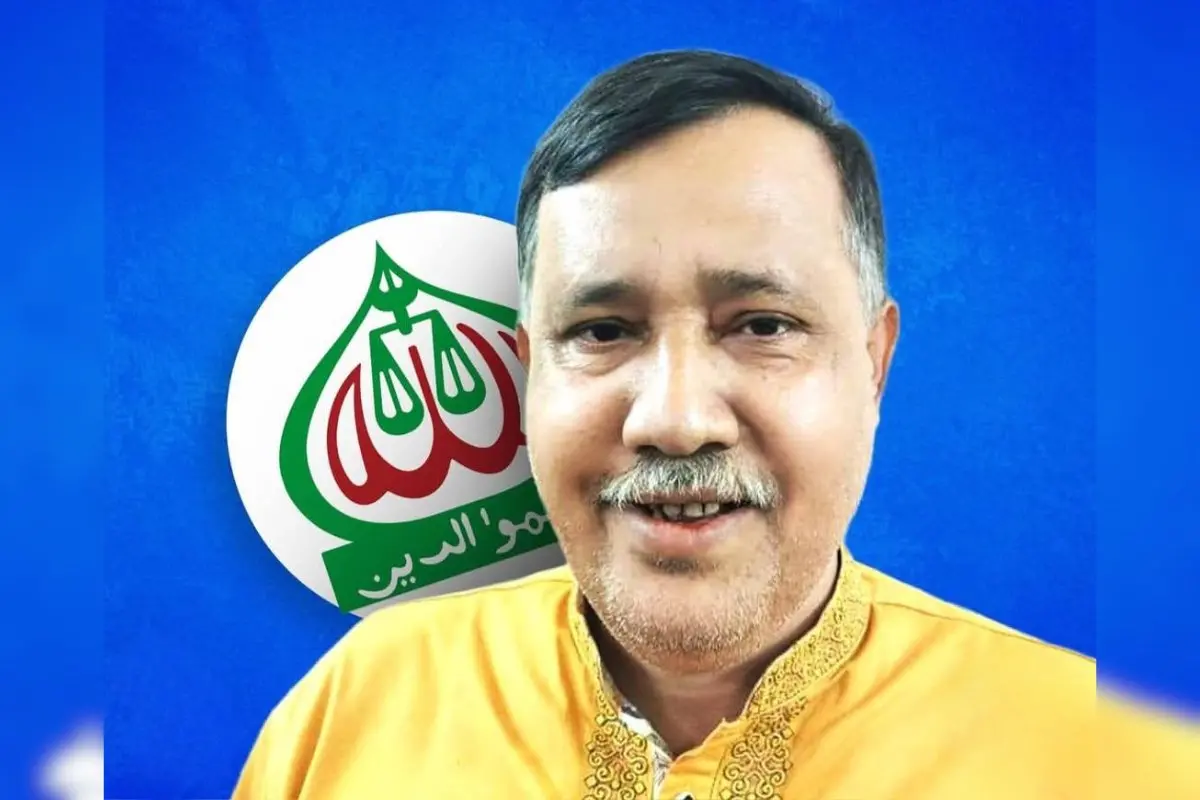
Krishna Nandi has emerged as an unexpected name in Bangladesh’s election campaign, with the Hindu businessman entering the fray as a Jamaat-e-Islami candidate from the Khulna-1 constituency. His candidature has drawn attention as Jamaat-e-Islami, an Islamist party, seeks to underline its claim of representing citizens across religious lines, including minority communities.
Who is Krishna Nandi?
A long-time associate of Jamaat-e-Islami Secretary-General Mia Golam Parwar, Nandi maintains that his decision to contest reflects the party’s broader political outlook rather than a departure from its ideological roots. He has said the organisation is capable of voicing concerns of all sections of society, Hindus included.
Also Read: Who is Gobinda Chandra Pramanik, the Hindu candidate running for Sheikh Hasina’s seat?
Nandi is a veteran entrepreneur with business interests spanning construction materials, motorcycles, fertilisers, tin, edible oil and sugar. According to a report by Prothom Alo, he has been active in trade for around four decades. His engagement with Jamaat-e-Islami began in 2003, when he came into contact with Mia Golam Parwar, who later encouraged him to enter politics.
Originally a voter in the Khulna-5 constituency, covering Dumuria and Phultala upazilas, Nandi explained that the party nominated him from Khulna-1 as Parwar himself is contesting from Khulna-5. Speaking about his association with the senior leader, Nandi has described it as ideological and political rather than personal.
Explaining his motivation during an interview with Prothom Alo, Nandi has said he wants to raise issues faced by the Hindu community from within Parliament. He has also argued that Jamaat-e-Islami stood with ordinary Bangladeshis of all faiths during the turbulent period following the removal of Sheikh Hasina’s government.
Also Read: Who is Tarique Rahman? Bangladesh political heavyweight set to end 17-year exile
Bangladesh’s election Thursday is the country's most consequential. It follows youth-led protests 18 months ago that overthrew the government of former prime minister Sheikh Hasina and ushered Bangladesh into an interim administration led by Nobel laureate Muhammad Yunus.
The vote, alongside a constitutional referendum on political reforms, will end the transition period and test the nation's democracy.