What to know about Gaza peace plan agreed to by Trump, Netanyahu
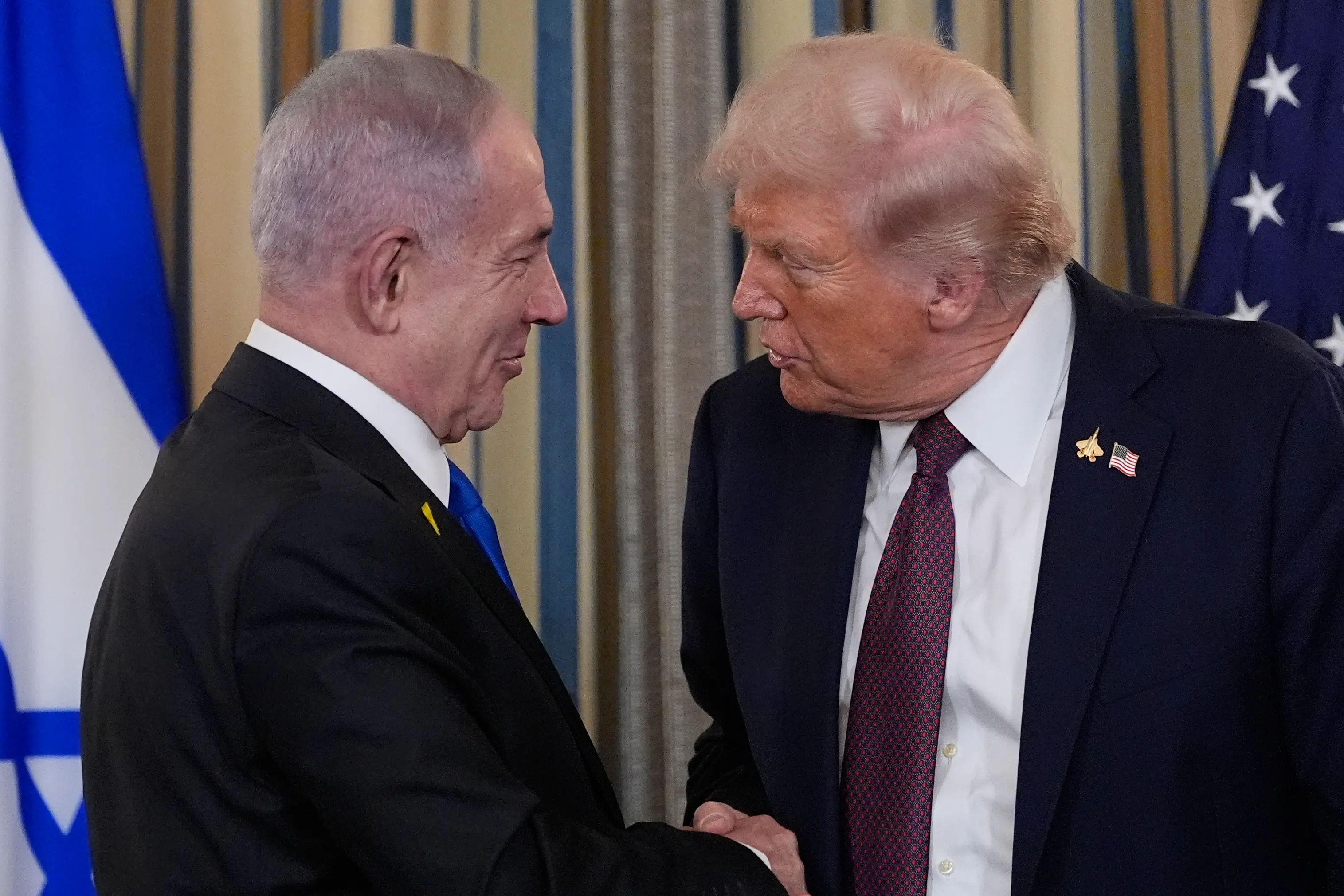
US President Donald Trump and Israeli Prime Minister Benjamin Netanyahu have unveiled a sweeping proposal to end the Israel-Hamas war in Gaza.
The 20-point plan promises a ceasefire, hostage release, international oversight, and large-scale reconstruction. But its future depends on whether Hamas agrees to the terms.
What does the peace plan propose?
The plan begins with an immediate ceasefire. Hamas would be required to release all remaining hostages—alive or deceased—within 72 hours. In return, Israel would release 250 Palestinians serving life sentences and 1,700 detainees from Gaza, including all women and children held since October 2023. For each deceased Israeli hostage returned, Israel would release 15 Palestinians’ remains.
The proposal also promises humanitarian aid monitored by neutral international organisations such as the UN and the Red Crescent, and the creation of a “special economic zone” to boost Gaza’s redevelopment. Palestinians will not be expelled, and Gaza is promised long-term reconstruction into a stable and prosperous society.
Will Israeli troops leave Gaza?
Under the plan, Israeli troops would eventually withdraw as an International Stabilisation Force (ISF)—supported by Arab partners—takes over security and helps train Palestinian police. However, Netanyahu has clarified that Israel’s army will “remain in most of Gaza” for security reasons. Israel would also maintain a “security perimeter presence” until Hamas is fully disarmed.
What happens to Hamas under this plan?
Hamas would be excluded from governing Gaza. Its tunnels, weapons, and military infrastructure would be dismantled. Members who pledge peaceful coexistence would be granted amnesty, while others could leave Gaza under safe passage. The territory’s daily administration would be handled by a technocratic Palestinian committee, overseen by a new international “Board of Peace” chaired by Trump and including figures such as former UK Prime Minister Tony Blair.
Is there a path to Palestinian statehood?
The plan mentions only a vague possibility of Palestinian statehood. It suggests that “conditions may finally be in place” for self-determination once the Palestinian Authority reforms and Gaza’s redevelopment advances. However, Netanyahu has categorically rejected the idea of a Palestinian state, insisting that it will not be realised under his leadership.
How has the world responded?
Eight Arab and Muslim-majority nations—Egypt, Jordan, Qatar, Saudi Arabia, UAE, Indonesia, Pakistan, and Turkey—have welcomed Trump’s plan, praising its focus on ending the war, preventing displacement, and rebuilding Gaza.
Hamas negotiators have said they are reviewing the proposal before giving a formal response. The group has consistently rejected disarmament, saying it has a right to resist until Israel ends its occupation of Palestinian lands.
Could Netanyahu face opposition at home?
Netanyahu’s far-right coalition partners may resist elements of the plan. Finance Minister Bezalel Smotrich warned against any involvement of the Palestinian Authority or moves toward Palestinian statehood. Some members of Netanyahu’s bloc have previously threatened to quit the government if he halts the war.
For now, Trump and Netanyahu present this 20-point framework as the most ambitious attempt to bring peace since the war began. But its success depends on whether Hamas accepts terms that require it to effectively surrender.