What exactly is ‘Block Everything’ movement and why is it driving chaos on French streets?
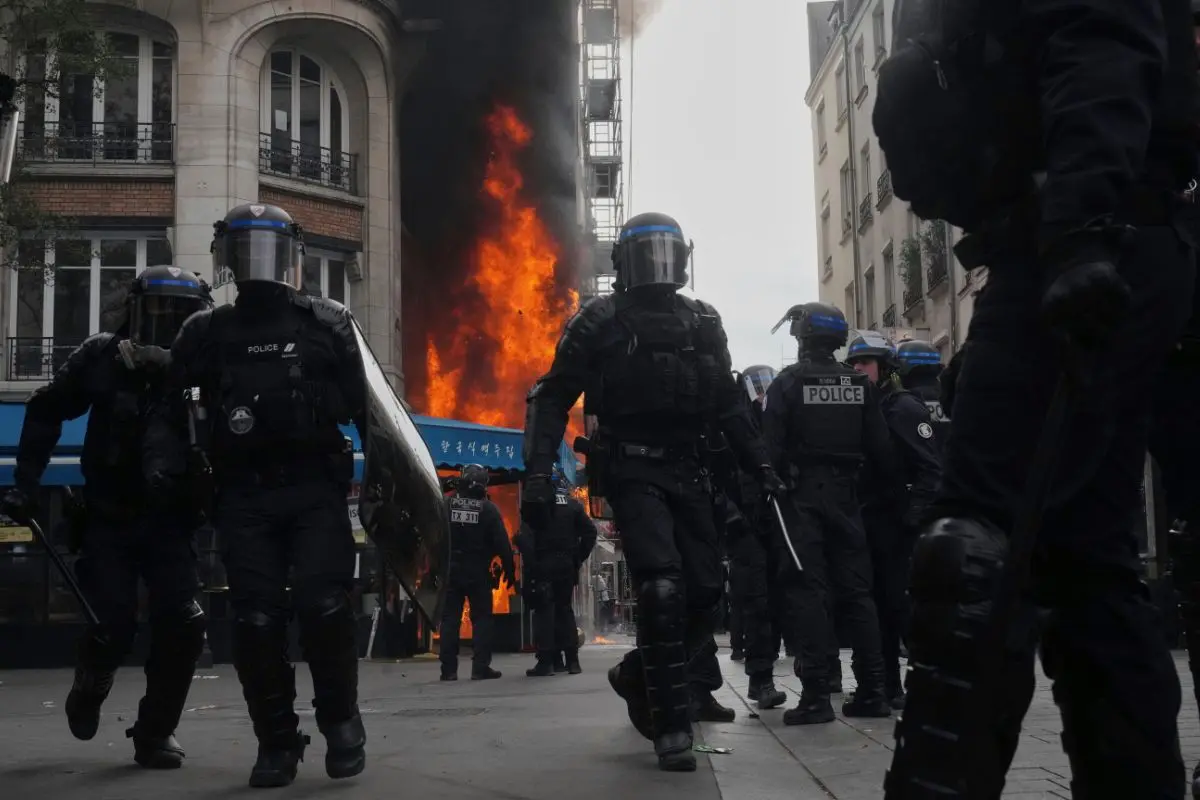
Paris: France is in turmoil again. A new prime minister has taken office, protests are filling the streets, and calls for President Emmanuel Macron’s resignation are growing louder. At the heart of the unrest is a grassroots campaign with an evocative name ‘Block Everything’ or, in French, ‘Bloquons Tout’.
Sebastien Lecornu, a long-time Macron ally, was appointed as the country’s fifth prime minister in less than two years following the resignation of Francois Bayrou. Lecornu inherits a divided parliament, a restless public and an urgent budget crisis. His appointment comes amid widespread disruption across France, with schools, trains, flights and factories affected by ongoing protests.
The roots of the protests
The immediate spark is Bayrou’s 2026 budget plan, which aimed to slash 43.8 million Francs from the national budget, freeze pensions, cut two national holidays, and remove 5 billion Francs from healthcare spending. The government insists the measures are necessary to reduce the deficit, but opponents say they will hurt workers and the vulnerable while sparing the wealthy.
Bayrou quit nine months into his term after failing to secure parliamentary support. His departure followed a no-confidence vote, a repeat of the same fate that toppled his predecessor, Michel Barnier. With no clear coalition in sight, far-right leader Marine Le Pen and other political figures are now demanding fresh elections.
Macron has been balancing an increasingly fractured legislature since 2017. The lower house is split three ways: the far-right National Rally is the largest single party but lacks a majority; the left is active on the streets but fragmented in parliament; and the weakened centre relies on issue-by-issue deals. “We’re facing the same problem as last year, where rival parties show little willingness for concessions,” Gesine Weber, a Paris-based research analyst, told news agencies.
What is the ‘Block Everything’ movement?
Unlike traditional union-led strikes, the ‘Block Everything’ collective is a citizen-driven campaign that spreads mainly through social media platforms like X, TikTok, Telegram and Facebook. Its playbook calls for civil disobedience, boycotts and community organising rather than centralised leadership.
Supporters have been sharing hashtags such as #10septembre2025 and #10septembre to coordinate actions, which include:
- Boycotting major retailers like Carrefour, Amazon and Auchan.
- Withdrawing money from banks.
- Peaceful occupation of symbolic public sites, including town halls.
- Setting up neighbourhood assemblies and strike funds.
While the protests fell short of their ambitious aim to literally ‘block everything’, they have nonetheless paralysed transport networks, disrupted schools and factories, and signalled rising anger at austerity measures. Early incidents included highway blockages in Bordeaux, a cable fire affecting rail services in Toulouse, and barricades in Paris that led to 75 arrests. Vinci, the highway operator, reported disruptions in Marseille, Montpellier, Nantes and Lyon.
Who backs the protests?
Support comes largely from the left: surveys show that 69 per cent of self-declared supporters voted for former parliamentarian Jean-Luc Mélenchon in 2022. Major unions have largely stayed away, preferring to hold their own nationwide strikes on September 18, with the exception of the hard-left CGT union, which has formally endorsed the movement.
Opposition is strong within parliament. “This (another new PM’s appointment) is a slap in the face for parliament,” Socialist leader Philippe Brun said on TV. “This is a slap in the face for voters.” Some, however, see room for compromise. Marine Le Pen described Macron’s latest move as his “last shot”, hinting her party could offer conditional backing. National Rally leader Jordan Bardella wrote, “We will judge the new prime minister, without any illusions, on his actions, his policies for France’s budget, and whether they meet our red lines.”
A polarised political landscape
Macron’s decision to appoint Lecornu, a 39-year-old veteran of his cabinets and a former centre-right Republican with ties across the spectrum, is widely seen as an attempt to steady the ship. Lecornu has been one of the few constants in Macron’s administration over eight years, and he is seen as pragmatic, with cordial ties even to far-right figures like Le Pen.
But France’s political gridlock has left many disillusioned. Calls for Macron to step down are intensifying, while hard-left party France Unbowed (LFI) has already tabled a no-confidence motion. Analysts warn that unless consensus emerges soon, protests could escalate further.
On the streets and online
As of Wednesday, around 80,000 security personnel were deployed nationwide. In Rennes, protesters set a bus on fire and damaged a power line. In Lyon, bins were set ablaze, while police in Nantes used tear gas to disperse crowds. In Paris, barricades built from dustbins became makeshift fortifications, with garbage thrown at police. Around 200 arrests have been reported.
“The working class suffers the most. There could be a better way,” said Chloe, a 25-year-old student protesting in Toulouse. Online, the mobilisation remains strong. “I thought there’d be more of us (on the streets)… It’s unfortunate that there are more revolutionaries on Facebook than in real life,” Cedric Brun, a 46-year-old auto worker and union leader in Valenciennes, told AFP.
The scale and leaderless nature of the protests have drawn comparisons to the Yellow Vest uprising of 2018 and similar movements in Nepal, Bangladesh and Sri Lanka.
(With inputs from AP, AFP)