Why are religious groups suing the Trump administration amid the US immigration crisis?
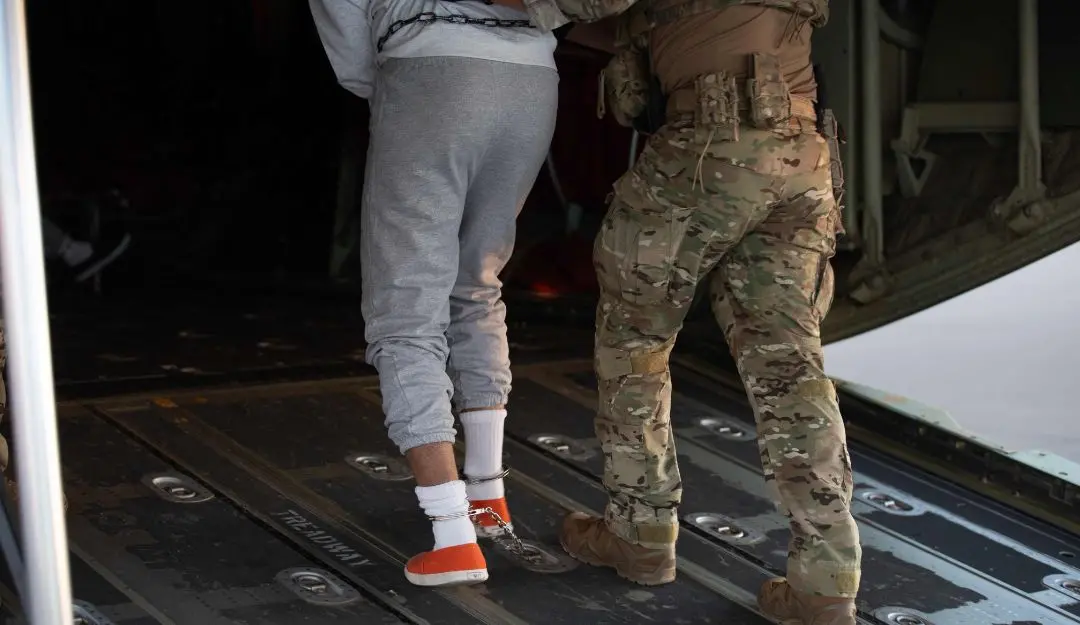
Washington: More than two dozen Christian and Jewish organisations representing millions of Americans have filed a federal lawsuit against the Trump administration, challenging a new policy that grants immigration agents more leeway to make arrests at houses of worship. The plaintiffs argue that the policy violates their religious freedom and spreads fear among undocumented immigrants, deterring them from attending religious services and community programmes.
Legal challenge against immigration arrests at churches
The lawsuit, filed in the US District Court in Washington on Tuesday, names the Department of Homeland Security and its immigration enforcement agencies as defendants. The plaintiffs include major religious groups such as the Episcopal Church, the Union for Reform Judaism, the Presbyterian Church (USA), the African Methodist Episcopal Church, the Mennonite Church USA, and the Unitarian Universalist Association, among others.
According to the lawsuit, the new enforcement policy allows immigration agents to operate at houses of worship without prior approval from supervisors, replacing longstanding restrictions. Previously, agents needed judicial warrants or special authorisation to conduct operations at churches, schools, and hospitals—designated as "sensitive locations."
Fear among immigrants and declining church attendance
Faith leaders contend that the policy has instilled fear among migrants, particularly undocumented individuals, causing a decline in church attendance and participation in support programmes such as food banks, homeless shelters, and meal services.
Rev. Sean Rowe, presiding bishop of the Episcopal Church, stated, "We cannot worship freely if some of us are living in fear." He emphasised that the lawsuit seeks to protect the right to worship and minister to migrants without government interference.
Carlos Malavé, president of the Latino Christian National Network and a pastor in Virginia, noted that the fear has extended beyond church walls. "People fear going to the store, they are avoiding going to church," he said, adding that many churches have shifted to online services due to concerns for the safety of their congregants.
The Trump administration has yet to respond to the new lawsuit, but a Department of Justice (DOJ) memorandum, issued last Friday in a separate but related case, provides insight into its legal stance. The DOJ argued that the request to block the policy is speculative and based on hypothetical harm, insufficient to warrant an injunction. The memorandum also noted that immigration enforcement at places of worship has been allowed for decades, with the new policy merely giving agents more discretion.
In a previous lawsuit filed by five Quaker congregations in January—later joined by the Cooperative Baptist Fellowship and a Sikh temple—the DOJ contended that any legal relief should apply only to the plaintiffs involved rather than a nationwide injunction.
Religious leaders push back
Legal representatives for the religious groups argue that the scale of the lawsuit makes it impossible to ignore. "The massive scale of the suit will be hard for them to ignore," said Kelsi Corkran, lead counsel from Georgetown University Law Centre's Institute for Constitutional Advocacy and Protection. She criticised the new policy for allowing immigration agents to "go anywhere, any time" without oversight, citing a recent case where a Honduran man was arrested outside a church in Atlanta while a service was underway.
Pope Francis also weighed in on Tuesday, criticising the Trump administration's crackdown on immigration, stating that mass deportations violate human dignity and "will end badly." While the US Conference of Catholic Bishops did not join the lawsuit, it has previously spoken against the administration's immigration policies.
Divided opinions on immigration enforcement at churches
Not all faith leaders oppose the policy. Mat Staver, founder of the conservative Christian legal organisation Liberty Counsel, defended the administration’s stance. "Places of worship are for worship and are not sanctuaries for illegal activity or for harbouring people engaged in illegal activity," he said. "There is no right to openly violate the law and disobey law enforcement."
Legal scholars remain divided on whether the plaintiffs will succeed in arguing that the policy violates religious freedom. Professor Cathleen Kaveny of Boston College noted that while the lawsuit may face legal hurdles, the administration risks disregarding the traditional role of churches as places of sanctuary. "These buildings are different—almost like embassies," she said. "I think of churches as belonging to an eternal country."
(With inputs from AP)