Sleeper cells, drone bases, ghost agents: How Israel pulled off strikes deep inside Iran
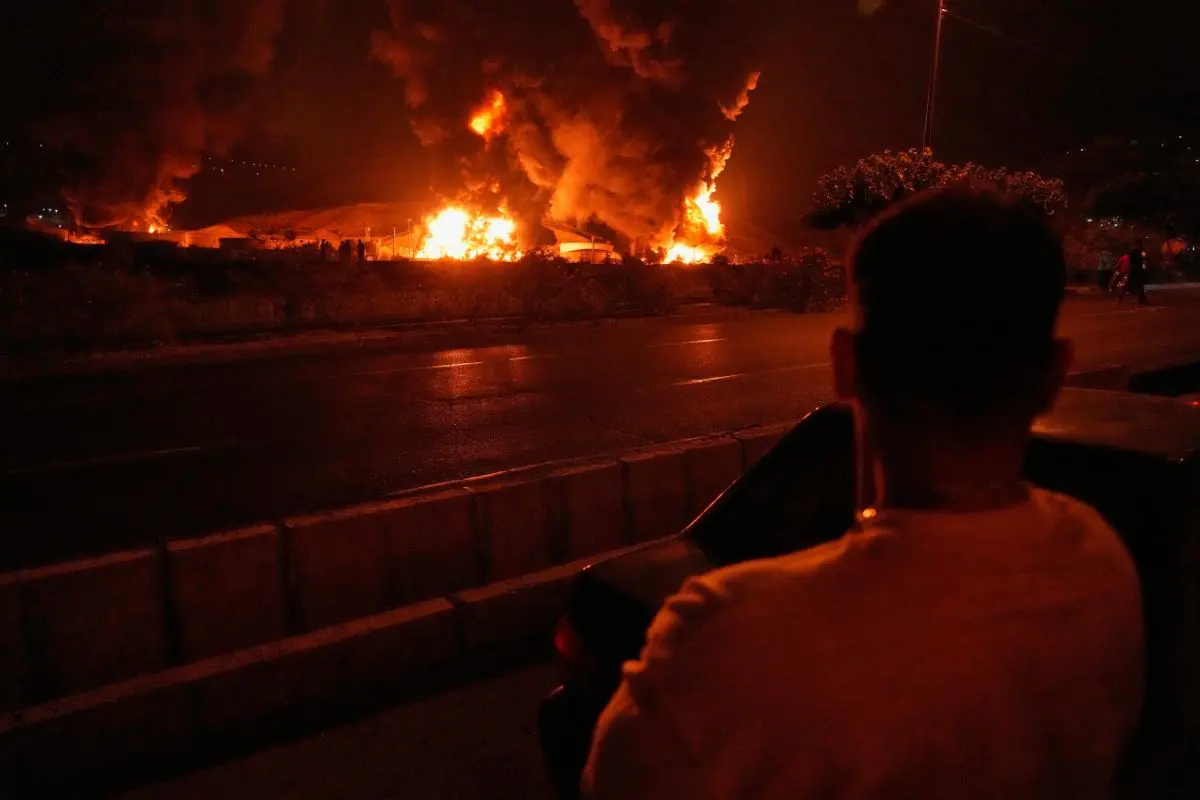
Israel’s ongoing offensive against Iran, including precision strikes that have killed top military commanders and nuclear scientists, is being described by analysts as the culmination of years of deep infiltration and meticulous intelligence work inside the Islamic Republic.
On Friday alone, Israel claimed to have hit hundreds of high-value targets. Since then, it has continued its aerial and covert campaign, targeting defence installations and fuel depots, including another strike on Sunday.
The offensive, the most expansive and coordinated assault ever launched by Israel against Iran, has coincided with renewed diplomatic efforts between Tehran and Washington over Iran’s nuclear programme.
“Israel has been following the nuclear programme for 15 years,” Israeli analyst Michael Horowitz told AFP. “The strikes we see are the result of years of intelligence gathering and infiltration of the Islamic Republic.”
Israel has carried out limited attacks in the past, including a notable operation in October last year. But according to Horowitz, the latest offensive had been in planning for months, especially after Iran’s air defences were reportedly weakened during last year's attacks.
“It seems that this week's operation had been in preparation for months, with an acceleration after the operation last year significantly weakened Iranian air defences,” he added.
While Iran continues to deny accusations of seeking nuclear weapons, it has steadily withdrawn from its commitments under the 2015 nuclear deal, an agreement that the United States exited during Donald Trump’s presidency. The accord had promised sanctions relief in return for restrictions on Iran’s nuclear programme.
Experts believe the current strikes go beyond sabotage missions previously attributed to Mossad, Israel’s intelligence agency. The scope, precision, and impact of the attacks have stunned observers.
A European security source described the strikes as demonstrating “an impressive degree of precision and mastery”.
Israel claims to have eliminated at least 20 top figures, including the Iranian armed forces chief of staff, senior Revolutionary Guards officials, and nine nuclear scientists.
Danny Citrinowicz of the Institute for National Security Studies in Tel Aviv said the operation’s success highlighted “operational superiority” and long-term intelligence efforts.
“It’s highly connected to the ability to collect information, intelligence in Iran for years, excellent intelligence that actually allows you to detect where they’re living, the seniors, also the nuclear scientists,” he told AFP.
The offensive follows the 2024 assassination of Ismail Haniyeh, Hamas’s political leader, in Tehran. Haniyeh had arrived in the city to attend the inauguration of President Masoud Pezeshkian and was reportedly killed by an explosive device planted in his guesthouse weeks in advance.
At the time, observers described the assassination as a major intelligence failure on Iran’s part. Yet, “still Iran didn't learn and didn't have the ability to lock the holes in their system,” Citrinowicz added.
A report by Axios cited Israeli intelligence sources as saying that Mossad agents inside Iran helped facilitate Friday’s attack by pre-positioning weapons near key air defence systems. These weapons, some reportedly hidden in civilian vehicles, were launched as the main operation commenced.
“Mossad had established an attack drone base inside Iran with drones that were smuggled in long before the operation,” a senior Israeli intelligence official told Axios.
A former intelligence official told The Atlantic that “Iranians opposed to the regime make for a ready recruiting pool” and that “Iranians working for Israel were involved in efforts to build a drone base inside the country”.
Alain Chouet, the former number three in French intelligence, echoed those views, saying he believed Israel had “half a dozen cells capable of acting at any moment” inside Iran.
Tehran regularly carries out executions of individuals accused of spying for Israel.
While questions remain about any potential American role, U.S. President Donald Trump stated that Washington was not involved.
The White House had earlier urged Israel to allow space for diplomatic talks ahead of a scheduled sixth round of US-Iran nuclear negotiations in Oman.
Still, Iran’s Foreign Minister Abbas Araghchi claimed otherwise:
“Tehran had solid proof of the support of the American forces and American bases in the region for the attacks,” he said on Sunday.
Israel’s Prime Minister Benjamin Netanyahu, meanwhile, suggested otherwise.
“Our country was acting with the clear support of the president of the United States,” he said on Saturday. AFP