State-backed ‘sanitisation’ of terror? Report exposes Pakistan’s JeM–LeT nexus
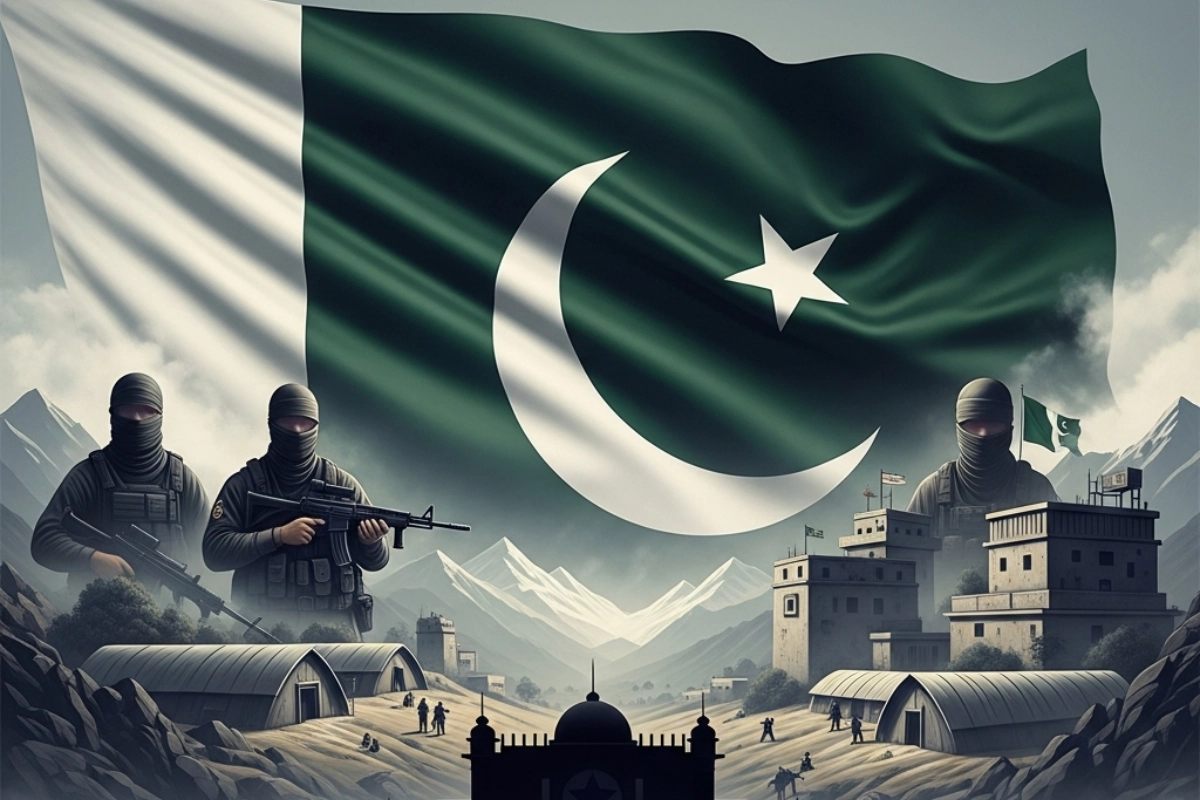
Islamabad: A report by DefenceNet has raised serious concerns over Pakistan’s alleged patronage of internationally designated terrorist organisations, claiming the state has adopted a structured model to shield and sustain groups such as Jaish-e-Mohammad (JeM) and Lashkar-e-Taiba (LeT) despite United Nations sanctions.
Drawing on dossiers and open-source intelligence, the report argues that this is not a case of isolated lapses but a deliberate strategy where tolerance, political legitimisation, and institutional support work together to “sanitise” extremist violence.
According to the findings, the operational boundaries between the Pakistani state and militant groups are carefully managed rather than accidental. Leadership activities, recruitment, ideological indoctrination, and infrastructure linked to JeM and LeT continue to function openly, reflecting what the report describes as a system designed to preserve armed networks while insulating them from international accountability.
One cited example is the reconstruction of the Markaz Syedna Bilal complex in Muzaffarabad in Pakistan-occupied Kashmir. Previously identified as a JeM training facility and targeted during Operation Sindoor, the site was later rebuilt as a state-backed project. In October 2025, Pakistan’s Federal Minister for Kashmir Affairs Rana Muhammad Qasim Noon, along with senior officials and political figures, publicly visited the complex, an act the report characterises as political rehabilitation rather than counterterrorism.
The report also highlights the continued ideological radicalisation of recruits through programmes presented as religious or educational initiatives. JeM’s seven-day Daura-e-Tarbiyah camps, described as indoctrination stages prior to militant training, were reportedly held openly in Quetta in December 2025 without state intervention. These camps were allegedly advertised publicly and conducted in mosques and community spaces.
Political mainstreaming of extremist groups forms another key concern. The Pakistan Markazi Muslim League (PMML), widely viewed as LeT’s political front, contested the 2024 general elections and remained active in 2025. The report notes that senior LeT figures, including Hafiz Talha Saeed, participated openly in PMML events despite being under US and UN sanctions. Public rallies by JeM and LeT-linked leaders have also reportedly taken place with visible police protection, underscoring what the report calls a gap between official restrictions and enforcement on the ground.
Beyond domestic implications, DefenceNet warns that Pakistan’s alleged integration of militant networks into political and social structures has international consequences. Strategic engagements involving countries such as Saudi Arabia, Iran, Turkey, Malaysia, and Indonesia are described as creating a wider politico-military framework that could impact Europe, China, and the United States by fuelling radicalisation, threatening trade corridors, and undermining global deterrence strategies.
The report contrasts Pakistan’s approach with Turkey’s handling of the Abdullah Ocalan case, noting that while Ankara pursued arrest and prosecution to sever links with terrorism, Pakistan is accused of repackaging armed groups into mainstream political and social platforms. The report concludes that this institutionalisation of violence poses risks extending well beyond South Asia.
(With IANS inputs)