What is Poseidon? Russia’s futuristic nuclear-capable underwater drone
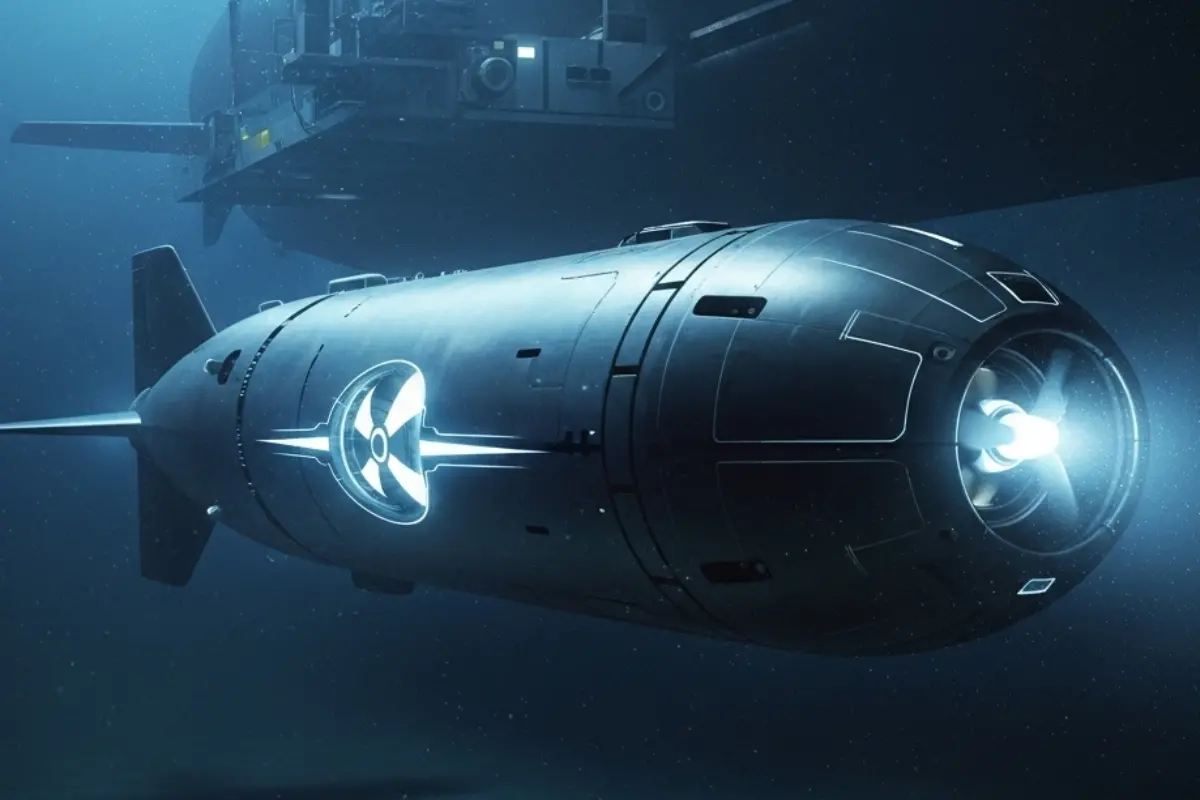
Russia has successfully tested its advanced nuclear-capable underwater drone, Poseidon, President Vladimir Putin announced on Wednesday, according to RT.
During a visit to a military hospital in Moscow, Putin confirmed that the Poseidon system underwent trials on Tuesday. "When it comes to speed and depth, there is nothing comparable to this unmanned vehicle anywhere in the world, and it is unlikely to appear anytime soon," the Russian President said.
Putin emphasised the drone’s strategic significance, noting that it currently has "no interception methods."
"For the first time, we succeeded not only in launching it from a submarine using its booster engine, but also in activating its nuclear power unit, which provided energy to the vehicle for a certain period. This is a tremendous success," he stated.
Also Read: Burevestnik: Russia’s new nuclear-capable missile
The Russian leader further claimed that Poseidon’s capabilities "significantly exceed the power of even our most promising Sarmat intercontinental-range missile."
What is Poseidon?
First unveiled in 2018, the Poseidon is described by Russian media as a deep-sea unmanned vehicle equipped with a nuclear propulsion system that grants it virtually unlimited range. Measuring about 20 meters in length and weighing around 100 tons, the drone can reportedly travel at speeds of up to 200 kilometres per hour and dive to depths exceeding 1,000 meters, RT reported.
The Poseidon is designed to deliver either conventional or nuclear warheads, potentially capable of creating massive underwater shockwaves and coastal devastation.
Broader nuclear developments
The successful test of the Poseidon comes less than a week after Moscow carried out trials of its nuclear-powered Burevestnik cruise missile — a move that drew criticism from former US President Donald Trump.
"I don't think it's an appropriate thing for Putin to be saying either. By the way, he ought to get the war ended. A war that should have taken one week is now in its fourth year. That's what he ought to do instead of testing missiles," Trump remarked.
Meanwhile, Putin has also signed a law formally terminating the plutonium disposal agreement with the United States, which was originally intended to limit the production of weapons-grade nuclear material.
The 2000 agreement required both Russia and the US to dispose of 34 tons of surplus weapons-grade plutonium that was no longer needed for military use, RT reported.