‘Terrorism can’t be a strategic asset’: PM Modi’s strong message at SCO Summit
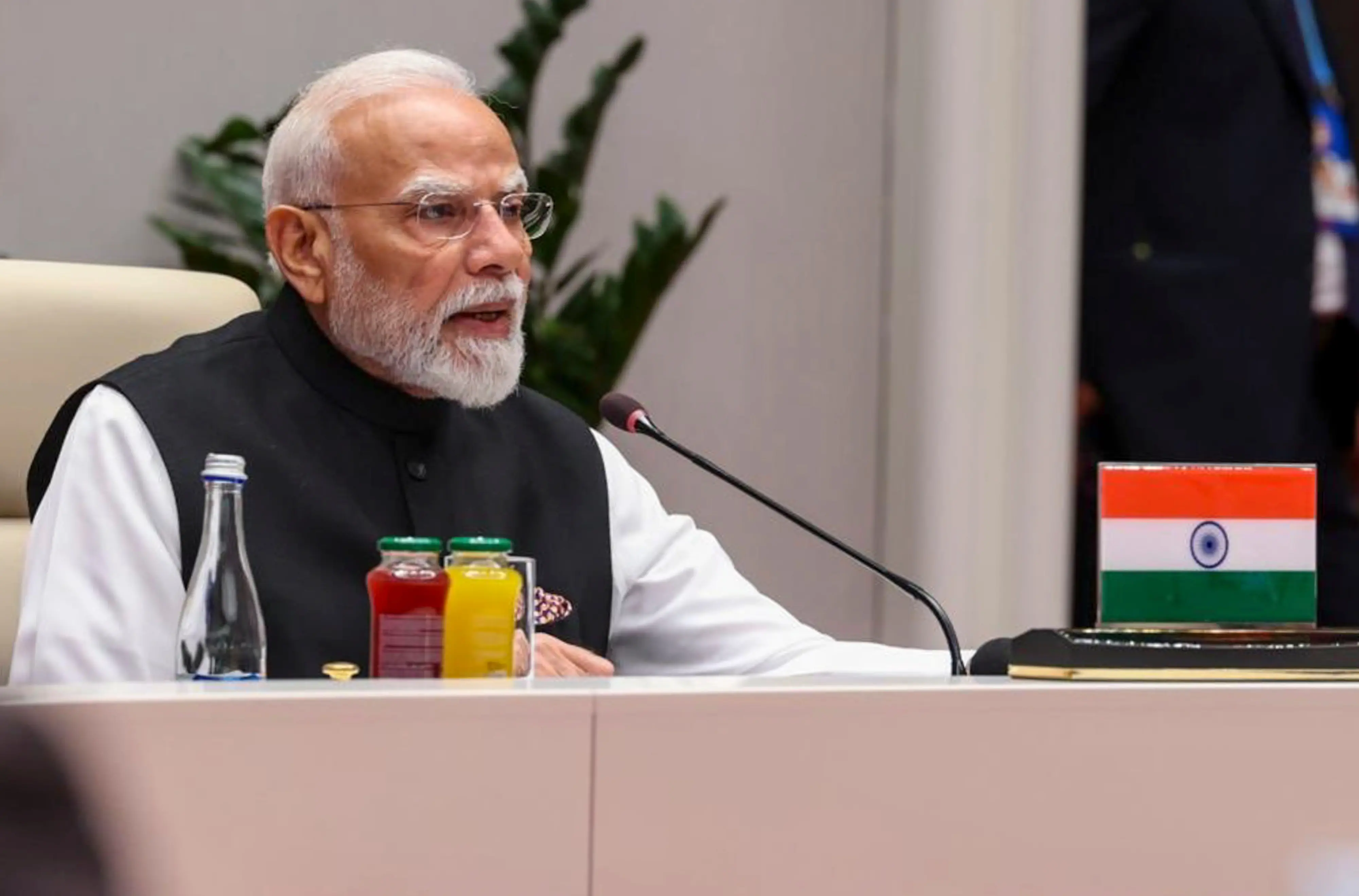
Bishkek (Kyrgyzstan): Prime Minister Narendra Modi on Tuesday issued a strong message against terrorism at the 26th Shanghai Cooperation Organisation (SCO) Summit in Bishkek, calling for the complete dismantling of the ecosystem that supports terror financing, recruitment, radicalisation and safe havens.
Addressing the Council of Heads of State of the SCO, Modi said the global fight against terrorism cannot be limited to an “action and reaction” approach and stressed that there can be no double standards on the issue.
He warned that countries that use terrorism as a tool of state policy or provide shelter and support to terrorists must be given a strong message.
“Terrorism cannot be a strategic asset for anyone,” Modi said.
The remarks came as terrorism, regional security and the wider geopolitical impact of conflicts remained central to India's intervention at the summit.
Modi calls for dismantling entire terror ecosystem
Modi said terrorism continues to pose a serious challenge to humanity and argued that defeating individual terrorist groups is not enough.
He called for action against the wider ecosystem that enables terrorism, specifically pointing to terror financing, recruitment, radicalisation and safe havens.
The Prime Minister also called on SCO members to speak with one voice against terrorism and rejected selective approaches to the issue.
“Those countries which make terrorism a tool of their policy, provide shelter and support to terrorists, will have to be given a strong message that terrorism cannot be a strategic asset for anyone,” he said.
‘Wars must be resolved through dialogue, diplomacy’
Alongside his message on terrorism, Modi reiterated India's position that wars and conflicts should be resolved through dialogue and diplomacy, not on the battlefield.
Referring to the crisis in West Asia, he said the consequences of a conflict are no longer limited to the region where it takes place.
According to Modi, instability in West Asia affects global energy security, maritime trade and supply chains, with countries in the Global South bearing a significant share of the impact.
“In today's interconnected world, the scope of security has expanded even further,” he said, stressing that India has consistently called for tensions and wars to be resolved through dialogue and diplomacy.
Drug trafficking another security concern
Modi also flagged drug trafficking as a serious threat to the younger generation as well as regional security.
He welcomed the centres being established within the SCO to address challenges including security threats, organised crime, information security and narcotics.
However, he called for these mechanisms to become effective instruments of practical coordination and timely action among member countries.
India pushes connectivity with focus on sovereignty
Connectivity and economic cooperation were another key part of Modi's address.
He said India supports efforts to connect markets, facilitate trade and create new pathways for development.
At the same time, Modi stressed that connectivity initiatives must respect the sovereignty and territorial integrity of all countries, describing this as a core principle of the SCO Charter.
He said the next phase of regional connectivity would need to go beyond roads, railways and air corridors.
Simplifying customs procedures, expanding digital documentation and improving logistics networks would also be necessary to make cross-border trade more efficient, he said.
Security, Connectivity and Opportunity
Modi outlined Security, Connectivity and Opportunity as the three main pillars of India's approach to the SCO.
He also called for the grouping's cooperation to become more people-driven rather than being limited to governments.
The Prime Minister highlighted India's initiatives within the SCO, including the Start-up Forum, Young Authors' Conclave and Young Scientists' Forum, particularly in the context of greater youth engagement.
He said Kyrgyzstan's presidency had placed special emphasis on youth participation and stressed that young people should have a greater role in the organisation's future.
Modi also recalled India's proposal last year for an SCO Civilisational Dialogue Forum and said its first session would be held in India this year.
India reiterates support for Afghanistan
Modi said India's engagement with Afghanistan would continue, particularly in the areas of development and humanitarian assistance.
He linked peace and stability in Afghanistan with the broader goal of creating a peaceful and secure Eurasian region.
India, he said, would continue contributing to the development and humanitarian needs of the Afghan people.
Also read | PM Modi's 'jhooth ki goonj' swipe at Rahul Gandhi comes with a Gen Z-style GDP pitch
Modi and Xi exchange greetings at summit
Earlier on Tuesday, Modi and Chinese President Xi Jinping were seen shaking hands and interacting as they arrived for the summit.
The two leaders walked side by side towards the venue after posing for a group photograph with other leaders and were seen speaking during the interaction.
Modi and Xi had last met on the sidelines of the SCO Summit in Tianjin in August 2025.
The interaction came after Modi held several bilateral meetings on the sidelines of the summit. On Monday, he met Iranian President Masoud Pezeshkian, Kyrgyz President Sadyr Zhaparov, Russian President Vladimir Putin and Armenian Prime Minister Nikol Pashinyan.
Modi also attended the opening ceremony of the World Nomad Games in Bishkek and interacted with members of the Indian community during his visit.
Modi said the SCO has built a strong tradition of dialogue and cooperation across the Eurasian region over the past 25 years.
He said the next 25 years should focus on translating that foundation into tangible results for people.
For India, he said, cooperation within the SCO should ultimately create opportunities for young people, strengthen connectivity, facilitate trade and contribute to regional security.
The SCO comprises 10 member states- Belarus, India, Iran, Kazakhstan, China, Kyrgyzstan, Pakistan, Russia, Tajikistan and Uzbekistan- along with observer states and dialogue partners.
At the Bishkek summit, India's message centred on a broader security approach: tackling terrorism and its supporting networks, addressing organised crime and narcotics, promoting connectivity while respecting sovereignty, and pursuing dialogue and diplomacy as the preferred path to resolving conflicts.
(With PTI inputs)