Netanyahu says Israel dropped 153 tonnes of bombs on Gaza after ceasefire breach
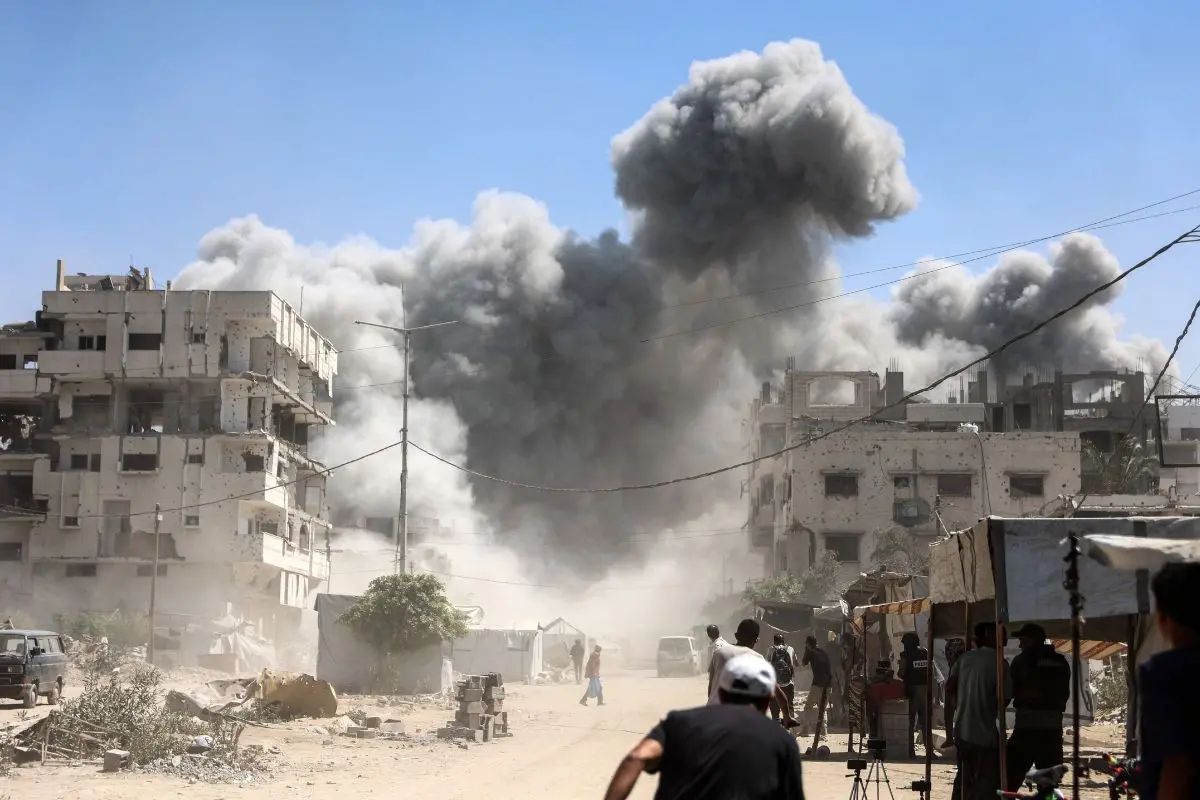
Jerusalem: Israeli Prime Minister Benjamin Netanyahu told parliament Monday that Israeli forces dropped 153 tonnes (337,307 pounds) of bombs on targets in Gaza, saying the strikes were a response to what Israel called a breach of the fragile ceasefire by Hamas.
"One of our hands holds a weapon, the other hand is stretched out for peace," Netanyahu said during a Knesset session. "You make peace with the strong, not the weak. Today Israel is stronger than ever before."
The Israeli leader said the military acted after two soldiers were killed in an attack allegedly carried out by Hamas. The Palestinian group denied any involvement, saying it had no knowledge of the incident.
Ceasefire tested by renewed violence
The strikes, carried out on Sunday, were the first major escalation since a US-brokered ceasefire took effect just over a week ago, intended to end two years of hostilities. Israel said the attacks targeted Hamas positions after its troops came under fire in Rafah.
According to Gaza’s Health Ministry, at least 36 Palestinians were killed, including children, in the latest wave of airstrikes. Hospitals across the enclave reported multiple casualties from separate attacks.
Al-Awda Hospital said it received 24 bodies from Israeli airstrikes in the Nuseirat and Bureij refugee camps in central Gaza. Another strike hit a coffeehouse in Zawaida town, killing six people, while attacks in Beit Lahiya and Khan Younis left several others dead, including women and children.
At Nasser Hospital in Khan Younis, Khadijeh abu-Nofal, standing beside wounded children, asked, "Where is peace?" as medics rushed to treat victims of the latest bombardment.
Israel, Hamas trade accusations
Israel’s military said it targeted “dozens of Hamas positions” after coming under fire and accused militants of breaching the ceasefire in Rafah, an area under Israeli control under current truce terms. Netanyahu reportedly instructed forces to take “strong action” against any violations but stopped short of threatening a full-scale return to war.
Hamas, meanwhile, denied responsibility, claiming it had lost contact with its remaining units in Rafah months ago. “We are not responsible for any incidents occurring in those areas,” the group said.
Palestinians in Gaza voiced fears that the latest escalation could mark the end of the ceasefire and a return to war in a territory still suffering from severe famine and destruction. “It will be a nightmare,” said Mahmoud Hashim, a father of five from Gaza City, urging U.S. President Donald Trump and other mediators to step in.
US urges calm, Egypt in talks
President Donald Trump said the truce remained intact but acknowledged tensions. “We want to make sure it’s going to be very peaceful,” he told reporters aboard Air Force One on Sunday, calling Hamas “quite rambunctious” and attributing the gunfire to possible “rebels” within the organisation.
“It’s going to be handled toughly but properly,” Trump said, noting the situation was “under review.”
Vice President JD Vance said he may visit Israel soon to “check on how things are going,” while acknowledging that the ceasefire would likely experience “fits and starts.”
A senior Egyptian official involved in mediating the ceasefire said “round-the-clock” contacts were underway to contain the situation. The official spoke on condition of anonymity because he was not authorised to discuss the talks publicly.
Civilian casualties and ongoing handover of remains
Israel also confirmed the identification of two hostages’ remains handed over by Hamas overnight – Ronen Engel, from Kibbutz Nir Oz, and Sonthaya Oakkharasri, a Thai agricultural worker from Kibbutz Be’eri. Both were believed to have been killed during the October 7, 2023, Hamas-led attack that ignited the war.
Hamas has handed over the remains of 12 hostages in the past week, while claiming that continuing Israeli strikes make further recovery efforts difficult.
Israel has demanded Hamas return all 28 remaining deceased hostages as part of the ongoing ceasefire deal, warning that the Rafah crossing between Gaza and Egypt would remain closed “until further notice.”
Gaza’s Health Ministry said Israel has returned 150 Palestinian bodies, including 15 on Sunday. Only 25 have been identified so far, with the rest documented online in the hope that families can recognise their relatives.
Next phase of ceasefire and political talks
A Hamas delegation led by chief negotiator Khalil al-Hayya arrived in Cairo for talks with mediators on the next phase of the ceasefire plan, which includes disarming Hamas, an Israeli withdrawal from certain areas, and discussions over the governance of Gaza.
Hamas spokesman Hazem Kassem said the group had started consultations to “solidify its positions,” reiterating that Hamas will not be part of Gaza’s postwar administration. “Government agencies in Gaza continue to perform their duties, as the (power) vacuum is very dangerous,” he said.
War’s heavy toll
Since the conflict erupted two years ago, more than 68,000 Palestinians have been killed, according to Gaza’s Health Ministry, which does not differentiate between civilians and fighters. Thousands remain missing, according to the Red Cross.
Hamas-led militants killed about 1,200 people, mostly civilians, during the October 7, 2023, attack on southern Israel, abducting 251 others.
Israel and Hamas have since exchanged 20 living hostages for over 1,900 Palestinian prisoners, while both sides continue to accuse each other of violating ceasefire terms.
(With inputs from AFP)