Nepal reverses rescue decision; foreign teams allowed as death toll nears 600
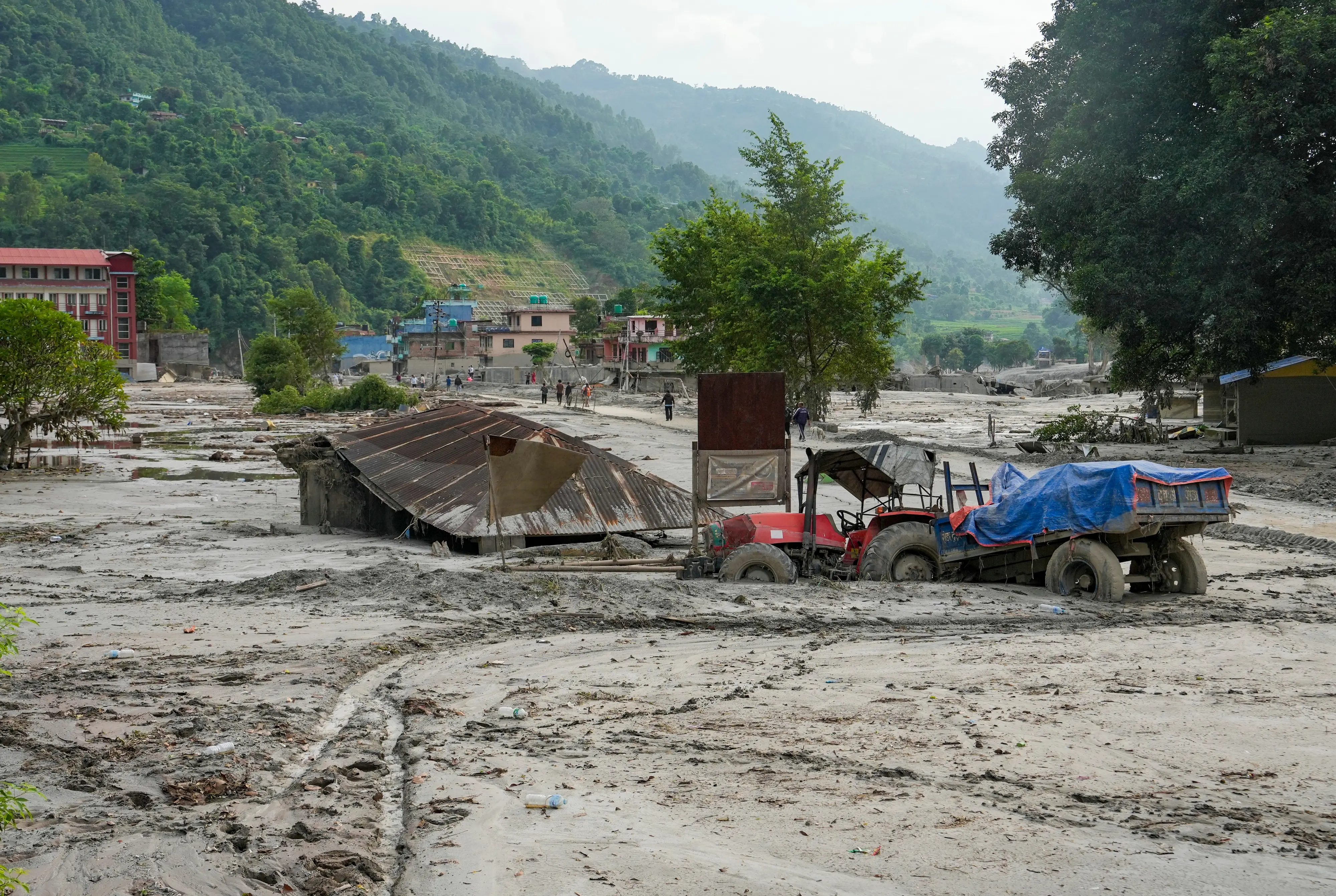
Kathmandu: Nepal has reversed its decision to keep foreign search-and-rescue teams out of flood-hit areas, allowing specialised assistance from India, China, Australia and South Korea as rescuers continue searching for hundreds of missing people.
The Nepal government has reversed its earlier decision to reject international search-and-rescue assistance in areas devastated by flash floods. The move came after pressure from countries whose nationals remain missing following the disaster.
Nepal had initially said its own rescuers were capable of handling search operations and that foreign rescue teams would not be permitted. Authorities have now agreed to accept specialised international assistance, particularly for tunnel rescues, DNA testing and forensic identification.
An inter-ministerial coordination committee approved assistance from India, China, Australia and South Korea following an assessment by Nepal's National Disaster Management Centre.
Hundreds remain missing
The flash floods devastated settlements along the Bhotekoshi and Trishuli rivers, destroying roads, bridges, buildings and other infrastructure.
Nepal's disaster authorities reported that the number of missing people had risen sharply, while hundreds of foreigners are among those unaccounted for. Indian nationals make up the largest group of missing foreigners, followed by citizens of the US, Ukraine, Australia and the UK.
The disaster was triggered after a glacier collapse sent a huge torrent of rock, ice, mud and debris through Himalayan river systems. At least 579 people were reported dead in Nepal, while seven deaths were reported in China's Tibet.
India offers rescue and medical teams
India has offered a tunnel rescue team, medical personnel and members of the National Disaster Response Force (NDRF).
Indian External Affairs Minister S Jaishankar also spoke to Nepal's Foreign Minister Shisir Khanal and reiterated India's offer of assistance. India has additionally sent humanitarian supplies, including portable generators, food packets, dignity kits and water purification tablets.
An 11-member team of doctors, paramedics and tunnel rescue specialists was also sent to Nepal with another tranche of relief supplies.
China reaches devastated border crossing
China and Nepal resumed rescue operations in the flood-hit Himalayan region on Friday. A 21-member Chinese rescue team, accompanied by a search-and-rescue dog, reached the badly damaged Gyirong border crossing after roads leading to the area were destroyed.
Chinese rescuers had to cross mountains and valleys and use ropes to navigate forests and cliffs. The team found the border complex largely destroyed by the flooding.
China has also been monitoring glacial lakes and other potential hazards in the region. A barrier lake upstream of the flood zone remains a concern, with authorities warning that further flooding could occur if water levels rise.
Rescue operations face continuing risks
Rescue efforts were temporarily suspended after a lake formed by the flooding began overflowing into the Lhende Khola and Trishuli rivers. The development triggered fresh warnings and forced rescuers to withdraw temporarily.
Operations resumed after the immediate threat eased. Nepali authorities continue to monitor two barrier lakes and have warned that flood risks could persist until they drain.
The disaster has affected more than 90,000 people, according to the Red Cross, while the United Nations and its partners are scaling up food, water and emergency assistance.
Families continue searching for missing relatives
The scale of the disaster has left families across several countries waiting for information about missing relatives. Many foreign nationals were in the region for trekking and pilgrimage trips when the floods struck.
At the same time, rescue teams have continued to find survivors. One eight-year-old boy who had been feared dead after his school was destroyed was found alive and later reunited with his mother.
Analysis: why Nepal changed its position
Nepal's reversal reflects the growing need for specialised expertise as the scale and complexity of the disaster became clearer. While domestic rescue agencies remain in charge, foreign teams can provide capabilities such as tunnel rescue, specialist medical support, DNA testing and forensic identification.
The presence of missing foreign nationals also increased diplomatic pressure on Kathmandu. India, China, the US, the UK, Japan, South Korea, Sri Lanka and Bangladesh had sought permission to deploy search-and-rescue teams.
The decision therefore represents a shift from Nepal's initial preference for handling the operation independently towards targeted international cooperation, while retaining control of the overall rescue effort.