Nvidia scandal reaches US Congress: Jensen Huang and Howard Lutnick asked to testify over China links
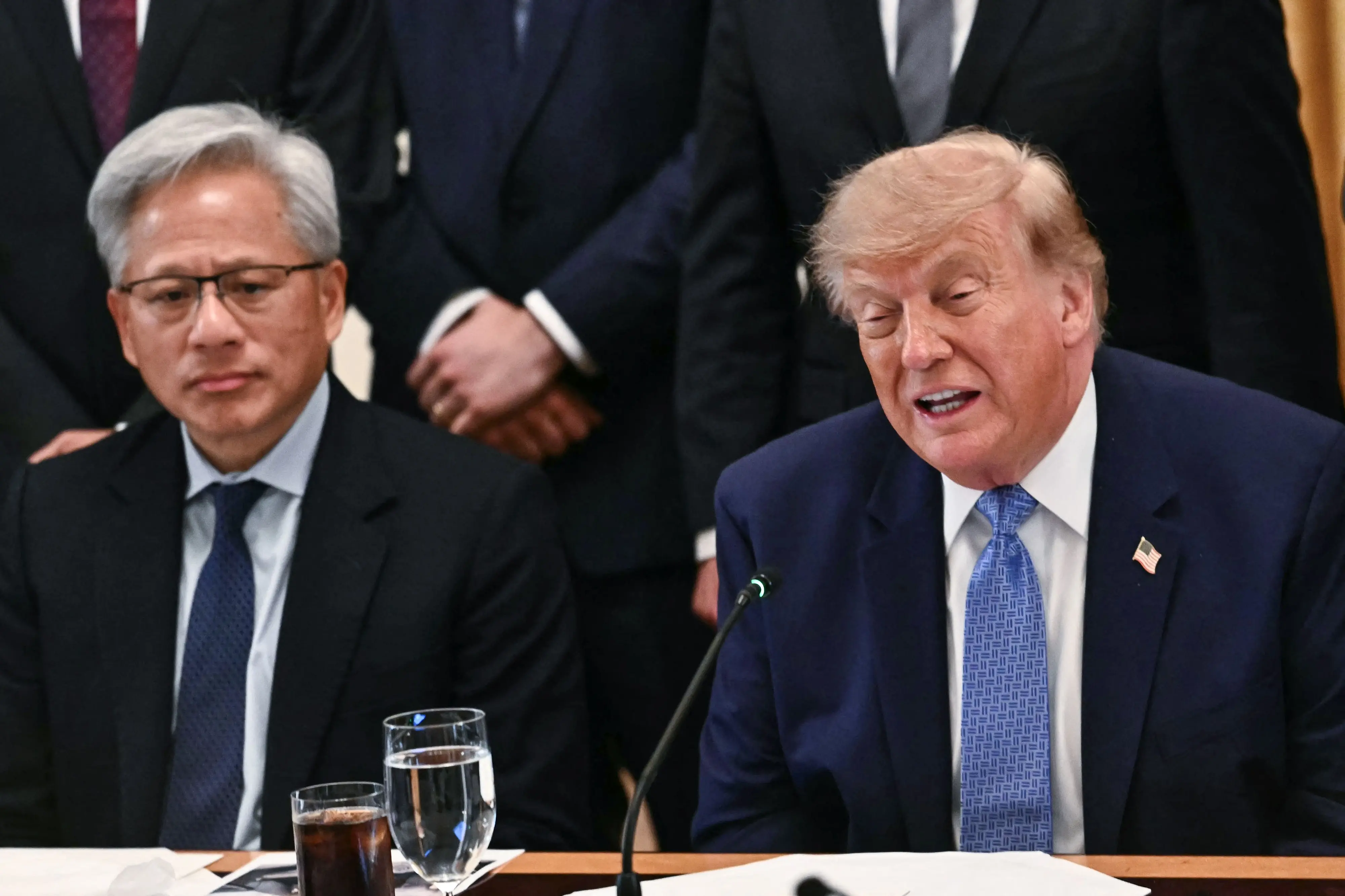
Washington DC: Former Nvidia chief executive Jensen Huang and US Commerce Secretary Howard Lutnick have been asked to testify before the US Senate Banking Committee in December amid growing questions about national security, alleged links to a suspected Chinese intelligence asset and the export of advanced artificial intelligence chips to China.
Senator Tim Scott, chairman of the Senate Banking Committee, sent letters to both men on Thursday requesting their appearance. Huang has been asked to testify voluntarily on December 3, with Scott warning that the committee could issue a subpoena if he does not comply.
The development follows Huang's abrupt departure from Nvidia, the company he co-founded and led for 33 years. His exit came after reports of alleged extramarital relationships, including one involving Alice Huang, a former executive at Singapore-based data centre company Megaspeed, who has been suspected by US intelligence of having links to China's Ministry of State Security.
The allegations have not been established. Beijing has rejected the claims, while US Attorney General Todd Blanche said the Department of Justice had not reached any conclusion about whether Alice Huang was involved in espionage.
Why are US lawmakers questioning Jensen Huang?
The Senate inquiry comes amid concerns about whether sensitive US technology could have been exposed to foreign intelligence interests.
In his post on X, Scott said: "Recent reports raise serious concerns about our national security and the protection of sensitive US technology."
He added that the American public deserved answers.
The Senate request is not the only congressional action involving Huang. Three House of Representatives committees dealing with intelligence, foreign affairs and China have also sought a closed-door interview with him on December 1, with the possibility of a subpoena.
The questions are expected to extend beyond Huang's personal relationships to the circumstances surrounding the suspected intelligence links and whether Nvidia technology or confidential company information could have been compromised.
Nvidia has said it has no reason to believe that national security or its trade secrets were compromised. The company's board has nevertheless opened an independent investigation into reports that Huang may have been the target of a foreign intelligence effort.
Who is Alice Huang and what are the allegations?
Alice Huang, who is not related to Jensen Huang, previously worked as an executive at Megaspeed, a Singapore-based data centre company.
Reports citing US intelligence assessments have alleged that she was an asset of China's Ministry of State Security. The allegations have not been independently established, and China has dismissed them as a smear.
Singapore's Home Ministry said Alice Huang was barred from re-entering the country in February after providing investigators with inaccurate information about her role at Megaspeed. However, Singapore said she was not investigated for espionage.
The controversy intensified after reports of a second alleged relationship involving Huang and Kimberly Powell, an Nvidia executive who reportedly worked closely with him. These claims have added to scrutiny within the company, although the reported relationships do not establish any wrongdoing involving the transfer of technology.
Why is Howard Lutnick also under scrutiny?
The Senate committee has also requested testimony from Commerce Secretary Howard Lutnick, whose role in regulating exports of advanced US technology to China has come under scrutiny.
Reports citing unnamed Trump administration officials have alleged that Lutnick delayed efforts to tighten restrictions on exports of advanced AI chips to China.
The issue is particularly significant because Nvidia's high-performance processors are central to the development and operation of advanced AI systems. US restrictions on their export are intended to limit China's access to technology considered strategically sensitive.
Lutnick has agreed to appear voluntarily before the Senate Banking Committee, according to a spokesperson for the Commerce Department.
His testimony could help lawmakers examine how export-control decisions were made, whether existing restrictions were adequately enforced and whether any attempts to divert restricted technology to China were identified.
Singapore has also said it repeatedly sought information from the US Justice Department and FBI during its investigation involving Megaspeed but received limited assistance. Malaysia, meanwhile, has announced an investigation into a Megaspeed subsidiary over the possible diversion of advanced AI chips to other countries.
Nvidia appoints Colette Kress as interim CEO
Huang's departure has created a major leadership transition at Nvidia at a time when the company occupies a central position in the global AI industry.
The company's board has appointed Chief Financial Officer Colette Kress as interim CEO while it searches for a permanent successor. Kress joined Nvidia in 2013 after working at companies including Cisco and Microsoft.
The board has also named former Synopsys chief executive Harvey Jones as its chair. It has said that the company's operations and product roadmap are expected to continue without interruption.
Huang remains one of Nvidia's largest individual shareholders, with a stake of approximately 3.6%, according to the company.
Nvidia's market value takes a hit
The controversy has unsettled investors, with Nvidia losing hundreds of billions of dollars in market value over the period covered by the reports.
Estimates of the decline have varied across reports, with figures of around $500 billion to $550 billion cited for the week. The fall comes after Nvidia's extraordinary rise during the global AI boom.
The company became one of the biggest beneficiaries of the surge in demand for AI computing following the launch of ChatGPT in 2022. Its processors, initially developed for video game graphics, became essential for training and running large AI models.
Huang had been one of the industry's most prominent advocates for artificial intelligence and an influential voice in discussions over US technology policy.
His departure therefore represents more than a change in corporate leadership. It has raised questions about Nvidia's governance, its exposure to geopolitical risks and the future of US-China competition in advanced computing.
Why the Nvidia controversy matters beyond Huang's personal life
The developments bring together three issues that are increasingly connected: corporate leadership, national security and the global competition over artificial intelligence.
1. The central question is whether sensitive technology was exposed
The allegations involving Alice Huang have attracted attention because of her reported links to a company operating in the data centre sector and suspicions raised by US intelligence. However, an alleged personal relationship does not establish espionage or the transfer of confidential technology.
The key issue for investigators and lawmakers is whether any sensitive information, intellectual property or restricted technology was accessed or diverted.
2. US-China tensions are shaping the investigation
Advanced AI chips have become a strategic asset in the technology rivalry between Washington and Beijing. The United States has imposed export restrictions on certain high-performance processors to limit China's access to computing capabilities that could have military and strategic applications.
Any suspected diversion of restricted chips therefore has implications beyond a single company. It raises questions about the effectiveness of export controls and the ability of US authorities to monitor international supply chains.
3. Lutnick's testimony could bring export policy under scrutiny
The Commerce Department plays a central role in administering US export controls. Allegations that Lutnick delayed tighter restrictions could prompt lawmakers to examine how decisions on chip exports were taken.
His appearance could also shed light on the administration's approach to balancing commercial interests, the technology industry's global business operations and national security concerns.
4. Nvidia faces a governance and confidence challenge
Huang's departure creates uncertainty at a company whose rise has been closely associated with its co-founder. Although Nvidia's board has said its operations and product roadmap will continue without interruption, the leadership change comes amid an independent investigation and questions from lawmakers.
The company's ability to maintain investor confidence will depend partly on how clearly it addresses the allegations and manages the transition.
5. Allegations must not be treated as established findings
Several important questions remain unanswered. US authorities have not established that Alice Huang was a Chinese intelligence operative, and Nvidia has said it has no reason to believe its secrets or national security were compromised.
The congressional hearings and investigations will be important in determining whether the controversy points to actual security failures or remains a matter of unproven allegations.
Ultimately, the issue extends beyond the departure of a high-profile technology executive. It places the security of AI supply chains, the enforcement of export restrictions and the accountability of major technology companies under renewed scrutiny.