Japan changes royal rules; but not enough for Princess Aiko to wear the crown
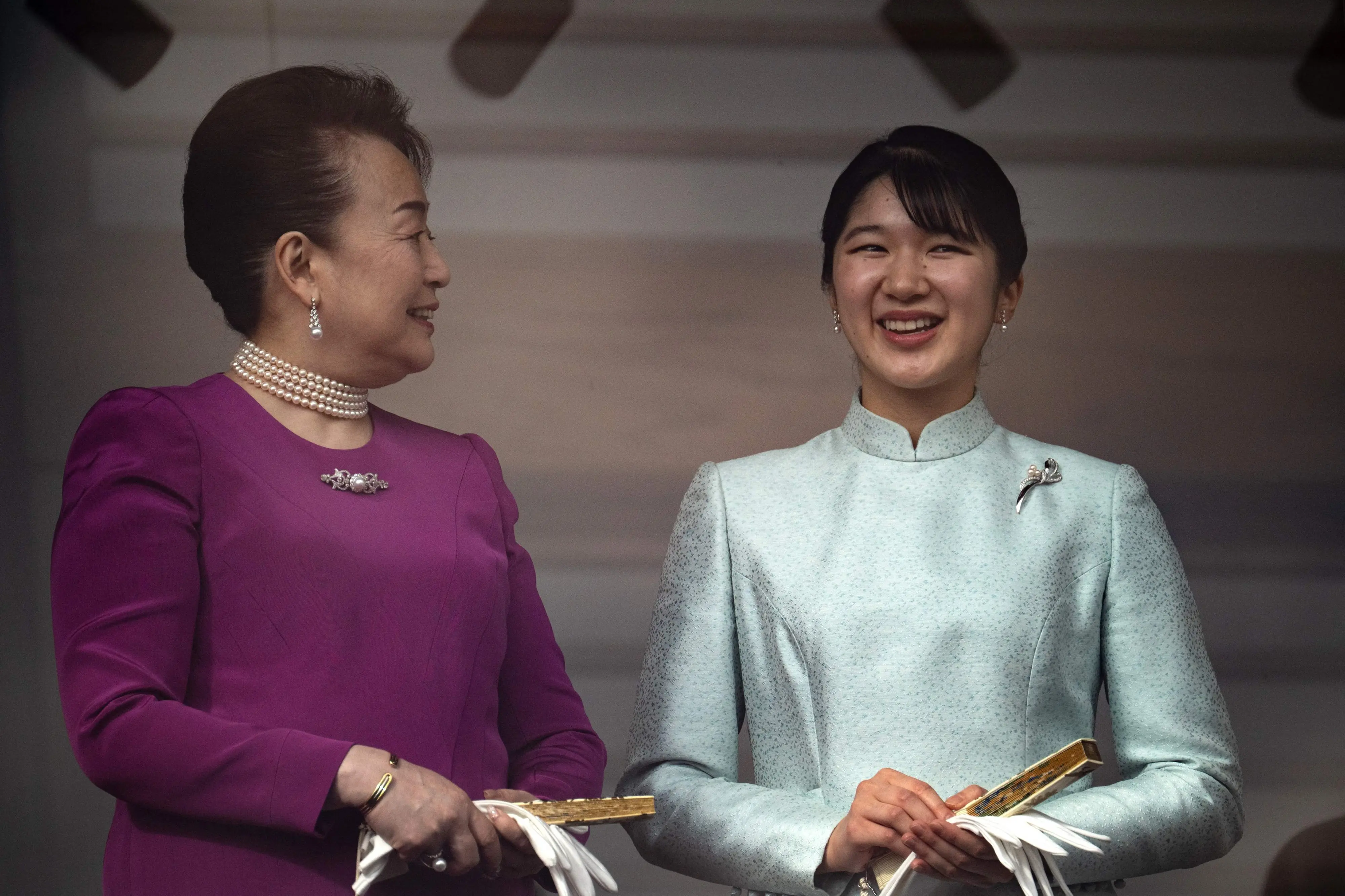
Tokyo: Japan's parliament on Friday approved revisions to the Imperial House Law aimed at addressing the country's shrinking royal family, but retained the long-standing rule that only men from the paternal imperial bloodline can ascend the Chrysanthemum Throne.
The legislation introduces measures to strengthen the imperial household without changing the male-only succession system, effectively keeping Princess Aiko—the only child of Emperor Naruhito—ineligible to become Japan's next monarch.
What changes under the new law?
The revised law introduces two key measures intended to address the declining number of royal family members.
First, unmarried male descendants from former imperial branch families who are at least 15 years old can be adopted back into the imperial household to preserve the male succession line.
Second, female members of the imperial family will now be allowed to retain their royal status after marrying commoners. Under the previous rules, women automatically lost their royal status upon marriage outside the imperial family.
However, while princesses may remain royals after marriage, they and any children born from those marriages will still not be eligible to inherit the throne.
Princess Aiko remains excluded
The legislation means Princess Aiko, 24, remains barred from becoming emperor despite her popularity among the Japanese public.
Under the current succession order, Emperor Naruhito's younger brother, Crown Prince Akishino, is first in line, followed by his 19-year-old son Prince Hisahito, who is currently the only young male heir in the imperial family.
If Prince Hisahito has no sons, concerns remain over the future continuity of the imperial bloodline.
Public opinion favours female succession
Recent opinion polls suggest most Japanese support allowing women to become emperor.
An Asahi Shimbun survey published in May found that 72 per cent of respondents backed changing the law to permit female succession.
Historians note that Japan has had eight female emperors in its history, although none passed the throne to their descendants. The current male-only succession requirement was formally established under the 1890 Imperial House Law and retained in the post-war 1947 legislation.
Critics question the reforms
Several experts and former members of Japan's imperial family criticised the new law.
Former imperial family member Asahiro Kuni questioned whether distant male relatives would willingly return to royal life.
He told Japanese media: "By the age of 15, a person has grown up breathing the air of freedom."
He added: "If they understood the hardships of life as a royal member, they probably wouldn't say such a thing." Political figures also criticised the exclusion of Princess Aiko.
Veteran Liberal Democratic Party lawmaker Seiichiro Murakami described the decision as: "Utterly outrageous."
Nagoya University monarchy expert Hideya Kawanishi said the legislation was designed to preserve the paternal bloodline at any cost.
He said: "It's a declaration to prevent female monarchs."
Prime minister's government backs male succession
The legislation follows months of debate within the ruling Liberal Democratic Party led by Prime Minister Sanae Takaichi, Japan's first woman prime minister.
Takaichi has consistently opposed allowing female emperors, arguing that maintaining the uninterrupted paternal bloodline is essential to preserving the legitimacy of the monarchy.
Japan's imperial family currently has just 16 members, of whom only five are male.
The ageing royal household has become an increasing concern as younger princesses marry and, under previous rules, leave the imperial family.
The new legislation seeks to slow that decline without altering the centuries-old male succession principle that continues to divide public opinion.