'Bibi or Tibi'? Netanyahu's old political slogan returns to haunt him after election
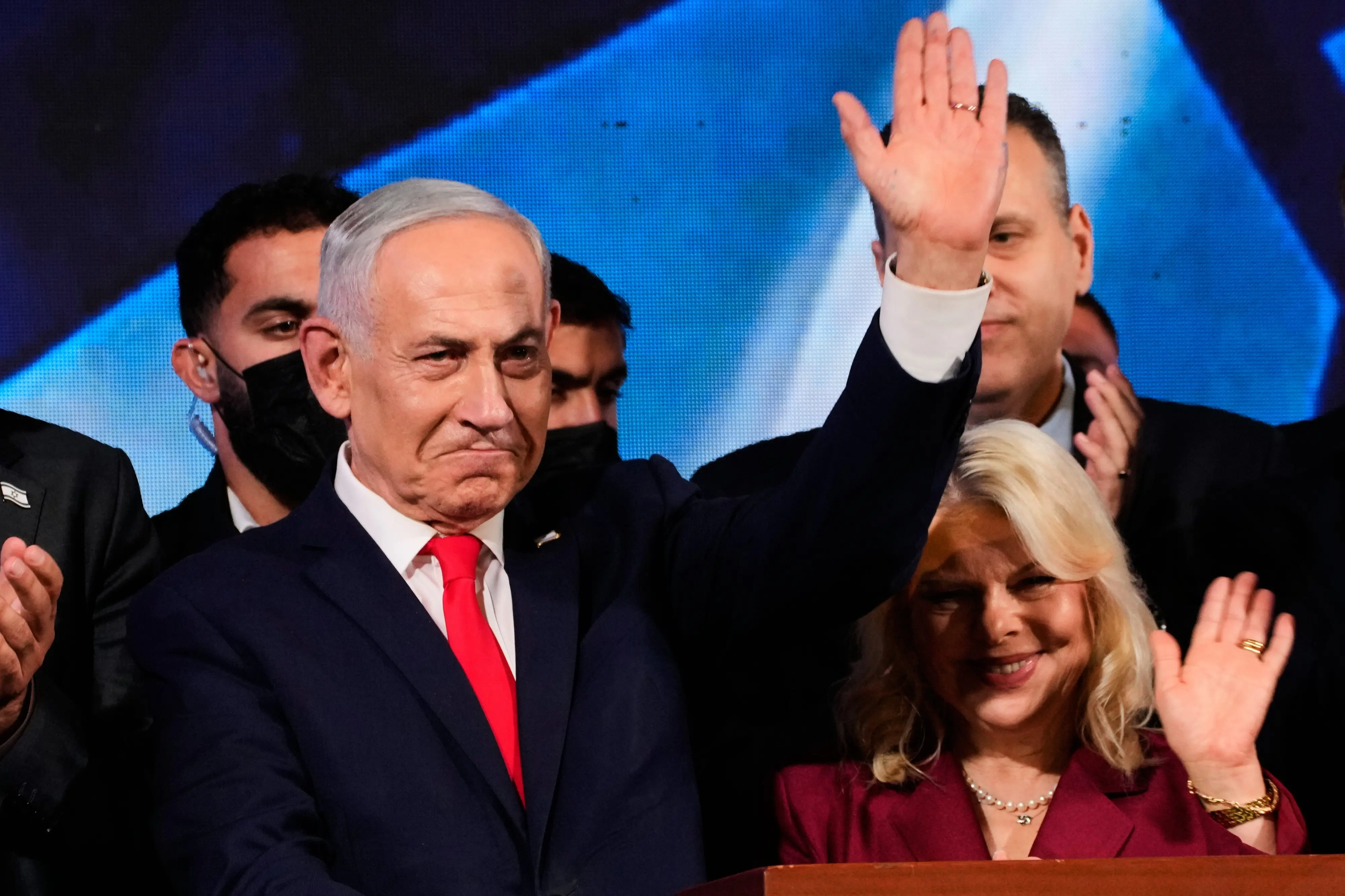
Jerusalem: Arab political parties in Israel have signalled their willingness to support a government led by opposition leader Gadi Eisenkot in an effort to end Benjamin Netanyahu's long rule.
Ahmad Tibi, a senior lawmaker from the Arab Joint List, told The Associated Press that his bloc was prepared to move beyond traditional political boundaries and cooperate with Jewish-led parties to remove Netanyahu's government.
"We want to do things that we did not do in the past in order to remove this criminal government," Tibi said.
The offer marks a significant shift in the political position of the Joint List, a coalition of three left-wing and nationalist parties that has historically remained outside Israeli governments.
Tibi said the alliance could support an anti-Netanyahu government without necessarily joining the administration. This arrangement could allow the opposition to secure parliamentary backing while avoiding some of the political difficulties associated with formally including Arab-led parties in the government.
Election results put Arab parties in a decisive position
The October 27 election has produced a fragmented parliament, with neither Netanyahu's coalition nor the opposition securing the 61 seats required for a majority in the 120-member Knesset.
According to the reported results:
- Netanyahu's coalition secured 53 seats.
- Gadi Eisenkot's opposition bloc won 48 seats.
- The Arab Joint List secured 11 seats.
- Ra'am, another Arab-led party, won eight seats.
Together, the two Arab-led political groups hold 19 seats, making them potentially decisive in determining which side forms the next government.
The Joint List could help Eisenkot's bloc by voting in favour of its government or abstaining during a confidence vote, depending on the parliamentary arrangement.
However, the opposition itself remains divided over whether it should accept support from parties that challenge Israel's identity as a Jewish state.
Netanyahu loses an important ally
Netanyahu has also suffered a setback after United Torah Judaism, an ultra-Orthodox Jewish party that has traditionally supported him, declined to recommend him for another term as prime minister.
During consultations with President Isaac Herzog on Thursday, the party said it would not recommend any member of parliament to form the next government.
United Torah Judaism holds seven seats in the new Knesset. Although it has not formally backed Eisenkot, its decision weakens Netanyahu's ability to rely on the same political alliances that helped sustain his previous governments.
The party has historically supported Netanyahu in exchange for political backing on issues concerning ultra-Orthodox religious students, particularly exemptions from compulsory military service.
However, opposition parties have demanded an end to these exemptions, arguing that military service responsibilities should be shared more equally as Israeli reservists continue to serve during the wars in Gaza, Lebanon and Iran.
The party's position could therefore reflect an attempt to negotiate better terms with whichever political bloc eventually forms the government.
Why accepting Arab support is difficult for the opposition
Despite the parliamentary numbers, cooperation with Arab-led parties presents a significant political challenge for Eisenkot.
Some members of his opposition alliance support working with Arab lawmakers, while others oppose the idea, citing statements by Joint List leaders that they believe question Israel's legitimacy or fail to adequately condemn its enemies.
Eisenkot has also indicated that Arab-led parties must meet certain conditions before becoming partners in a government. These include recognising Hamas as a terrorist organisation and supporting its destruction.
The Joint List and Ra'am have condemned the Hamas-led October 7, 2023, attack and violence against civilians. However, they have refused to label Hamas a terrorist organisation or endorse calls for its destruction, arguing that such positions could be used to justify Israel's military campaign in Gaza.
Tibi has maintained that the Joint List's proposed outside support should not be subject to the same conditions as formal participation in the government.
He also acknowledged that an alliance with Eisenkot would not necessarily end Israel's wars or bring about the creation of a Palestinian state.
Instead, he described the proposed administration as a government focused on repairing Israel's political system and improving the lives of Palestinian citizens.
Who are Israel's Arab citizens and why does their political role matter?
Arab citizens make up approximately 20 per cent of Israel's population. Many are descendants of Palestinians who remained within Israel's borders after the 1948 war surrounding the country's establishment.
They have Israeli citizenship and the right to vote, but Arab-led political parties have historically faced resistance from several mainstream Jewish political groups.
The Joint List opposes what it describes as Israel's racist Zionist political consensus and supports equal rights for all citizens. It also advocates a Palestinian state in the West Bank, Gaza and east Jerusalem, territories occupied by Israel in the 1967 Middle East war.
Only one Arab party, Ra'am, has previously participated in an Israeli government, joining a coalition in 2021. Its participation was significant because it broke a long-standing political barrier, although the party adopted a more conciliatory approach than the Joint List.
The current election results have given Arab political parties considerably greater influence over government formation.
What happens next?
President Isaac Herzog is holding consultations with political parties before deciding which member of parliament should receive the mandate to form the next government.
The president generally considers which candidate has secured the support of the largest number of lawmakers.
Eisenkot is currently considered likely to receive the first opportunity because of the weakening support for Netanyahu, although neither bloc has secured a majority.
Once given the mandate, the designated lawmaker will have 28 days to form a government, with a possible 14-day extension.
If the attempt fails, Herzog can assign the responsibility to another lawmaker.
For now, the key question is whether Eisenkot can bring together a sufficiently broad coalition without alienating opposition partners who reject cooperation with the Arab parties.