‘Stolen by Arab parties’: Netanyahu alleges election fraud as Israel vote hangs in balance
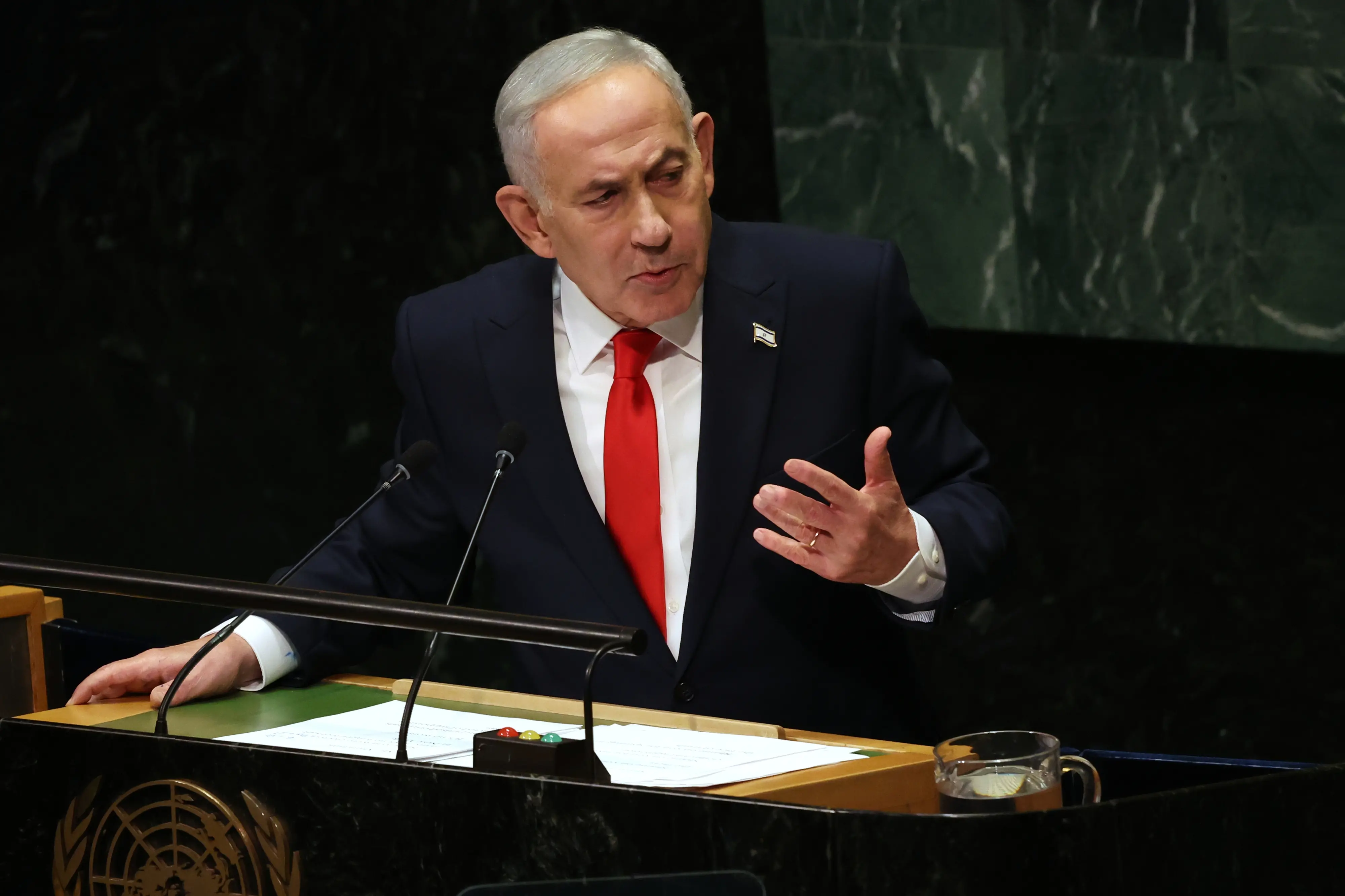
Jerusalem: Israeli Prime Minister Benjamin Netanyahu's Likud party has alleged widespread electoral malpractice by Arab parties, claiming that bribery, threats, violence and other irregularities compromised the integrity of Israel's election. The party has called for an investigation and said it submitted hundreds of testimonies and pieces of evidence to the police, the Shin Bet domestic security agency and the Central Elections Committee.
The allegations emerged as preliminary election projections indicated that Netanyahu's right-wing bloc had secured 53 seats in the 120-member Knesset, below the 61 required to form a majority government. The opposition bloc led by Gadi Eisenkot was projected to hold 48 seats, while Arab parties were projected to win 19 seats.
In a statement shared by Netanyahu, Likud claimed: “The elections in the State of Israel were stolen by Arab parties that support terrorism and the elimination of the Jewish state through serious criminal offences of bribery, threats, violence, forgeries, and the use of prohibited software to mobilise voters.”
These are allegations made by Likud and have not been established as proven findings in the information provided.
Likud alleges irregularities at Arab polling stations
Likud said it was transferring evidence of suspected electoral malpractice to the police, Shin Bet and the Central Elections Committee. The party alleged that irregularities included cash found alongside Ra'am party slips, threats against polling station officials, multiple voting, the use of double identities and discrepancies between the number of ballot envelopes and registered voters.
The party also alleged the use of prohibited software to mobilise voters. No independent confirmation of the allegations was provided in the report.
The claims come amid a closely contested election in which the distribution of seats among right-wing, opposition and Arab-led parties could determine the next government.
Netanyahu's bloc falls short of majority
With around 90% of votes counted, projections cited by Israeli media placed Netanyahu's bloc at 53 seats, compared with 48 for the opposition bloc led by Gadi Eisenkot. Arab-led parties were projected to secure 19 seats combined, potentially giving them a decisive role in coalition negotiations.
A majority in Israel's 120-member Knesset requires 61 seats. Although Likud appeared to be the largest individual party, Netanyahu's bloc remained eight seats short of the threshold.
The opposition bloc could potentially assemble a majority with the support of Arab-led parties. However, cooperation remains politically contentious, with several Jewish-led opposition parties having ruled out joining a government dependent on Arab parties.
Gadi Eisenkot calls election a rejection of Netanyahu
Eisenkot described the result as a rejection of Netanyahu's government and pledged to pursue political change.
“This is the will of the people, who expressed no confidence in the government of October 7 and draft evasion, and in the draft-dodgers' bloc as a whole,” Eisenkot wrote on X.
He also said his camp would continue working towards forming a government, adding that its objective was to establish a Zionist administration committed to military conscription.
Meanwhile, Yair Golan, leader of the left-wing Democrats party, said he intended to meet opposition leaders to discuss possible government formation. Golan has publicly supported the possibility of including Arab parties in a coalition, setting him apart from several other opposition figures.
“I hope to meet with all of them by Sunday,” Golan said in an interview with Channel 12, according to The Times of Israel.
He said the opposition shared an overarching mission to bring hope to Israelis and argued that a new administration was needed to address security challenges, halt the government's judicial overhaul and restore confidence among younger citizens.
Election authorities' position on fraud allegations
The allegations made by Likud have not been established as fact. A report published by Anadolu Agency on October 29, citing The Times of Israel, said Israeli police had found no evidence supporting the party's claims of widespread electoral fraud. The Central Elections Committee had confirmed receiving the complaint and was examining it as part of its review of election-integrity complaints.
The distinction is significant because allegations of individual irregularities do not, by themselves, demonstrate systematic manipulation of an election. The claims will need to be assessed against evidence and the findings of the relevant authorities.
What happens next in Israel's election?
The final parliamentary distribution depends on the completion of vote counting, including special ballots cast by soldiers, diplomats, prisoners and other eligible voters who vote through a double-envelope process. These ballots are checked separately to prevent duplicate voting.
Once the official results are confirmed, President Isaac Herzog is expected to consult political parties and designate the leader considered best placed to form a government. Coalition negotiations could take weeks, and a failure to secure sufficient parliamentary support could lead to another election.
Why Arab parties matter in Israel's election
The election has produced a fragmented Knesset in which neither Netanyahu's right-wing bloc nor Eisenkot's opposition bloc has secured the seats required for a majority on its own.
The projected 19 seats for Arab-led parties could give them considerable bargaining power. However, their combined numbers do not automatically translate into a viable governing coalition because political differences and opposition to cooperation with Arab parties complicate negotiations.
The result also reflects broader divisions in Israeli politics over national security, military-service exemptions for ultra-Orthodox communities, the government's handling of the October 7, 2023, Hamas attack and judicial reform. The election was the first since that attack and the subsequent regional conflict, making Netanyahu's leadership a central issue in the campaign.
For Netanyahu, remaining the leader of the largest bloc could give him an initial opportunity to form a government, but the seat count means that securing sufficient parliamentary support remains a challenge. For the opposition, bringing together Jewish-led and Arab-led parties could offer a route to a majority, but political disagreements could prevent that combination from becoming a governing alliance.