Six months after war; Iran stronger, Israel isolated as US fails to reshape West Asia
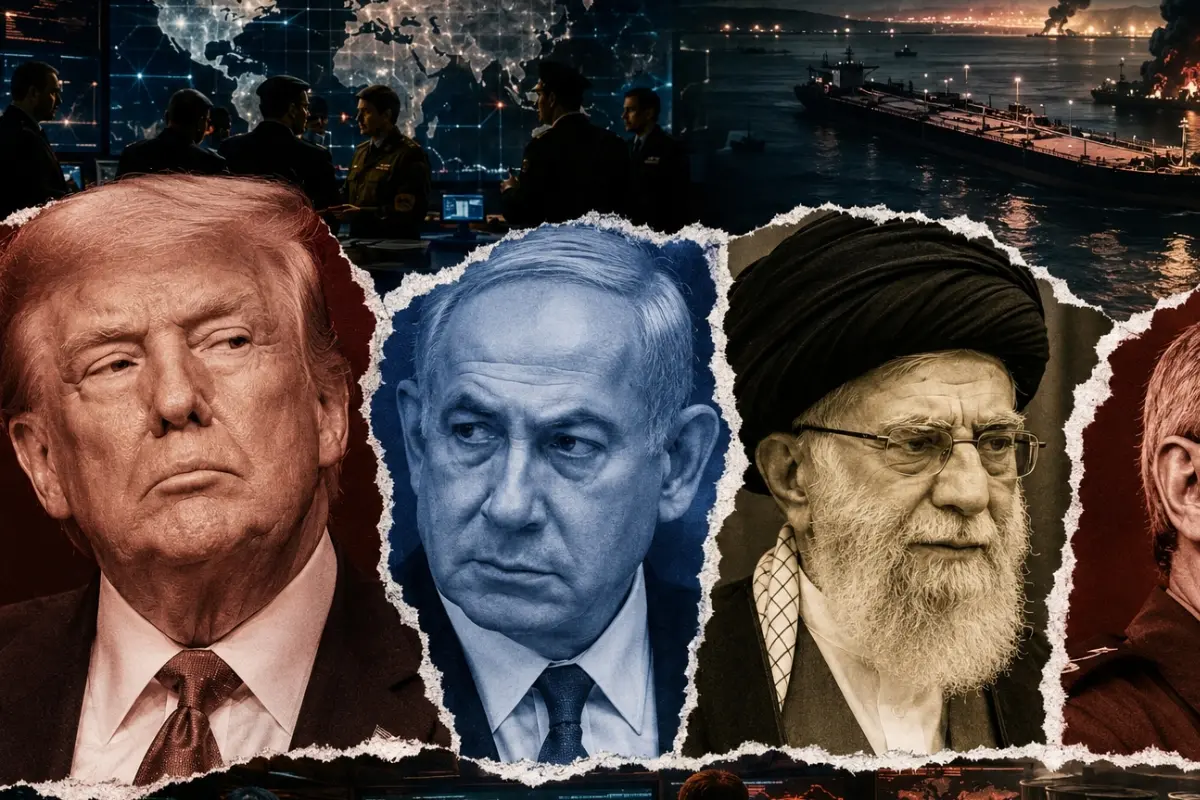
The US and Israeli campaign against Iran was intended to weaken Tehran's leadership and reshape West Asia. Six months later, Iran has survived the assault, tightened its grip and gained new leverage, while Gulf states are reassessing their dependence on Washington and Israel faces growing regional and international isolation.
When the US and Israel launched their campaign against Iran on February 28, the objective was to put intense pressure on Tehran's ruling system and encourage political change.
Iran was already facing significant internal and external pressure. Its economy was struggling, its currency had weakened sharply and anti-government protests had been violently suppressed. Its military and regional allies had also suffered losses in earlier conflicts.
But the strikes did not produce the political collapse Washington and Jerusalem had hoped for.
Iran's leadership survived the killing of senior officials and weeks of intense bombing. Rather than triggering another uprising, the attacks appear to have hardened the government's position.
Former US diplomat Barbara Leaf described the result as a “hardened and very radical regime”, arguing that Tehran had gained confidence in its ability to survive and influence the regional balance.
Strait of Hormuz becomes Iran's biggest leverage
One of the biggest consequences of the conflict has been Iran's use of the Strait of Hormuz as a strategic pressure point.
The narrow waterway is a crucial route for global oil and gas shipments. Iran's ability to disrupt traffic through the strait has given Tehran significant leverage over its neighbours and the wider global economy.
The conflict also saw Iranian attacks on Gulf states hosting US forces, raising concerns among regional governments that they could become targets in a wider confrontation.
Iran is now seeking greater control over the strait while refusing to make major concessions on its nuclear programme.
Analysts, however, caution that prolonged disruption could also hurt Iran's neighbours, China and the global economy, while encouraging countries to develop alternative trade routes.
Gulf states question US security guarantees
The conflict has also shaken confidence among America's traditional Gulf partners.
For decades, Washington's military presence in the region has helped protect Gulf energy infrastructure and deter threats. But the latest conflict exposed concerns about whether US protection would be sufficient if regional tensions escalate further.
Iran targeted US military positions and critical infrastructure in Gulf countries, putting additional pressure on air-defence systems and American interceptor supplies.
Attacks on desalination facilities also highlighted a particularly serious vulnerability for Gulf states: water and electricity infrastructure could become targets during a broader regional war.
Gulf governments therefore face a difficult calculation. They continue to rely heavily on American military and security networks, but are increasingly exploring additional partnerships.
Saudi Arabia's defence arrangements with Pakistan and Turkiye have been cited as one indication of this diversification.
Israel gains militarily but faces political costs
Israel emerged from the conflict with significant military gains, but the wider political consequences have been more complicated.
The conflict brought renewed confrontation with Iran-backed Hezbollah in Lebanon and contributed to further Israeli military operations there.
At the same time, Israel has faced growing international criticism over the war in Gaza and increasing debate in the United States about its relationship with Washington.
The political strain has affected support for Israel among parts of the American public and political establishment, while critics have argued that Israel's actions contributed to the US becoming further involved in another Middle Eastern conflict.
Saudi-Israel normalisation becomes harder
The changing regional environment has also complicated the possibility of Saudi Arabia establishing formal relations with Israel.
Saudi officials have increasingly viewed the continuing conflicts since October 7, 2023, and the policies of the current Israeli leadership as contributing to regional instability.
As a result, the diplomatic conditions required for Saudi-Israeli normalisation have become more difficult.
A changed West Asia
Six months after the US-Israel offensive, the regional picture is markedly different from what its architects intended.
Iran's leadership remains in power and has emerged more entrenched. Tehran has demonstrated that it can use the Strait of Hormuz and its regional capabilities to impose costs on its opponents.
Meanwhile, Gulf states are reassessing the risks of depending entirely on Washington for security, even though the US remains central to their defence networks.
Israel retains substantial military capabilities but faces higher diplomatic and political costs.
The result is a West Asia in which the military campaign altered the balance of power without delivering the regime change or regional realignment that the US and Israel initially sought.