‘Western dominance is fading’: Why Iran claims world is moving towards multipolar era
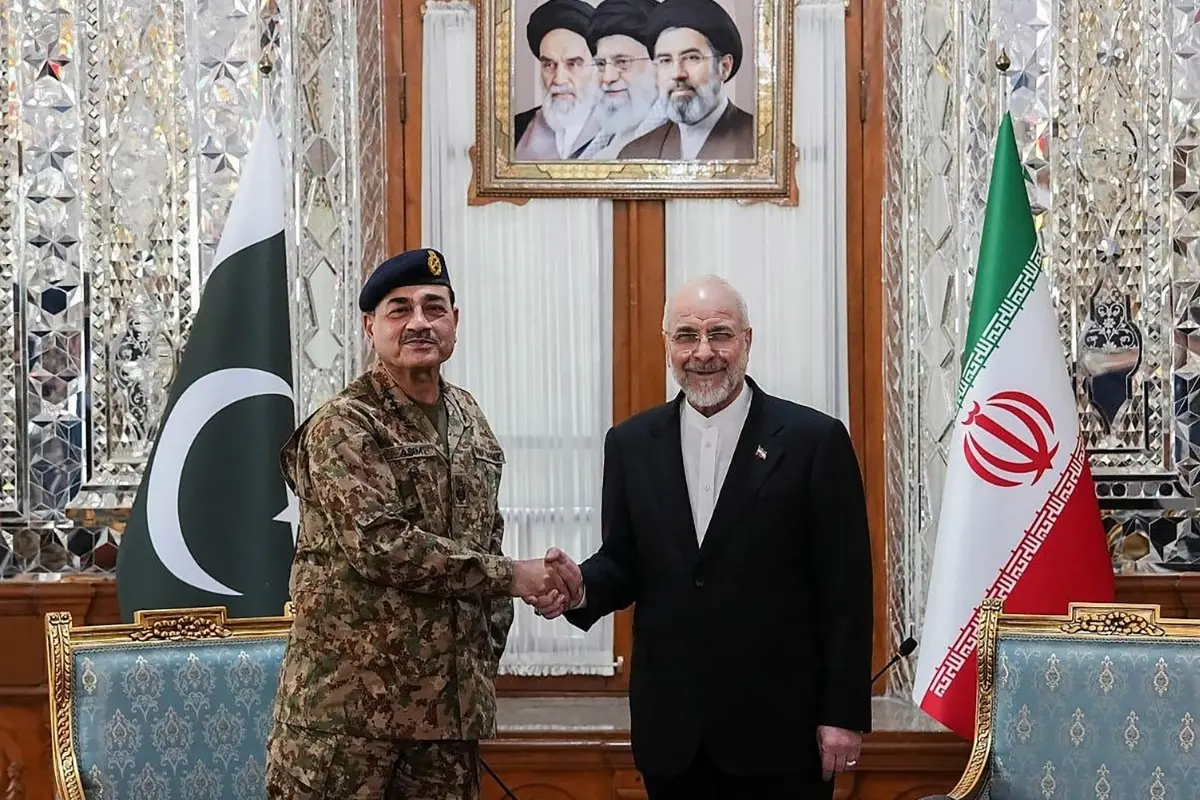
Tehran: Iranian Parliament Speaker Mohammad Bagher Ghalibaf has declared that the world is moving towards a “new order” led by countries of the Global South, claiming that the dominance of Western powers is gradually weakening amid shifting geopolitical alliances and ongoing global conflicts.
In a statement posted on X on Sunday, Ghalibaf said the international system was witnessing “a transformation unseen in a century”, echoing remarks recently made by Chinese President Xi Jinping during high-level discussions with US President Donald Trump.
“The world stands at the cusp of a new order,” Ghalibaf wrote, adding that Iran’s recent “70-day resistance” against military and economic pressure from the United States and Israel had accelerated the global transition. He further claimed that “the future belongs to the Global South”.
Iran links resistance to global power shift
The Iranian leader’s remarks come at a time of heightened tensions across West Asia, particularly following continued military exchanges involving Iran, Israel, and US-backed regional operations. Iranian officials have increasingly portrayed the conflict as part of a broader struggle against what they describe as Western political and economic dominance.
Iranian state media also amplified Ghalibaf’s statement, describing Iran’s resistance as evidence of the “fragility” of the existing US-led global order. According to Iranian reports, Tehran believes many developing nations in Asia, Africa, and Latin America are increasingly seeking alternatives to Western influence, sanctions, and military intervention.
The comments are being viewed as part of Iran’s broader diplomatic strategy to strengthen ties with emerging powers such as China and Russia while deepening engagement with BRICS nations and other Global South economies.
Xi Jinping’s remarks gain global attention
Ghalibaf’s statement closely followed comments made by Xi Jinping during his recent interaction with Donald Trump in Beijing. Xi had warned that the world was undergoing historic geopolitical changes and described the current international situation as “fluid and turbulent”.
“The transformation unseen in a century is accelerating across the globe,” Xi said during the meeting, while also raising concerns over increasing rivalry between major powers.
Xi also referred to the concept of the “Thucydides Trap”, a geopolitical theory that suggests conflict often emerges when a rising power challenges an established global power. Analysts believe the reference reflected growing strategic competition between China and the United States over trade, technology, Taiwan, and global influence.
Growing Global South narrative
The term “Global South” is commonly used to describe developing and emerging economies across Asia, Africa, Latin America, and parts of the Middle East. In recent years, several countries within this bloc have pushed for a more multipolar world order, arguing that global institutions and economic systems have long been dominated by Western powers.
Iran has increasingly aligned itself with this narrative, particularly after joining the BRICS grouping and strengthening economic partnerships with China and Russia amid continuing Western sanctions.
Political observers say Tehran’s messaging also reflects broader shifts in global diplomacy, where countries outside traditional Western alliances are seeking greater influence over trade, energy, security, and international governance.
West Asia conflict and global uncertainty
The remarks also come amid ongoing instability in West Asia, including tensions surrounding the Strait of Hormuz, continued Israel-Hezbollah exchanges, and wider concerns over energy security and international shipping routes.
Iranian leaders have repeatedly accused Western countries of fuelling instability in the region, while the United States and its allies continue to criticise Tehran over its nuclear programme, regional activities, and support for armed groups.
Despite the sharp rhetoric, analysts note that many countries are attempting to balance relations between the West and emerging powers rather than fully aligning with either side. However, statements such as Ghalibaf’s highlight how global political narratives are increasingly shifting towards discussions about multipolarity and the redistribution of geopolitical influence.
The developments are likely to intensify international debate over the future balance of power as major economies navigate growing tensions, economic competition, military conflicts, and changing diplomatic alliances across multiple regions.