Indian scholar Badar Khan Suri's deportation case in US takes new turn
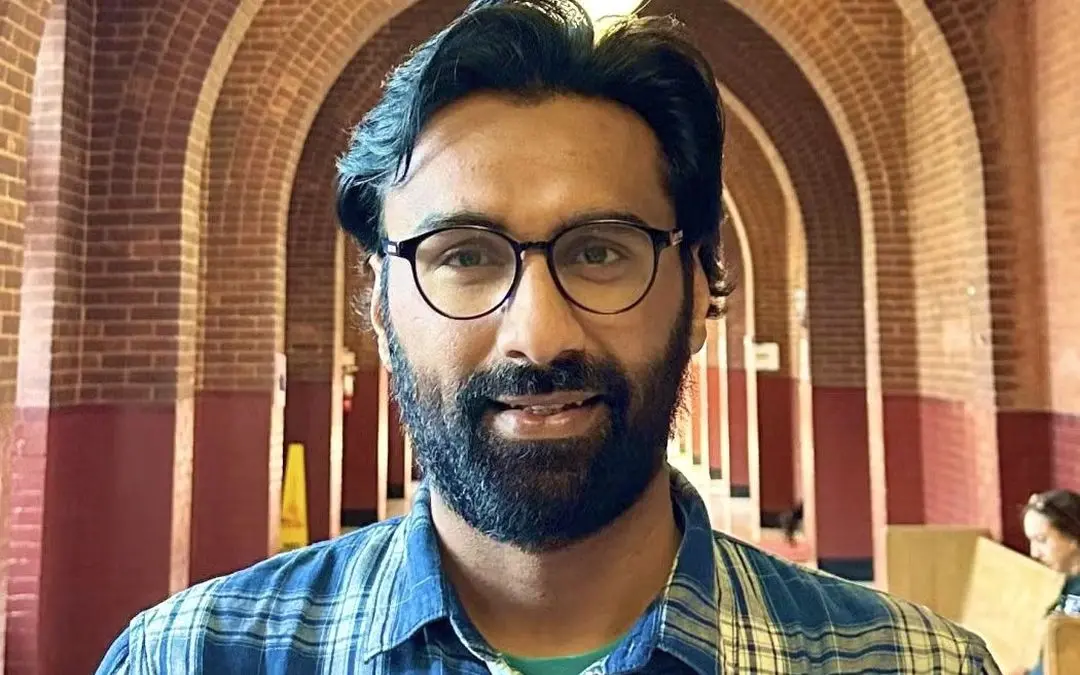
The Donald Trump administration has urged a federal judge to transfer a lawsuit filed by a Georgetown scholar challenging his deportation from Virginia to Texas, where he is currently detained on accusations of "spreading Hamas propaganda."
United States District Judge Patricia Tolliver Giles expressed skepticism regarding the government's request, which would necessitate dismissing the case in her Virginia court. She voiced concerns that such a dismissal could nullify her previous order in March, which mandated that Badar Khan Suri, an Indian citizen, remain in the United States while his First Amendment legal challenge proceeds.
Khan Suri, an Indian national who arrived in the US in 2022 on a J-1 visa and worked as a visiting scholar and postdoctoral fellow at Georgetown University, shares three children -- a 9-year-old son and 5-year-old twins -- with his wife, Mapheze Saleh.
Justice Department attorney David Byerley acknowledged Judge Giles' concerns, stating he would need to consult with US Immigration and Customs Enforcement (ICE). While Byerley expressed his belief that ICE would honour the judge's order against Khan Suri's deportation during the refiling process in a Texas federal court, Judge Giles responded with reservation, stating, "OK...I'm not going to rely on that. But thank you."
In a pre-hearing court filing, US attorneys contended that Khan Suri's legal team filed the lawsuit in Virginia after he had already been moved out of the state. They argued that transferring the case to a Texas federal court represented a "relatively straightforward application of well-settled law." The Trump administration explained that Khan Suri's swift transfer from a facility in Farmville, Virginia, to detention centers in Louisiana and then Texas was due to overcrowding.
However, Judge Giles appeared unconvinced by the government's overcrowding claim during the Thursday hearing. She directed the US government to provide specific details regarding the number of available beds in the Farmville facility at the time of Khan Suri's arrest and the number of individuals transferred due to overcrowding.
Attorneys from the American Civil Liberties Union (ACLU), representing Khan Suri, informed the court that their client was forced to sleep on the floor of an overcrowded detention center in Texas for at least the initial weeks of his detention. They noted that he is currently housed in his own cell in Texas.
Khan Suri's legal team argued that the true motivation behind his transfer to Texas was to bring the case before a judge perceived as more conservative. Attorney Vishal Agraharkar accused the government of "forum shopping," a practice of seeking a court likely to rule in one's favor.
The ACLU highlighted the contrasting political leanings of the courts involved. Unlike the US District Court in Alexandria, Virginia, the federal district courts in Texas and western Louisiana have a majority of judges appointed by Republican presidents.
Appeals from these courts would be heard by the 5th US Circuit Court of Appeals, known for its conservative composition, with twelve of its seventeen full-time judges having been appointed by Republican presidents.
Echoing Agraharkar's statements, another attorney for Khan Suri, Hassan Ahmad, commented outside the courtroom, "There is a reason why the detention facilities exist there... This kind of rigged game has to stop."
Khan Suri's lawsuit was initiated shortly after his arrest on March 17th by masked, plain-clothed officers outside his Arlington, Virginia, apartment complex. His attorneys assert that his arrest and detention were unconstitutional, stemming from his wife's family connections in Gaza.
They argue that Khan Suri and his wife, Mapheze Saleh, have been targeted due to Saleh's father's past employment with the Hamas-backed Gazan government, a period ending before Hamas's attack on Israel on October 7, 2023. The ACLU emphasized that Khan Suri had minimal acquaintance with his wife's father, Ahmed Yousef.
Conversely, the US government maintains that Khan Suri has "undisputed family ties" to Hamas, which they allege Khan Suri "euphemistically refers to as the government of Gaza.'" Khan Suri's arrest also reportedly stems from his social media posts concerning the war in Gaza, where he expressed support for the Palestinian people.
Homeland Security Assistant Secretary Tricia McLaughlin stated on social media that Khan Suri was accused of "spreading Hamas propaganda and promoting antisemitism on social media" and deemed deportable. The ACLU contends that arrests based on such grounds violate his First Amendment rights.
Court records indicate that prior to his arrest, Khan Suri taught a university course on majority and minority human rights in South Asia and aspired to a career in academia and teaching as a university professor.