‘I have 200 messages saying you won Nobel Prize’: How this year’s winners found out they’d made history
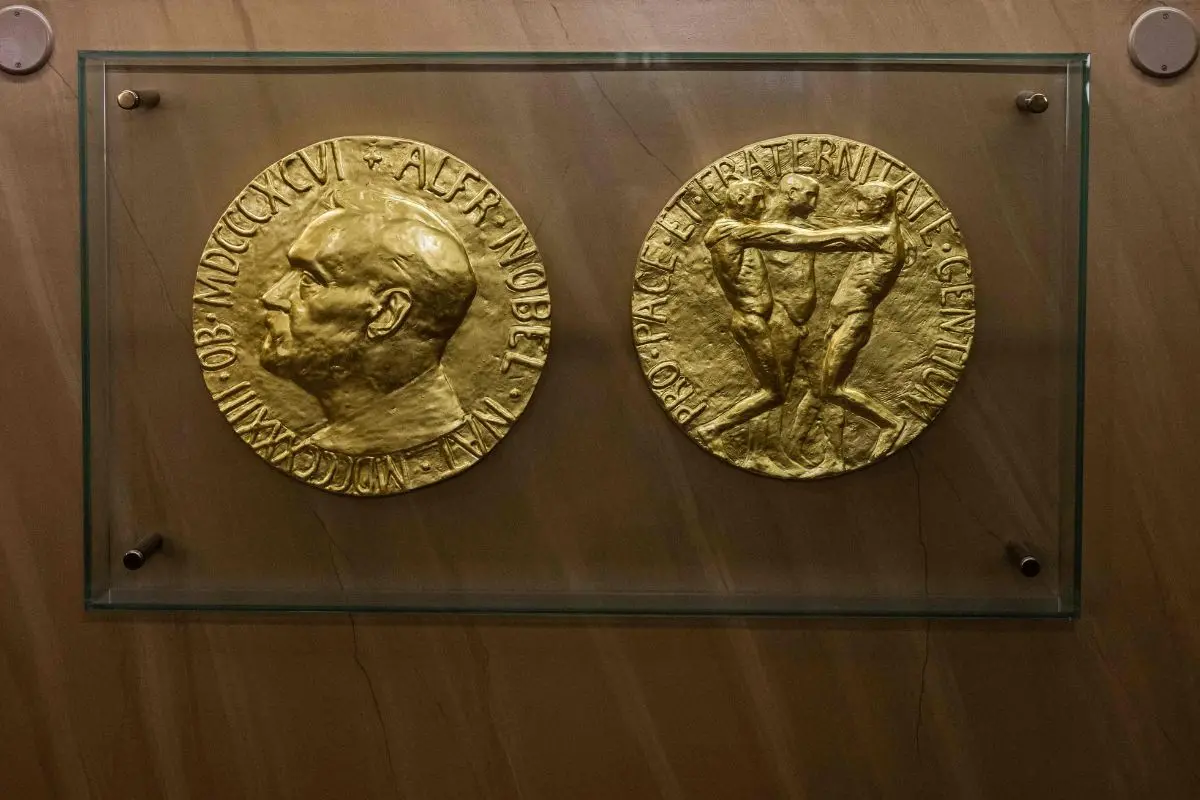
For many Nobel Prize winners, the moment of recognition arrives in an unexpected way; a phone call before sunrise, a knock on the door, or, in one case, a flurry of text messages after hours without mobile service.
The annual Nobel announcements, made from Stockholm, continue to hold an air of surprise and excitement, even for scientists who have waited decades for their discoveries to be recognised.
What makes the Nobel Prize so special?
The Nobel Prizes are among the world’s most respected honours, celebrating achievements in medicine, physics, chemistry, literature, economics, and peace. Over the decades, laureates have joined a distinguished list that includes Albert Einstein and Mother Teresa.
Some winners anticipate the call, staying awake through the night or preparing for press conferences in advance. Others, often scientists whose work has quietly shaped their field, are caught off guard. While famous figures such as former US President Barack Obama and singer-songwriter Bob Dylan have once claimed Nobel honours, most recipients in the sciences remain relatively unknown until their names are announced.
This year, five of the nine science winners were in the United States when the news broke, many still asleep. In Japan, two winners were already at work when a call from Sweden appeared on their phone screens. One even mistook it for a telemarketing attempt.
A knock at the door in Seattle
On Monday morning, a photographer knocked on the door of Mary E Brunkow’s Seattle home. It was Brunkow’s dog, Zelda, who heard it first and started barking, waking her husband, Ross Colquhoun.
“I don’t think he really knew what I was there for,” the photographer recalled. “And I said, ‘You know, sir, I think your wife just won the Nobel Prize.’”
The photos later captured Colquhoun waking Brunkow to deliver the life-changing news: she was one of three scientists awarded the 2025 Nobel Prize in Medicine.
“Don’t be ridiculous,” Brunkow told her husband. But it was true. Two decades ago, she and her colleagues had discovered a key mechanism that helps the body regulate the immune system, known as peripheral immune tolerance. Experts have since described their findings as crucial for understanding autoimmune conditions like Type 1 diabetes, rheumatoid arthritis, and lupus.
A sleepy morning in California
On Tuesday, photographers arrived at the Santa Barbara home of physicist John Martinis before sunrise. His wife, Jean, answered the door and politely asked them to return later as her husband was still asleep.
“For many years, we would stay up on the night the physics award was announced,” she said. “At some point we just decided, that’s nuts. We’ll figure it out if it’s happening, but let’s just get our sleep.”
Laughing, she added, “I was trying to think how I can introduce this. Like, ‘Do you think you should plan a trip to Sweden?’”
She finally woke Martinis around 6 am. local time (1300 GMT), telling him only that the media wanted an interview.
“I kind of knew that the Nobel Prize announcements were this week, so I put two and two together,” Martinis said later. “I opened my computer and looked under Nobel Prize 2025 and saw my picture along with Michel Devoret and John Clarke. So I was kind of in shock.”
Martinis, Devoret and Clarke won the physics prize for their pioneering research on quantum tunnelling, a strange subatomic phenomenon that has helped improve modern computing and communication systems. The trio will receive their awards at the ceremony in Stockholm on December 10.
The winner who didn’t know he’d won
For Fred Ramsdell, one of the three winners of the medicine prize, the news took much longer to arrive. He was travelling through Yellowstone National Park with his wife and their dogs, Larkin and Megan. His phone was on aeroplane mode, as it often is on family trips.
Hours later, while driving through a small town, his wife suddenly started shouting as her phone buzzed with hundreds of notifications. “She told me I’d just won the Nobel Prize in medicine alongside Brunkow and Shimon Sakaguchi,” Ramsdell said.
“I said, ‘No, I didn’t,’” he recalled.
“She said, ‘Yes, you did. I have 200 text messages that say you won the Nobel Prize.’”
Later that day, Ramsdell stopped at a hotel in Montana to connect to Wi-Fi and contact friends and colleagues. He finally spoke to the Nobel Committee around midnight.
Though astonished and deeply moved by the honour, Ramsdell insisted that he had no intention of changing his approach to technology. His habit of switching off his phone, he said, is essential for work-life balance.
When the Nobel committee calls
The Nobel Committee reaches out to winners just before the public announcement. But not everyone answers. Like Brunkow, many assume the early-morning call is spam.
Chemistry laureate Susumu Kitagawa also admitted his doubts when his phone rang on Wednesday. “I answered rather bluntly, thinking it must be yet one of those telemarketing calls I’m getting a lot recently,” he said.
The Nobel announcements will continue through the week, with the literature prize next on the list.