Hantavirus panic spreads: Passenger tests positive mid-flight as global evacuation unfolds
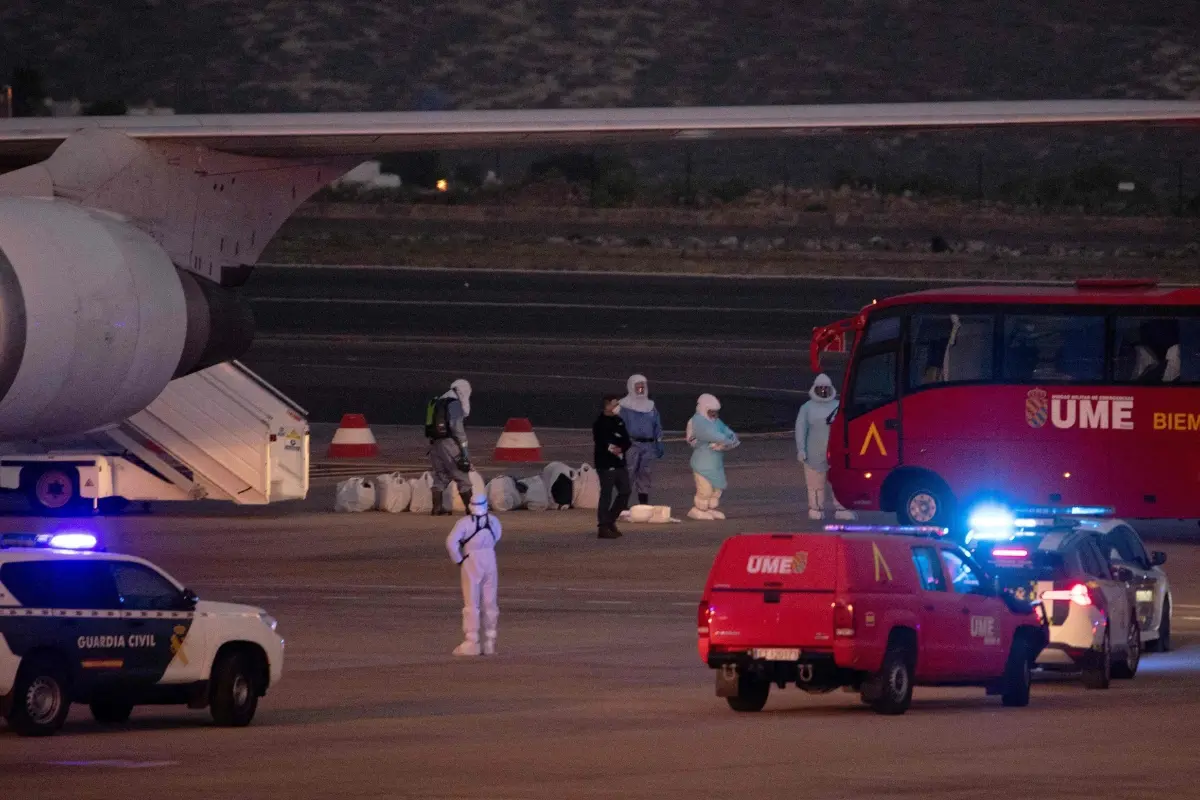
Tenerife (Spain): Passengers from the hantavirus-affected cruise ship MV Hondius were evacuated from Tenerife in a large international operation involving military and government aircraft. The ship had been anchored in the Canary Islands after reports of infections among passengers.
Authorities confirmed that evacuees were flown to multiple destinations under strict quarantine measures, with medical teams wearing protective suits overseeing the transfer process.
US health officials confirmed that one of the evacuated American passengers tested positive for hantavirus, although the individual is currently asymptomatic. The passenger has been transferred to a high-security medical facility at the University of Nebraska Medical Center, which includes a federally funded quarantine and biocontainment unit.
A spokesperson for Nebraska Medicine confirmed that some passengers will undergo intensive monitoring based on exposure risk levels, while others will remain under observation in specialised quarantine facilities.
Symptomatic case reported on French flight
French authorities also confirmed that one passenger developed symptoms during their repatriation flight. The affected individuals were immediately isolated, and testing protocols were initiated upon landing.
The French government has indicated that the passengers will remain under hospital observation until further medical clearance is given.
Multiple countries have activated emergency health protocols. Spanish authorities transported passengers to military hospitals, while Dutch, British, and other European evacuees were placed under mandatory quarantine or hospital observation upon arrival.
In the United Kingdom, officials have indicated a structured quarantine period followed by extended self-isolation monitoring.
The World Health Organization has urged calm, stating that the risk to the general public remains low. WHO Director-General Tedros Adhanom Ghebreyesus emphasised that the outbreak is not comparable to COVID-19 and does not pose widespread transmission risk under normal conditions.
However, health experts continue to monitor the situation closely due to the rare possibility of limited human-to-human transmission in this specific strain.
How the outbreak spread concerns
Hantavirus is typically transmitted through exposure to infected rodent droppings, often through inhalation of contaminated particles. Symptoms can take one to eight weeks to appear and may include fever, fatigue, and severe respiratory complications in advanced cases.
Passengers from more than 20 countries are being tracked under coordinated international health protocols. Some evacuees remain on medical transport routes, while others have been transferred to designated quarantine facilities.
The cruise vessel itself is expected to sail to Rotterdam, where full disinfection procedures will be carried out under international supervision.
While health authorities continue to stress that the outbreak risk to the wider public remains limited, the multinational evacuation and confirmed infections have triggered heightened global vigilance and reinforced strict quarantine measures across several countries.
(With AP inputs)