143 years of history in ruins as France erupts in protests: Historic town hall burns amid chaos
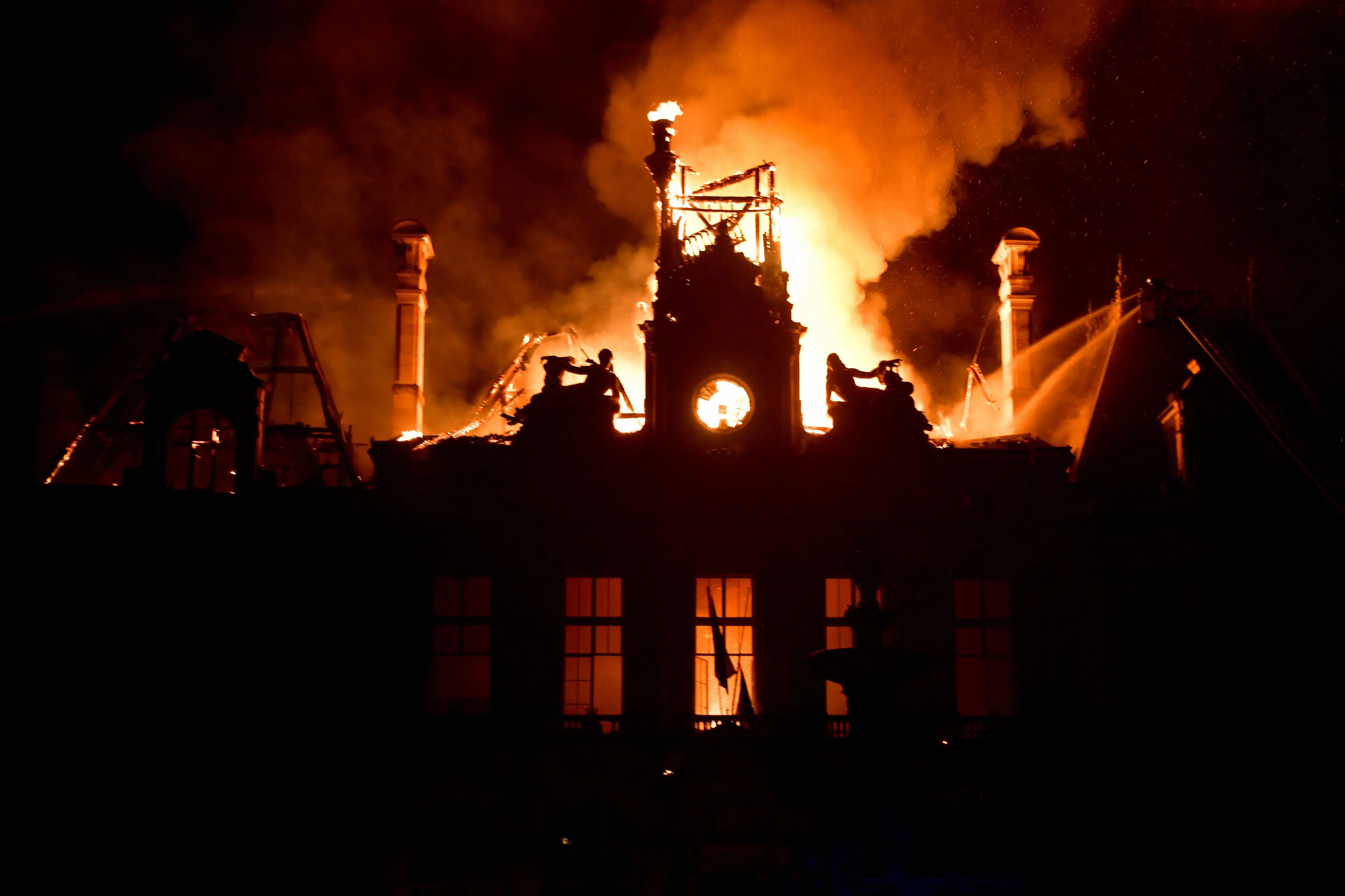
Paris: A historic town hall in Limoges, a city in central France, suffered extensive damage after a fire broke out during violent unrest following a demonstration on Saturday, October 17, 2026. The building, inaugurated in 1883, is an important part of the city’s architectural heritage.
Regional prefect Maurice Barate said the town hall was “largely lost”, describing the damage as a catastrophe for the city’s heritage. Images from the scene showed flames engulfing the building and its roof collapsing onto the lower floors. Reports indicated that the western wing remained largely intact, while much of the structure sustained severe damage.
According to witness accounts reported by French media, masked individuals allegedly set fire to a police vehicle outside the town hall before smashing windows and entering the building. The fire subsequently spread through part of the structure and reached the roof.
Firefighters responded to the blaze as crowds gathered to watch the historic building burn. A municipal employee was reportedly seen crying as a local elected representative attempted to console them.
The precise circumstances and responsibility for the fire remain matters for the authorities to establish.
Protests across France escalate into violence
The fire in Limoges was part of wider unrest that spread across France on October 17. Demonstrations brought together students, workers, trade union members and supporters of the Yellow Vest movement, who voiced concerns about rising living costs, education conditions, wages and the state of public services.
French Interior Minister Laurent Nuñez estimated that approximately 550,000 people participated in demonstrations nationwide, including around 110,000 in Paris. Organisers put the overall turnout at approximately 800,000, according to French media reports.
Although many demonstrators participated in peaceful marches, groups in several cities engaged in arson, looting and attacks on public property. Police deployed tear gas and water cannon in parts of Paris as clashes intensified.
Reports of vandalism and damage emerged from cities including Marseille, Lille, Bordeaux, Lyon, Grenoble, Nantes and Toulouse.
In Lyon, a fire broke out at the city's tourist information office. In Marseille, masked individuals reportedly entered municipal premises and damaged the building. Shops and commercial establishments were also targeted in several cities, including luxury retailers and electronics stores.
Arrests and injuries reported
The unrest resulted in mass arrests and injuries among police officers and demonstrators. French Prime Minister Sebastien Lecornu said approximately 150 police officers had been injured, while reports from Reuters put the number of arrests at more than 1,200 as the situation developed.
Arrest totals differed across reports published at different stages of the unrest, making it important to distinguish preliminary figures from later official updates.
A separate incident in Saint-Etienne left a young demonstrator with a severe hand injury after an encounter involving a police grenade, according to local officials. The incident added to scrutiny of police tactics during the demonstrations.
France’s police watchdog was also reported to be investigating allegations of police violence. The investigations are separate from inquiries into arson, looting and attacks on public buildings.
What triggered the demonstrations?
The latest protests emerged from several overlapping sources of public dissatisfaction, rather than a single grievance.
Student demonstrations over conditions in secondary schools, known in France as lycées, had focused on staff shortages and deteriorating facilities. The movement subsequently attracted support from trade unions and other groups concerned about the cost of living, wages, pensions and access to public services.
The Yellow Vest movement, which emerged in 2018 amid anger over fuel prices and economic inequality, also became part of the latest mobilisation. The protests reflected wider frustration among groups who believe the government has not adequately addressed household financial pressures and declining public services.
The demonstrations also took place amid concerns about rising fuel, energy and food costs. Trade unions called for better wages and pensions, lower prices and the protection of essential public services.
The government had announced measures to address some education concerns. Education Minister Edouard Geffray previously promised additional supply teachers, but the demonstrations continued.
Macron vows legal action against those responsible
French President Emmanuel Macron condemned the arson, looting and attacks on public buildings, pledging that those responsible would face legal consequences.
Prime Minister Lecornu also criticised the violence, arguing that political demands could not be advanced through attacks on public institutions, businesses and law enforcement officers.
The government’s response has focused on distinguishing peaceful demonstrators from those involved in violence. This distinction is significant because the protests brought together people with different political views and economic concerns, not all of whom participated in or supported the attacks.
Meanwhile, opposition figures offered competing explanations for the unrest. Marine Le Pen accused the far left of exploiting legitimate grievances, while Jean-Luc Mélenchon criticised police conduct and also condemned looting and arson, according to reports.
France faces mounting political pressure
The unrest comes as France prepares for its next presidential election, scheduled for April and May 2027. Macron is approaching the end of his second presidential term, and economic concerns, public services and political divisions are expected to remain major issues in the election campaign.
The government faces the challenge of addressing public dissatisfaction while managing France’s public finances. Disagreements over spending priorities, education, household costs and social policy have contributed to a tense political climate.
The damage to public buildings has added another dimension to the unrest, raising concerns about the protection of historic sites and the cost of repairing public infrastructure.
Economic grievances and public trust
The demonstrations highlight how cost-of-living pressures can bring together groups with different priorities. Students have raised concerns about education, while workers and trade unions have focused on wages, pensions and public services. The revival of Yellow Vest mobilisation adds a further layer of anger over economic inequality and the cost of everyday essentials.
The scale of participation does not mean that all demonstrators share the same political objectives. Nor does participation in a protest establish responsibility for violence. Separating peaceful mobilisation from criminal acts is essential when assessing the events.
The political challenge for Macron’s government
With the 2027 presidential election approaching, the protests put pressure on the government to demonstrate that it can respond to economic concerns while maintaining public order.
A response focused only on policing may not resolve the underlying grievances about living costs and public services. At the same time, arson, looting and attacks on public institutions can undermine public support for demonstrations and divert attention from protesters’ stated demands.
The government’s challenge is therefore twofold: pursue accountability for criminal acts and address the policy concerns that have contributed to public discontent.
The damage to Limoges town hall illustrates how unrest can have consequences beyond immediate clashes and arrests. The loss of historic fabric, damage to public property and potential costs of restoration affect local communities long after demonstrations end.
Authorities will need to assess the building’s structural condition, establish the cause of the fire and determine the extent of the damage before the long-term consequences become clear.
The events of October 17 show the tension between the right to peaceful protest and the protection of public safety, businesses and cultural heritage. How the government responds to both the violence and the grievances behind the demonstrations may influence public confidence in the months before the presidential election.