UN condemns Taliban's ban on Afghan women working for NGOs
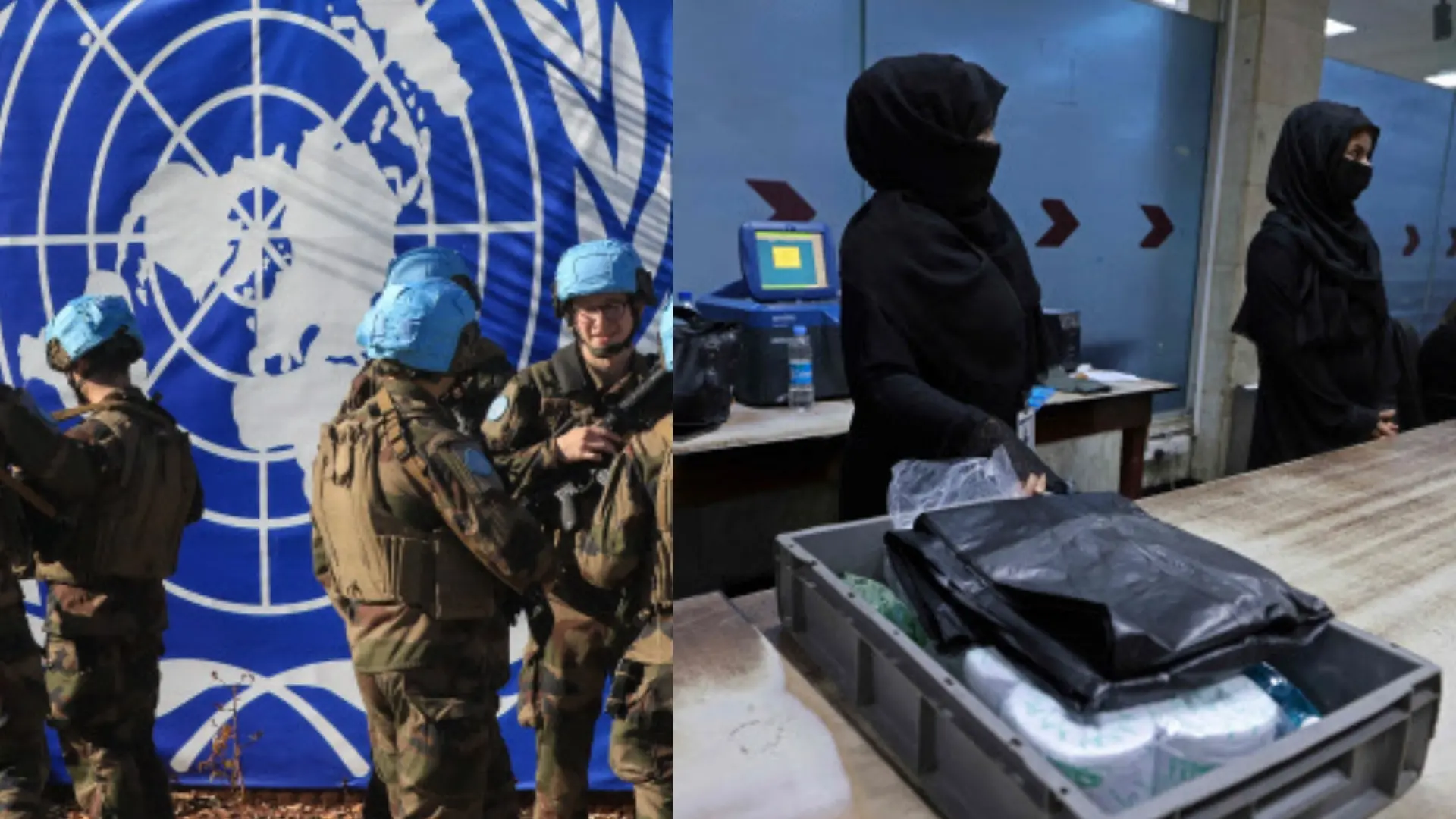
Geneva: The United Nations has condemned the Taliban's recent ban on Afghan women working for non-governmental organizations (NGOs), calling it a deeply discriminatory measure that threatens humanitarian efforts in the country. Taliban had threatened NGOs with closure if they employ women UN Human Rights Chief Volker Turk expressed his alarm over the Taliban’s decision, stating that the authorities must reverse the ban immediately. Since the Taliban's return to power in August 2021, the rights of Afghan women have been progressively restricted, and the UN has denounced the "gender apartheid" that has taken hold under the current regime.
"I am deeply alarmed at the recent announcement by the de facto authorities in Afghanistan that non-governmental organisations' licences will be revoked if they continue to employ Afghan women. This is absolutely the wrong path being taken," Turk said in a statement. The Taliban’s Ministry of Economy issued a directive on Thursday to the Agency Coordinating Body for Afghan Relief and Development (ACBAR), which represents around 200 NGOs, demanding compliance with a two-year-old decree that prohibits the employment of Afghan women.
The Taliban’s new circular states that any NGO that continues to employ female workers will face the suspension of its operations and the cancellation of its operating license. In response, ACBAR met with the ministry and announced that female workers in health and education sectors would be exempt from the ban, and those working online could continue their work as usual.
However, the humanitarian crisis in Afghanistan remains severe, with over half of the population living in poverty. NGOs play a crucial role in providing life-saving assistance to both men and women, as well as children, across the country. Turk emphasized that the Taliban's decision will significantly hinder the ability of NGOs to deliver vital aid to the Afghan people, especially women and girls.
"The humanitarian situation in Afghanistan remains dire, with more than half the population living in poverty. NGOs play a vital role in providing critical life-saving assistance – to Afghan women, men, girls and boys – and this measure will directly impact the ability of the population to receive humanitarian aid," Turk stated.
He further urged the Taliban authorities to revoke not only this decree but also other policies that limit women and girls' access to education, work, healthcare, and public services. "No country can progress – politically, economically, or socially – while excluding half of its population from public life," Turk added. He called for a change in direction, stressing that for Afghanistan's future to improve, the Taliban must reconsider its policies.
Under the Taliban’s rule, Afghan women have faced severe restrictions, including the banning of post-primary education for girls, limitations on employment, and a prohibition on accessing parks and public spaces. In addition, a recent law forbids women from singing or reciting poetry in public, in line with the Taliban's strict interpretation of Islamic law. The regime has also pushed for women to "veil" their voices and bodies when outside the home, and some local media stations have ceased broadcasting female voices altogether.
Despite these repressive measures, the Taliban claims that Islamic law guarantees the rights of both Afghan men and women. However, the UN and many human rights organizations argue that these policies are a violation of women’s fundamental rights and hinder Afghanistan’s social, political, and economic progress.
AFP