796 babies buried in a septic tank: Inside the darkest secrets of Ireland’s former Catholic 'fallen women' home
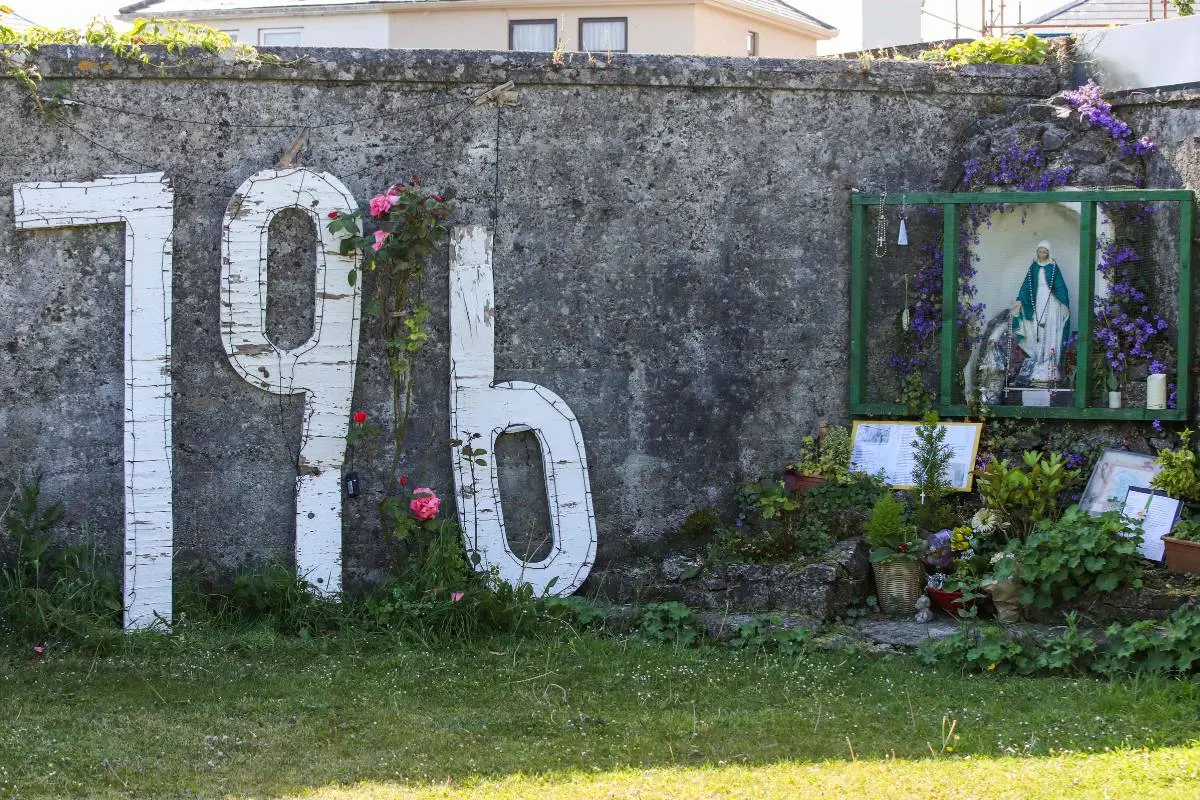
A full-scale excavation is now underway at the site of a former mother and baby home in Tuam, County Galway, Ireland—one that could finally uncover the truth behind the fate of 798 infants and young children believed to be buried there. The former institution, run by Catholic nuns from the Bon Secours order, operated between 1925 and 1961 and housed unmarried pregnant women who were forced into secrecy, labour, and separation from their babies.
The shocking reality behind the Bon Secours Mother and Baby Home
Known locally as “The Home,” the Bon Secours Mother and Baby Home served as a facility where unmarried women were sent to give birth out of the public eye. Women sent there were typically required to stay for a year, performing unpaid work, and were then separated from their newborns. The children were kept by the nuns and often adopted out—frequently without family consent.
Historian Catherine Corless spent years researching the institution and, in 2014, made a revelation that shocked Ireland and the world. Through death records and other documentation, she discovered that 798 children died at the Tuam home, but only two were buried in a nearby cemetery. The remaining 796 children, she found, had no burial records at all. Local accounts and research led Corless to believe their bodies had been discarded in a disused septic tank on the property, referred to as “the pit.”
“Many of the infant remains are feared to have been dumped in the cesspool known as ‘the pit’ at the former institution,” Corless told Sky News. She added, “I’m feeling very relieved. It’s been a long, long journey. Not knowing what’s going to happen, if it’s just going to fall apart or if it’s really going to happen.”
A painful legacy for survivors
Among the many stories tied to the home is that of Annette McKay, whose sister Mary Margaret is believed to be among the 798 children. Her mother, Margaret “Maggie” O’Connor, was raped at the age of 17 and later gave birth at the Tuam institution. Mary Margaret died six months later, and the mother only learned of her child’s death through a cruel remark from a nun.
“She was pegging washing out and a nun came up behind her and said ‘the child of your sin is dead,’” McKay recounted in an interview with Sky News. Now living in the UK, she added, “I don’t care if it’s a thimbleful, as they tell me there wouldn’t be much remains left; at six months old, it’s mainly cartilage more than bone.”
Excavation finally begins
On Monday, crews began preparing the Tuam site for a full forensic excavation. Daniel MacSweeney, who is leading the operation, said preliminary work would take four weeks, with the official dig beginning July 14. It’s expected to take up to two years. The site, now surrounded by modern housing, was once part of a 19th-century workhouse and may also contain famine victims’ remains—complicating the search.
“It’s an incredibly complex challenge because of the size of the site and the fact that we are dealing with infant remains that we know, at least in the case of the memorial gardens (on the site), are co-mingled,” MacSweeney told RTÉ Radio.
Hoarding has been set up around the area, which now lies at the centre of a residential estate, to maintain privacy and manage the excavation process. The goal is to identify as many of the remains as possible through DNA testing and ensure a proper and respectful reburial for each child.
A national reckoning with a dark past
The revelations about Tuam were not isolated. The home was just one of many institutions that formed a state-backed network of religious-run facilities in Ireland throughout the 20th century. These included Magdalene laundries, where women—many of whom had previously lived in mother and baby homes—were sent if they had another child out of wedlock. Originally designed for sex workers and so-called “fallen women,” these laundries eventually came to house victims of rape and incest, orphans, and girls abandoned by their families.
The last Magdalene laundry closed only in the 1990s.
The Irish government has since acknowledged the role both the state and religious institutions played in this system. A commission of investigation found in 2021 that around 9,000 children had died across 18 mother and baby homes. That same year, then Taoiseach Micheál Martin offered a formal state apology, saying:
“We had a completely warped attitude to sexuality and intimacy, and young mothers and their sons and daughters were forced to pay a terrible price for that dysfunction.”
In 2022, a compensation scheme was introduced, and so far, €30 million (approx. $32.7 million) has been distributed to 814 survivors. But the religious orders involved have refused repeated calls to contribute financially.
The Sisters of Bon Secours, who ran the Tuam home, eventually issued their own statement acknowledging the horror. They admitted the children were “buried in a disrespectful and unacceptable way” and expressed “profound apologies.”
As forensic experts begin the grim but necessary task of searching for the remains of the 796 children still unaccounted for, Ireland is once again confronting the painful legacy of its mother and baby homes.
What lies beneath Tuam is more than a mass grave; it is a stark reminder of a society that punished women for their pregnancies and disregarded the lives of their children. In the words of former Taoiseach Enda Kenny, who addressed the nation in 2017 following the revelations, Tuam was “a chamber of horrors.”
Now, the excavation may finally bring some peace—not only to those buried there but to the generations left haunted by silence and injustice.