COMAC’s global push signals a new chapter in commercial aviation
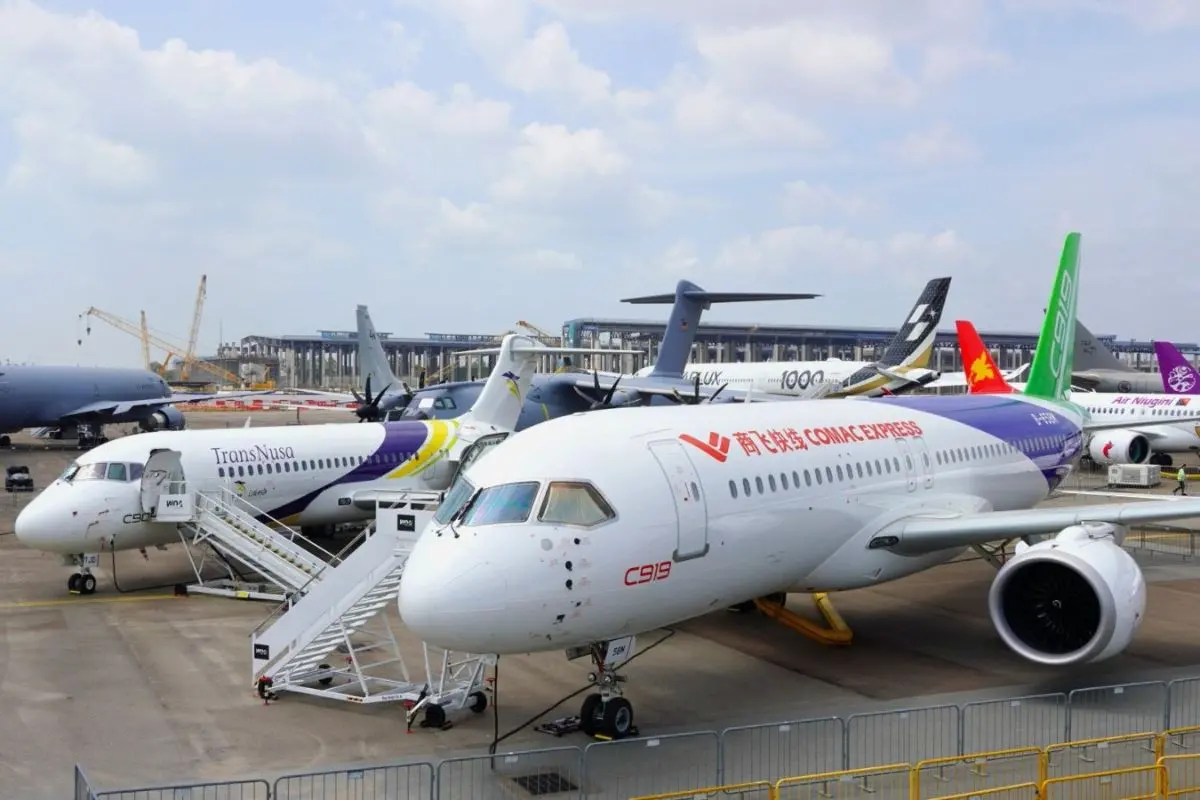
China’s state-owned aircraft manufacturer, COMAC (Commercial Aircraft Corporation of China), is rapidly expanding its global footprint and positioning itself as a long-term challenger to aviation giants Boeing and Airbus. With a strong focus on the fast-growing Asia-Pacific market, COMAC’s strategy reflects both opportunity and necessity in a supply-constrained global aviation environment.
C919 debut marks a key international step
COMAC is showcasing its flagship narrowbody aircraft, the C919, at the Singapore Airshow, a major milestone in its international outreach. Designed to compete directly with the Boeing 737 MAX and Airbus A320neo, the aircraft first flew outside China nearly two years ago and is now being actively marketed to airlines beyond the domestic market, particularly in Southeast Asia.
This move comes at a time when regional airlines are facing prolonged delivery delays from Boeing and Airbus, driven by production bottlenecks, engine shortages, and broader supply chain disruptions.
Timing favours new aircraft suppliers
The timing of COMAC’s push is strategic. Airlines across Asia-Pacific are struggling to expand fleets due to long wait times for new aircraft, rising leasing costs, and geopolitical uncertainties. Trade tensions and tariff risks have further complicated fleet planning, creating a strong demand for alternative aircraft manufacturers.
Industry leaders acknowledge this shift. IATA Director General Willie Walsh has said that COMAC will take time but is likely to become a serious global competitor in the long run. Analysts estimate that within 10 to 15 years, COMAC could stand alongside Boeing and Airbus as a major global aircraft supplier.
Growing fleet
COMAC currently has two aircraft in commercial service, the C919 and the smaller ARJ21, now rebranded as the C909. The C919 seats between 158 and 192 passengers and has a range of up to 5,555 kilometres, making it suitable for medium-haul routes. The C909 is designed for shorter routes and airports with limited runway length, seating between 78 and 97 passengers.
The company says it has delivered over 200 aircraft, operating on nearly 800 routes and carrying more than 36 million passengers. Around 25% of these aircraft are already flying in Southeast Asian countries such as Laos, Indonesia, and Vietnam. Brunei-based GallopAir has placed a major order, while Cambodia plans to acquire nearly 20 aircraft.
Industry experts say the entry of COMAC into the commercial aircraft market is both necessary and overdue. Subhas Menon, Director General of the Association of Asia Pacific Airlines (AAPA), noted that the global aircraft supply chain is effectively a duopoly, making airlines vulnerable to delays and cost pressures. A third major manufacturer could help restore balance, competition, and resilience in the industry.
Challenges
Despite growing interest, COMAC still faces significant hurdles. The C919 currently trails the Airbus A320neo in range, and the aircraft has not yet received European certification. Industry estimates suggest this process could take until 2028 or even 2031.
In addition, COMAC must continue to build global maintenance infrastructure, expand pilot training programmes, and manage the integration of Chinese and Western systems, all of which are critical for airline confidence and international acceptance.
COMAC is accelerating production to meet rising demand. China’s three largest airlines have each ordered 100 C919 aircraft, and the manufacturer is expected to deliver at least 28 aircraft this year, nearly doubling last year’s output of 15 aircraft.
This production ramp-up signals strong domestic backing and long-term industrial commitment from the Chinese government.
While Boeing and Airbus continue to dominate global aviation, COMAC’s growing presence marks a structural shift in the industry, especially in Asia-Pacific, where demand for new aircraft remains strong and unmet. Though the journey toward full global competitiveness will take time, COMAC is no longer a distant challenger but an emerging force reshaping the future of commercial aviation.