Wayanad landslides: Climate change and neglect fuel deadly environmental crisis
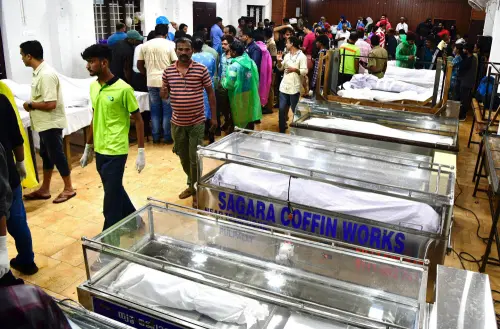
New Delhi: Climate change, fragile terrain, and significant forest loss have combined to create a catastrophic scenario leading to devastating landslides in Kerala's Wayanad district. The recent calamity, triggered by exceptionally heavy rainfall, has resulted in the tragic loss of at least over 120 lives and injuries to 128 individuals, with many feared trapped under debris.
Studies over the years have pointed to Kerala's vulnerability to landslides, exacerbated by its geographical features and environmental changes. According to the Indian Space Research Organisation's (ISRO) National Remote Sensing Centre, Kerala houses 10 of India's 30 most landslide-prone districts, with Wayanad ranked 13th. The Western Ghats and Konkan hills, spanning Tamil Nadu, Kerala, Karnataka, Goa, and Maharashtra, cover 0.09 million square kilometres and are identified as high-risk areas for landslides.
Research highlights the dense population and household density in the Western Ghats, particularly in Kerala, exacerbating the vulnerability of inhabitants to natural disasters like landslides. A study published by Springer in 2021 identified all landslide hotspots in Kerala within the Western Ghats, with concentrated incidences in districts such as Idukki, Ernakulam, Kottayam, Wayanad, Kozhikode, and Malappuram. Plantation areas were particularly prone, accounting for 59% of landslide occurrences in the state.
The depletion of forest cover in Wayanad has been alarming, with studies showing a significant reduction from 85% of the district covered by forests in the 1950s to a mere 23% by 2018. This loss was largely compensated by a drastic increase of around 1,800% in plantation cover. Such changes have not only altered the landscape but also increased the region's susceptibility to natural disasters.
Scientists attribute these environmental shifts to climate change, which has intensified rainfall patterns in the Western Ghats. S. Abhilash from the Advanced Centre for Atmospheric Radar Research at Cochin University of Science and Technology (CUSAT) pointed out that warming of the Arabian Sea has led to the formation of deep cloud systems, resulting in more intense and concentrated rainfall over Kerala. This atmospheric instability, linked to climate change, has made Kerala more prone to extreme weather events, historically more common in the northern Konkan belt.
Recent studies published in journals like npj Climate and Atmospheric Science and Elsevier have highlighted the increasing intensity and spatial shift of rainfall patterns along the west coast of India. This change has raised concerns about heightened landslide risks in the high- to mid-land slopes of the Eastern Kerala Western Ghats during monsoon seasons.
The landslides in Wayanad have underscored longstanding concerns raised by the Western Ghats Ecology Expert Panel led by ecologist Madhav Gadgil. Formed by the government to address ecological concerns in the region, the panel recommended stringent measures to protect the fragile ecosystem, including declaring the entire hill range as an ecologically sensitive area. It proposed dividing the region into zones based on ecological sensitivity, urging bans on mining, quarrying, new thermal power plants, hydropower projects, and large-scale wind energy projects in the most vulnerable areas.
Despite these recommendations made over a decade ago, they have not been implemented due to resistance from state governments, industries, and local communities. This delay in adopting protective measures has left the Western Ghats and its inhabitants increasingly vulnerable to the impacts of climate change and environmental degradation.
The devastating landslides in Wayanad serve as a stark reminder of the urgent need for proactive environmental policies and their rigorous implementation. Addressing the complex interplay of climate change, deforestation, and urbanisation in ecologically sensitive regions like the Western Ghats is crucial to mitigating future disasters and safeguarding lives and livelihoods in these vulnerable areas. PTI