V D Satheesan: The master strategist powering Congress-UDF’s Kerala comeback wave
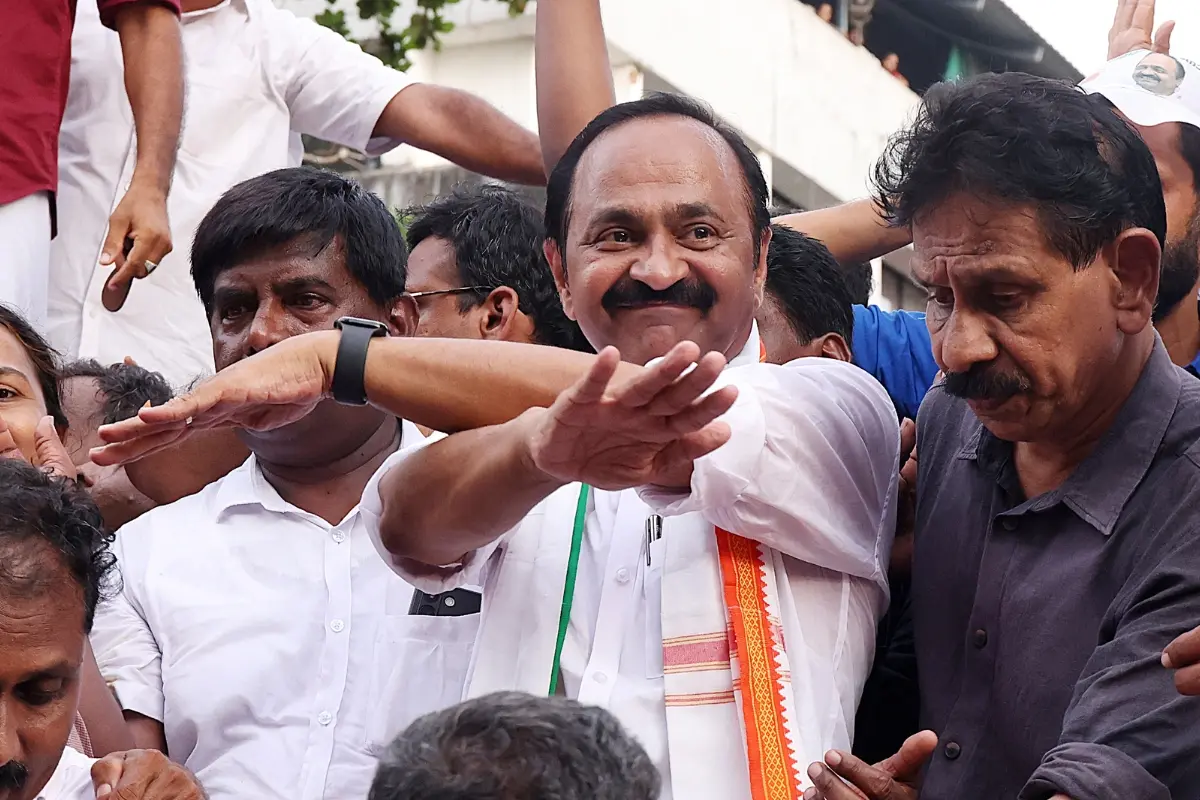
The 2026 Kerala Assembly election has once again placed V. D. Satheesan at the centre of the state’s political conversation. As Leader of Opposition and one of the key architects of the Congress-led UDF campaign, his role has gone beyond his own constituency to shaping the alliance’s broader strategy, messaging, and organisational direction.
His victory from North Paravur, where he has maintained a long electoral presence, reinforced both his personal political strength and his standing within the Congress at a time when the party’s fortunes in Kerala have seen significant fluctuation.
Who is V D Satheesan and how did he rise in Kerala politics?
V D Satheesan began his political journey through student activism and early involvement in Congress-affiliated organisations, particularly the NSUI. Over time, he developed a reputation as a disciplined organiser with a strong grounding in legal practice and legislative debate. His background as a practising lawyer also shaped his analytical approach to political issues, often reflected in his interventions in the Assembly.
His rise within the Congress was not sudden but gradual, built over decades of constituency work, organisational assignments, and repeated electoral success in Paravur. This long-term consolidation helped him transition from a regional leader into one of the most influential figures in Kerala’s Opposition politics.
Why did he become Leader of Opposition in 2021?
After the UDF’s defeat in the 2021 Assembly election, the Congress leadership underwent a period of internal reassessment. In this context, Satheesan’s selection as Leader of Opposition was seen as a strategic move towards rebuilding credibility and discipline within the alliance.
His appointment marked a shift towards a more structured and assertive Opposition style. Rather than relying on fragmented responses, the UDF under his leadership began focusing on coordinated messaging, consistent policy critique, and stronger legislative presence. This change is widely considered one of the turning points in the party’s post-2021 recovery phase.
How did his leadership change UDF’s political approach?
As Opposition Leader, Satheesan adopted a more data-driven and issue-focused approach. His interventions in the Assembly often centred on governance, financial management, and administrative accountability, which helped reposition the UDF as a more policy-oriented Opposition.
Over time, this approach also influenced how the alliance functioned outside the Assembly. Coordination between UDF constituents improved, and campaign messaging became more unified. His leadership style emphasised discipline and clarity, which was reflected in both election campaigns and legislative debates.
Why is Paravur central to his political identity?
North Paravur is not just an electoral seat for Satheesan; it is the core of his political identity. Having won the constituency multiple times over two decades, he has built a stable and consistent voter base that has withstood state-level political shifts.
His repeated victories reflect sustained grassroots engagement and a strong local organisational network. The 2026 win further reinforced this pattern, showing that despite evolving political dynamics in Kerala, his personal connect with the constituency remains intact.
What role did he play in UDF’s broader performance?
Beyond his own seat, Satheesan’s influence has been visible in the UDF’s improved electoral performance in recent cycles. The alliance has shown stronger results in by-elections and local body elections, along with more coordinated campaigning across constituencies.
Much of this improvement is attributed to his emphasis on organisational rebuilding, where district-level structures were strengthened and campaign messaging was streamlined. This helped the UDF recover ground in several regions where it had previously weakened.
Satheesan is often described as a methodical and disciplined political leader. Unlike more populist figures, his style is rooted in structured argumentation, policy critique, and organisational control. He is known for studying issues in depth before speaking on them, which has earned him a reputation for precision in legislative debates.
At the same time, his leadership is also marked by strict internal discipline. He has not hesitated to take action within party structures when required, reinforcing his image as a leader focused on accountability and organisational coherence.
What challenges has he faced?
Despite his rise, Satheesan has faced criticism from political opponents and internal challenges within the Congress ecosystem. The ruling LDF has frequently targeted his positions and leadership style, while internal balancing within the Congress has required continuous negotiation among different factions.
His earlier public declaration that he would step back from politics if the UDF failed to win the election also became a point of political debate during the campaign. While supporters viewed it as confidence, critics saw it as overstatement in a highly competitive political environment.
What next for V D Satheesan?
With the UDF showing improved performance in 2026 and Satheesan retaining his stronghold in Paravur, his role within Kerala politics is expected to expand further. The key question now is whether his influence will remain limited to organisational strategy or evolve into a broader leadership claim within the Congress structure in the state.
There is also growing interest in whether his model of disciplined Opposition politics will continue to shape the UDF’s future direction. His ability to balance constituency politics with state-level strategy will likely determine his next phase in Kerala’s political landscape.
What does his rise mean for Kerala politics?
Satheesan’s emergence reflects a broader shift in Kerala’s Opposition politics towards more structured, issue-based, and coordinated leadership. While the state remains primarily dominated by the LDF and UDF, leaders like him are influencing how Opposition politics is conducted, particularly in terms of legislative engagement and campaign organisation.
His trajectory highlights the importance of long-term constituency grounding combined with state-level strategic leadership, a combination that is increasingly shaping political outcomes in Kerala.