Can lightning be controlled? Indian scientists gear up for research; Centre allocates Rs 2,000 crore
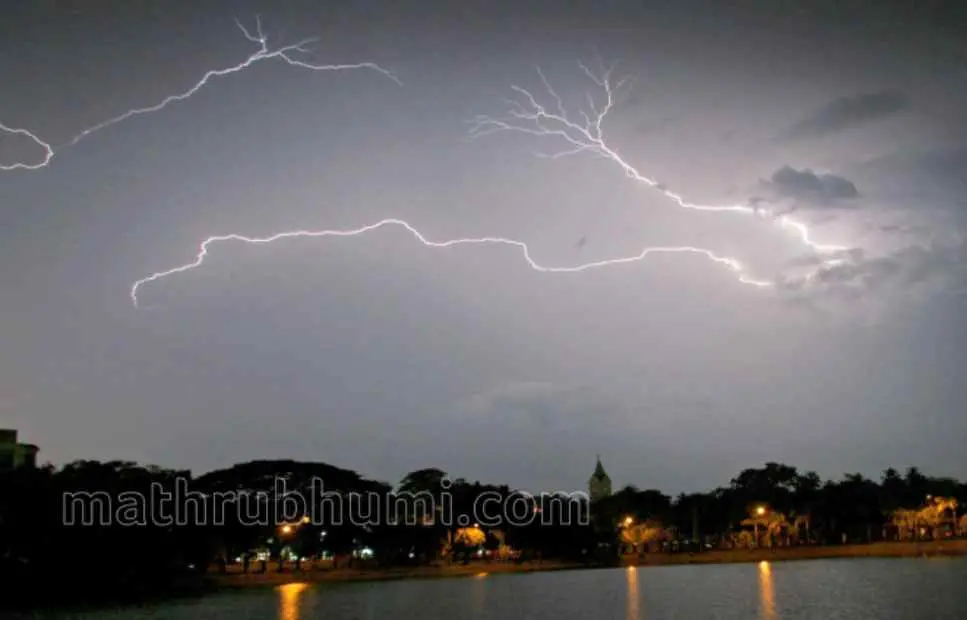
Alappuzha: Can Science ever control phenomena like heavy rainfall, thunderstorms, hailstorms and fog? Indian scientists are initiating studies to explore this possibility.
While techniques like cloud seeding already exist to induce artificial rain by dispersing chemical substances in clouds, precise control over rainfall has not been achieved. India is now venturing into such experimentation through a project called ‘Mission Mausam’, led by the Ministry of Earth Sciences, with an investment of Rs 2,000 crore.
The mission aims to enhance weather forecasting in the country, manage extreme events arising from climate change, and bring these benefits to the general population. Research will focus on whether cloud seeding could potentially reduce rainfall to prevent floods and landslides, or increase rainfall to counter drought. The five-year mission will be executed in two phases, as explained by Ministry Secretary M Ravichandran.
Mission Mausam
Weather forecasting in tropical regions like India poses significant challenges. To address this, ‘Mission Mausam’ will expand monitoring systems and employ advanced technologies like artificial intelligence and machine learning to improve forecasting.
The project includes the establishment of a ‘Cloud Chamber’ laboratory to artificially develop clouds, increasing the number of radar systems by over 150 percent, and using modern satellites and supercomputers to conduct monitoring and analysis. These enhancements aim to provide precise forecasts even at the village level.
Cloud Chamber
To study the processes within clouds, a ‘Cloud Chamber’ will be set up at the Indian Institute of Tropical Meteorology (IITM) in Pune. This facility will allow scientists to artificially generate clouds and conduct experiments, enabling a thorough study of the physical and chemical processes within clouds.
It will also support research on the feasibility of cloud seeding in controlling rain. The Cloud Chamber is expected to be operational within one and a half years, as stated by Dr Thara Prabhakaran, director of the Cloud Research Project and a Malayali, in an interview with Mathrubhumi.