Evaluation of tiger reserves in India: Periyar regains top rank, Parambikulam slips 11 positions
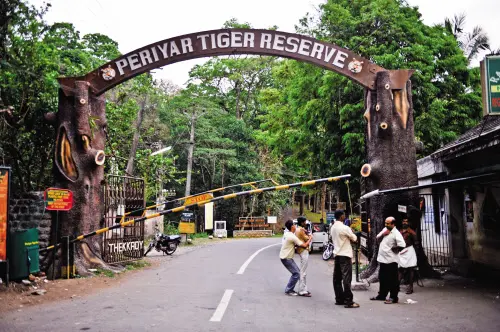
Kozhikode: Kerala’s Periyar Tiger Reserve (PTR) regained its top position in the latest Management Effectiveness Evaluation (MEE) of Tiger Reserves released by prime minister Narendra Modi in Mysore on Sunday on the completion of 50 years of Tiger Reserves in India.
PTR, with 94.38 per cent score, topped the list of 51 tiger reserves in the country in the fifth cycle report. It was ranked second in the 2018 report followed by Pench Tiger Reserve in Madhya Pradesh. In the latest report Pench is ranked number 13. PTR had topped the 2014 rankings. In the first report published in 2006, PTR was ranked 13.
At the same time, Kerala's second tiger reserve, the Parambikulam Tiger Reserve, is ranked 18 in the 2023 report. It secured 4th position in 2014 and 7th in 2018. A small dip in the score caused a major rank slump.
The MEE has been used for assessing tiger conservation efforts in the country since 2006. Since then, the Tiger Reserves have been put through repeated evaluation cycles every four years. The MEE exercise, adopted from the International Union for Conservation of Nature and Natural Resources' (IUCN's) World Commission on Protected Areas framework, has emerged as the most significant approach to help and enhance Tiger Reserve management perspectives and their associated landscape connectivity.
This framework includes consideration of design issues, the adequacy and appropriateness of management systems and processes and the delivery of Tiger Reserves objectives including conservation of values.
“As a part of the exercise, the Field Directors submitted a self-assessment form with all relevant supporting documents by July 2022. The Independent Expert MEE teams visited all 51 Tiger Reserves for conducting MEE as per the prescribed assessment criteria and completed the MEE Score Card after cross checking the supportive documents submitted by the Field Directors. All efforts were made to ensure that the 3-member Independent Expert MEE teams visit the tiger reserves together and spend at least three days per site,” reads the report.
However, the tiger census showed a dip in the number of tigers in the Wayanad Wildlife Sanctuary. This puzzled the Kerala forest officials. They say that the decline in the number of tigers in Aralam and Kottiyoor regions, located in Kannur also affects the figures as these areas fall under the Wayanad landscape. A clarity over the census can be achieved only after publishing the district-wise and division-wise report. This detailed report will be available within a week, officials said.
“The Government of India undertook an important conservation initiative by launching the 'Project Tiger' in 1973 and so far, India has declared a network of 53 Tiger Reserves spread across 18 States (Figure 1 & Table 1). Of which, a total of 51 Tiger Reserves are evaluated through MEE process encompassing a total of 73,765.57 square kilometres area; 40,787.15 square kilometres serve as the core and 32,978.42 square kilometres serve as the buffer (https://ntca.gov.in/) in fifth cycle of MEE of TR 2022,” the MEE report notes.
With agency inputs