‘Don’t loot the vote’: Uddhav, Raj Thackeray march against CEC Gyanesh Kumar over SIR
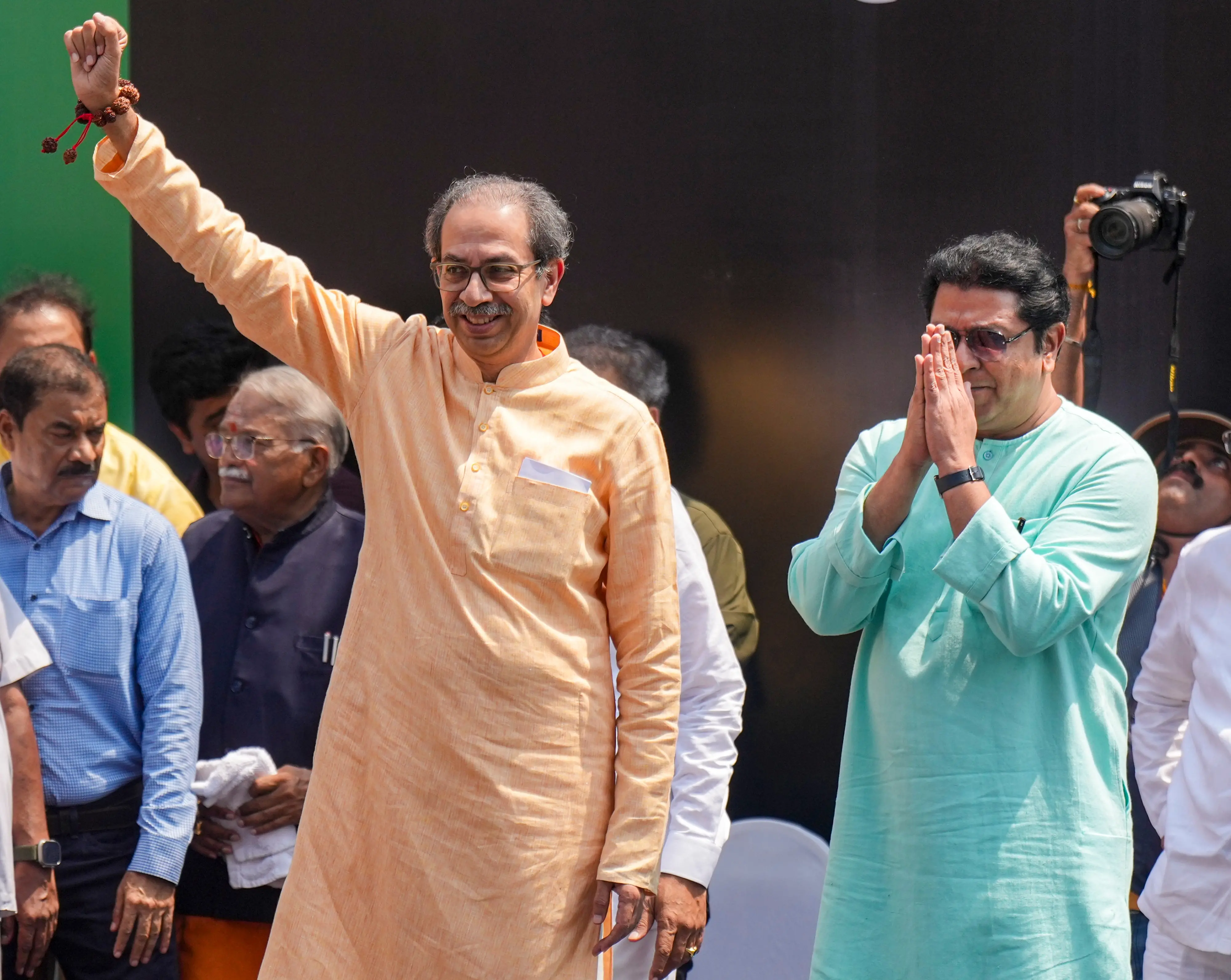
Mumbai: Shiv Sena (UBT) chief Uddhav Thackeray and Maharashtra Navnirman Sena (MNS) chief Raj Thackeray joined hands on Sunday to lead a major protest march in Mumbai against Chief Election Commissioner Gyanesh Kumar over alleged irregularities in the electoral process.
The march, called the Virat Garjana Morcha, began at Metro Cinema in south Mumbai and moved towards the Brihanmumbai Municipal Corporation headquarters. Leaders and workers from the Congress and the Sharad Pawar-led NCP (SP) also participated in the demonstration.
The protest was primarily centred on the Special Intensive Revision (SIR) of electoral rolls, with the participating parties demanding that the exercise be cancelled in Maharashtra.
Raj Thackeray demands cancellation of SIR
Addressing protesters, Raj Thackeray criticised the Election Commission over the ongoing electoral-roll revision and questioned the reported deletion of voters' names.
“Gyanesh Kaka, don’t loot the vote,” Thackeray said while targeting the Chief Election Commissioner.
He demanded that the SIR exercise in Maharashtra be cancelled and argued that elections should be conducted using ballot papers rather than electronic voting machines.
Thackeray also questioned the reported scale of voter deletions, asking how a large number of voters could be removed from electoral rolls through the revision process. He urged political parties to take the issue to Delhi and collectively demand that the SIR be withdrawn.
Uddhav Thackeray raises concerns over voter deletions
Uddhav Thackeray said the Mumbai demonstration was aimed at opposing what he described as arbitrary action and alleged attempts to exclude voters from electoral rolls.
He referred to claims of large-scale deletions across different states and argued that the right to vote must be protected.
Uddhav also referred to developments in West Bengal, where questions surrounding electoral-roll revisions have become the subject of political and legal debate. He said voters who believe their names have been wrongly excluded should have access to appropriate legal and electoral remedies.
During his address, Uddhav also criticised what he described as authoritarian functioning and compared the situation with historical examples of dictatorships.
Opposition parties participate in the march
The protest was not limited to the two Thackeray-led parties. Leaders from the Congress and the NCP (SP) also joined the march, reflecting wider opposition to the SIR exercise and concerns over electoral rolls.
The participation of different opposition parties gave the demonstration a broader political character, with speakers focusing on electoral transparency, the Election Commission and voters' rights.
The organisers had invited opposition parties to participate when the Thackeray cousins announced the march in September.
Sanjay Raut targets government and Election Commission
Shiv Sena (UBT) leader Sanjay Raut said the protest represented a response to what he alleged were attempts to undermine democratic institutions, electoral processes and constitutional rights.
Raut also criticised the government's handling of several issues and accused the authorities of interfering with electoral processes. These were political allegations made during the protest and were not independently established by the statements cited.
He additionally raised the alleged mistreatment of a woman journalist during a protest at Jantar Mantar and questioned Union Home Minister Amit Shah's response to the incident.
Party flags barred from protest
The organisers reportedly decided that party flags would not be allowed during the march. Participants and supporters were instead asked to carry the national tricolour.
The move was intended to give the demonstration a broader identity beyond the individual political parties participating in it.
What is the SIR issue?
The Special Intensive Revision, or SIR, involves a detailed revision of electoral rolls. The process can involve verifying existing entries, identifying eligible voters and addressing issues such as duplicate, shifted, deceased or otherwise ineligible entries.
The political dispute centres on how the exercise is being conducted and whether eligible voters could be excluded during the verification and revision process.
Opposition parties have raised concerns over alleged large-scale deletions and have demanded greater safeguards and transparency. The Election Commission's position and the relevant electoral procedures remain central to determining whether individual deletions are justified.
Why the Mumbai protest matters
The demonstration is significant because it brought Uddhav Thackeray and Raj Thackeray together on a common political platform after years of operating through separate parties.
The two leaders have increasingly coordinated on issues concerning Maharashtra politics and electoral processes. Their joint appearance at the Virat Garjana Morcha provided a visible platform for their parties to campaign together on the SIR issue.
The protest also comes amid wider political debate over electoral-roll revisions in several states. The participating parties are seeking to make voter-list integrity a central issue, while the authorities responsible for electoral administration are expected to determine the validity of individual voter entries through the established revision and objection process.
The allegations made by political leaders during the protest remain their stated positions. The exact number of eligible voters affected by the revision, the reasons for individual deletions and the outcome of any legal or administrative challenges will depend on official electoral records and proceedings.