Amid paper leak concerns, President in I-Day eve address says govt taking steps to curb unfair means
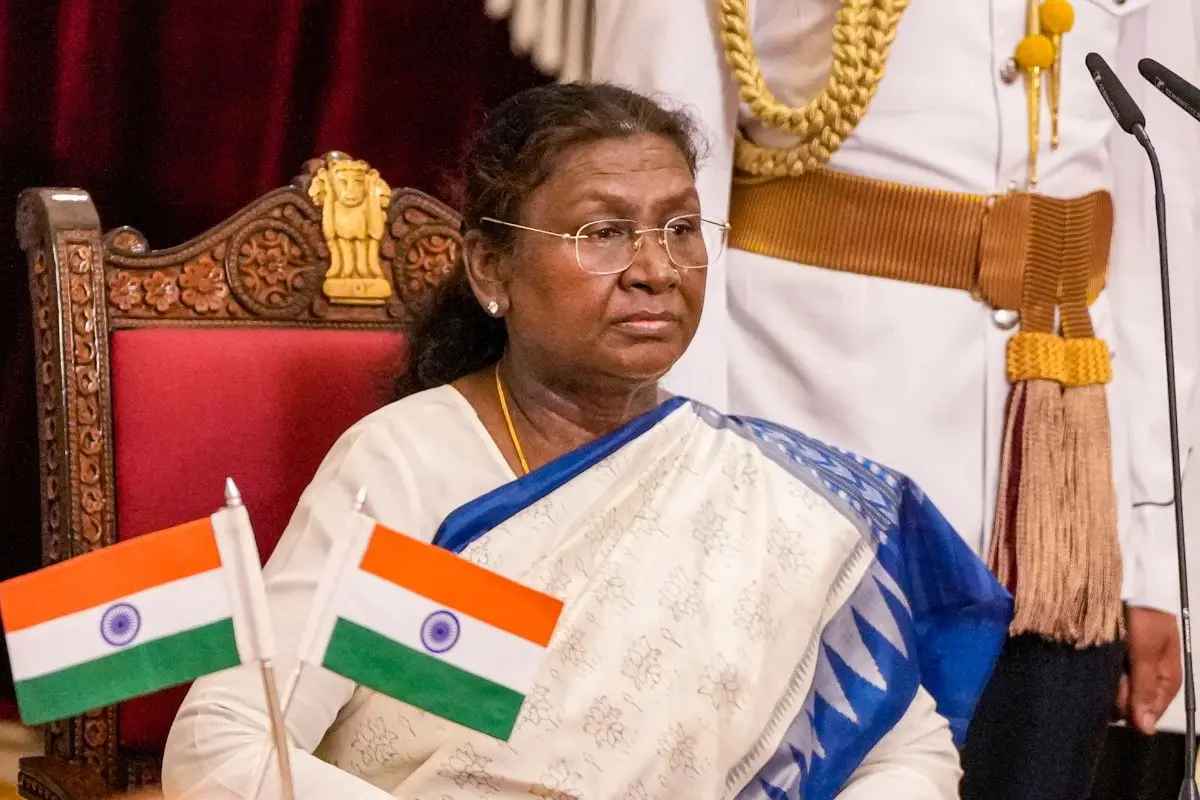
President Droupadi Murmu addressed the nation on Friday, August 14, on the eve of India’s 80th Independence Day, highlighting the country’s progress and challenges while calling on citizens to contribute to nation-building.
From examination reforms and youth empowerment to national security, economic growth and women’s participation, the President touched on several key issues during her address.
Freedom means opportunities for every citizen
President Murmu said the true meaning of freedom lies in ensuring that every citizen gets opportunities to fulfil their aspirations and contribute to making India the foremost nation in the world.
She said the Tricolour remains the “symbol of our freedom” and recalled August 15, 1947, when India gained independence from colonial rule.
“On the eve of our Independence Day, I convey my warm greetings to all of you for this national festival. In a few hours from now, our country will witness the auspicious beginning of the 80th year since its independence. All Indians, living in the country and abroad, celebrate this festival with great joy. Our Tricolour is the symbol of our freedom. We unfurl it with immense pride,” she said.
“On August 15, 1947, Bharat Mata was liberated from the shackles of subjugation. Every citizen became an architect of the destiny of Independent India. The true meaning of freedom lies in ensuring that all citizens are able to utilise opportunities to fulfil their aspirations, and work towards the goal of making India the foremost nation in the world,” she added.
Students are ‘architects of India’s future’
The President said students and teachers, scientists and engineers, doctors and healthcare workers, workers and farmers are all contributing to the nation’s development.
She also acknowledged the contribution of sportspersons, craftspersons, artists, intellectuals, private and public sector workers, elected representatives, judicial officials, civil servants, investors, social workers and Safai Mitras.
“Numerous citizens engaged in various other activities, and every citizen who faithfully discharges the Fundamental Duties enshrined in our Constitution, are active partners in our nation-building process. I wholeheartedly appreciate each one of them,” she said.
Murmu described students as the “architects of India’s future” and said the government was taking comprehensive measures to reform public examinations.
The objective, she said, was to completely curb unfair means, including paper leaks, while making examinations more transparent, secure and trustworthy.
“Public examinations become gateways to opportunities for our students. The government is undertaking comprehensive steps to reform these examinations. The objectives of these reforms are to completely curb the use of unfair means in public examinations, make the examination system more transparent, more secure, and more trustworthy for the youth,” she said.
Her remarks assume significance in the backdrop of recent nationwide Gen Z and student-led protests demanding systemic overhauls, fast-track investigations, and stringent legal action following high-profile paper leak irregularities in competitive examinations.
Youth urged to embrace entrepreneurship
Murmu highlighted the growing culture of entrepreneurship among young Indians, saying many were choosing self-employment and job creation over conventional job-seeking.
“Many of our youth are embracing the culture of job creation as they pursue the path of self-employment. The participation of young entrepreneurs has led to the creation of a strong start-up ecosystem in our country. Major global enterprises are impressed by the talent and dedication of Indian youth and entrust them with leadership roles,” she said.
She said the achievements of young Indians had strengthened the country’s reputation globally and expressed confidence in the future of India’s youth.
The President also pointed to India’s demographic advantage, noting that 65 per cent of the population is below the age of 35.
Sports and youth well-being
The President said the physical and mental well-being of young people was central to the country’s future and that families and society had a shared responsibility to support them.
She highlighted sports as an important part of youth development through the government’s Khelo India programme.
“Under the Khelo India programme, a sports ecosystem is being developed across the country, from the grassroots to the national level. The government is making unprecedented investments to promote sports, yielding remarkable leaps in the achievements of our sportspersons in international tournaments,” she said.
Murmu also praised young innovators and referred to a recent space exploration milestone led by a team whose average age was 28.
President praises Armed Forces and Operation Sindoor
National security was another major focus of the address, with Murmu praising the “unmatched valour” of the Indian Armed Forces.
She referred to Kargil Vijay Diwas, observed on July 26, and the anniversary of Operation Sindoor, launched on May 7.
“On the 26th of July, we observed Kargil Vijay Diwas. Earlier, on the 7th of May, we commemorated the completion of one year since the launch of Operation Sindoor. We remembered the unmatched valour of our Armed Forces. That historic operation against terrorism demonstrated the capability of the Indian Armed Forces to act with precision,” she said.
Murmu said the operation demonstrated India’s ability to conduct precision counter-terror operations and sent a message to terrorists and their supporters.
“It sent a clear and firm message to terrorists and those who support them, that no matter where they hide, they will have to face the consequences of their actions,” she said.
She also described the suspension of the Indus Waters Treaty with Pakistan as a decisive step in the national interest, particularly for farmers.
Naxalism-free India described as major achievement
On internal security, the President described the eradication of Naxalism as a major achievement after decades of challenges.
“For decades, Naxalism posed a serious challenge to the nation. Making India Naxal free is a major achievement. Today, enthusiasm prevails in the areas once affected by Naxalism,” she said.
She pointed to development initiatives and local participation in programmes such as the Bastar Olympics and Bastar Pandum festival.
India’s heritage and global role
Murmu highlighted India’s civilisational heritage, noting that Sarnath, associated with Lord Buddha’s first sermon, was included in the UNESCO World Heritage List this year.
She also referred to the listing of 12 Maratha military forts the previous year, saying India’s heritage reflects both spiritual traditions and military strength.
On foreign policy, she said peace, dialogue, cooperation and the principle of “Vasudhaiva Kutumbakam” remain central to India’s international relations.
“We believe in a rules-based international order. Our endeavour is to ensure that the global community receives appropriate representation in the United Nations and other multilateral organisations,” she said.
She also noted India’s growing role among the countries of the Global South.
Focus on senior citizens and healthcare
The President said India’s large young population was accompanied by a growing number of senior citizens.
She noted that around six crore senior citizens aged 70 and above can avail themselves of free healthcare services of up to Rs 5 lakh a year under government initiatives.
Murmu urged society to remain sensitive towards senior citizens and uphold their dignity.
India’s economy and goal of Viksit Bharat
The President said India was moving towards the goal of becoming a developed nation by 2047, supported by economic resilience, digital infrastructure and the empowerment of young people and women.
She said the country’s growth had continued despite global warfare and instability.
“Even in such trying circumstances, our economy is moving ahead as the fastest growing major economy in the world. According to economic projections, the growth rate of the Indian economy is expected to be more than twice the average global growth rate.
“'Atmanirbhar Bharat Abhiyan' has further strengthened the foundation of our economic progress and national security,” she said.
Murmu said more than 25 crore people had been lifted out of poverty.
She also said nearly 59 crore people had joined the banking system through the Pradhan Mantri Jan Dhan Yojana, including more than 32 crore women. Free rations, she added, had ensured food security for more than 80 crore people.
Digital infrastructure and India’s demographic strength
The President highlighted India’s technological progress, saying the country had developed the world’s largest and best digital infrastructure.
She said India accounted for more than half of global real-time digital transactions.
Murmu also described the country’s young population as its “most valuable asset”, citing the fact that 65 per cent of Indians are below the age of 35.
She linked the demographic strength to entrepreneurship, innovation and the growth of India’s start-up ecosystem.
Women’s empowerment takes centre stage
Women’s empowerment featured prominently in the President’s address.
She highlighted achievements ranging from rural self-help groups to the armed forces and said the initial target of creating three crore ‘Lakhpati Didis’ had been achieved. The government, she said, was now working towards creating three crore more.
“Our girls are performing exceptionally well in education and diverse sectors, from the Drone Didi enhancing agricultural productivity to the Fighter Combat Leader in the Air Force. In the recently concluded Commonwealth Games in Glasgow, women won 8 out of India's total tally of 13 gold medals,” she said.
Murmu also referred to the Nari Shakti Vandan Adhiniyam, enacted in 2023, which provides for 33 per cent reservation for women in the Lok Sabha and state Legislative Assemblies.
She said the measure would make Indian democracy more inclusive.
Environment and sustainable development
The President said India was playing a leading role in environmental protection and had achieved several Sustainable Development Goals for 2030 ahead of schedule.
She recited a poem in the Santali language written by Pandit Raghunath Murmu and urged citizens to remain committed to protecting nature and human values.
She linked individual responsibility with initiatives such as ‘Ek Ped Maa Ke Naam’ and Lifestyle for Environment, or LiFE.
Tribute to freedom fighters and Partition victims
Murmu paid tribute to freedom fighters and remembered Mahatma Gandhi, B R Ambedkar and Sardar Vallabhbhai Patel for their contributions to the nation.
She also remembered those who lost their lives or were displaced during Partition. August 14 is observed as Vibhajan Vibheeshika Smriti Divas.
Towards the conclusion of her address, the President invoked Telugu writer Gurajada Apparao’s words: “A nation is not just its land, a nation is all its people”.
She urged citizens to contribute wholeheartedly towards transforming independent India into a fully developed nation by 2047.
The President also praised the soldiers of the three Armed Forces, Armed Police Forces and police personnel for their dedication to duty.
She acknowledged the Indian diaspora and officials serving in Indian embassies for contributing to the country’s prestige and standing globally.