PM Modi inaugurates newly built Navi Mumbai International airport | VIDEO
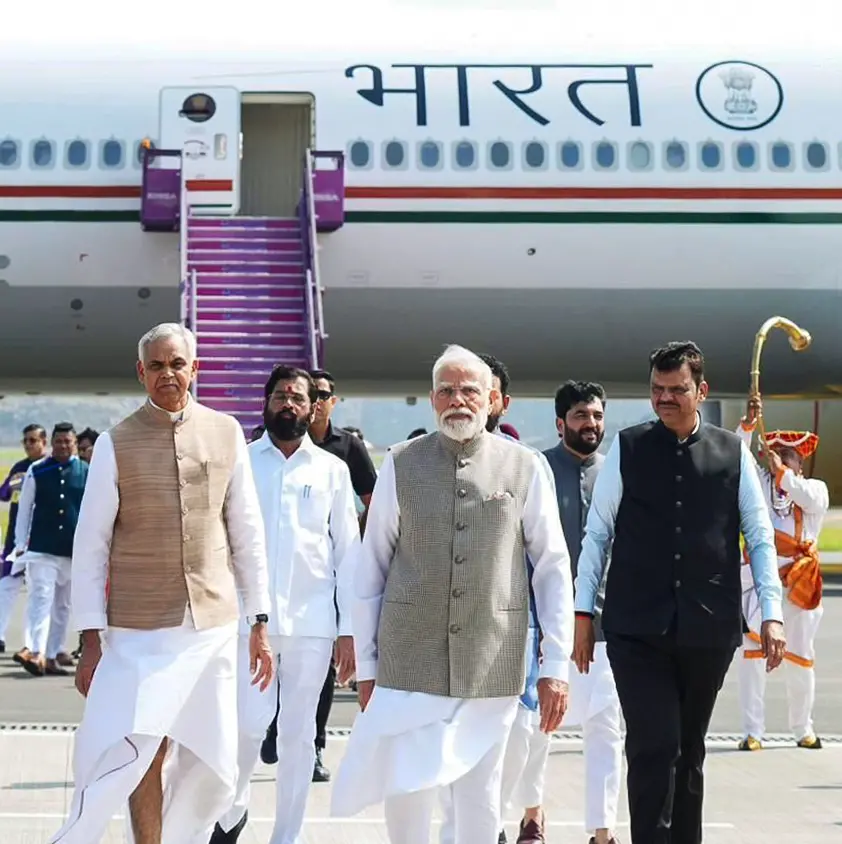
Mumbai: Prime Minister Narendra Modi on Wednesday inaugurated the Navi Mumbai International Airport (NMIA), a landmark infrastructure project designed to strengthen air connectivity across the Mumbai Metropolitan Region and Western India.
What makes NMIA a key aviation project?
Developed under a Public-Private Partnership (PPP) model, the airport is operated by Navi Mumbai International Airport Pvt. Ltd. (NMIAL), a joint venture between Adani Airports Holdings Ltd, which holds a 74 per cent stake, and the City and Industrial Development Corporation of Maharashtra Ltd (CIDCO), holding the remaining 26 percent.
The project aims to ease the heavy passenger load on the existing Mumbai International Airport while positioning Navi Mumbai as a global centre for aviation and logistics.
Where is the airport located and what is its design based on?
Located at Ulwe in Navi Mumbai, about 37 kilometres from South Mumbai, the airport spreads across 1,160 hectares (2,866 acres). Its architectural design draws inspiration from the lotus flower, India’s national emblem, with 12 sculptural feature columns representing the unfolding petals and 17 large columns supporting the terminal roof canopy.
What does the first phase include?
The first phase, inaugurated by PM Modi, includes a single integrated terminal catering to both domestic and international passengers, with a capacity of 20 million passengers per annum (MPPA). Once fully operational, the airport’s total capacity will rise to 90 MPPA.
The airport features two parallel Code F-compliant runways, each 3,700 metres long and 60 metres wide. Terminal 1 has 66 check-in counters, 22 self-baggage drop points, 29 aerobridges, and 10 bus boarding gates to ensure a smooth passenger experience.
How will cargo operations work?
The cargo complex has an initial capacity of 0.5 million metric tonnes annually and includes automated cargo handling, digital shipment tracking, and paperless operations. Special zones are set up for temperature-controlled cargo such as pharmaceuticals and perishables, along with dedicated express cargo and drone-handling areas. There are also facilities for valuables and live animals.
What smart and sustainable features stand out?
NMIA is built as a 5G-connected smart airport, featuring contactless check-ins under the Digi Yatra programme, no manual ID checks, and IoT-enabled monitoring systems for efficiency and security.
Passengers can access digital retail, dining, and lounge services through the Adani OneApp, which will streamline airport experiences. The terminal will also host over 110 retail and food outlets, CIP lounges accommodating 500 passengers, and a transit hotel with 80 rooms, in addition to baggage delivery and wrapping services.
As a Green Airport, NMIA has integrated sustainability measures across operations. It will generate 47 MW of solar power, and also focus on rainwater harvesting, wastewater recycling, and electric vehicle (EV) operations.
What makes NMIA a global-standard facility?
The airport has received certifications from global bodies, including the International Air Transport Association (IATA) Centre of Excellence for Independent Validators (CEIV) and the Transportation Security Administration (TSA).
Strategically located 14 km from Jawaharlal Nehru Port Trust (JNPT) and 35 km from Mumbai Port Trust, NMIA enjoys excellent multimodal connectivity, boosting its role as a logistics and air cargo hub for India.
(Agency inputs)