Iran President Pezeshkian to visit Delhi for BRICS: What it means for India and Iran
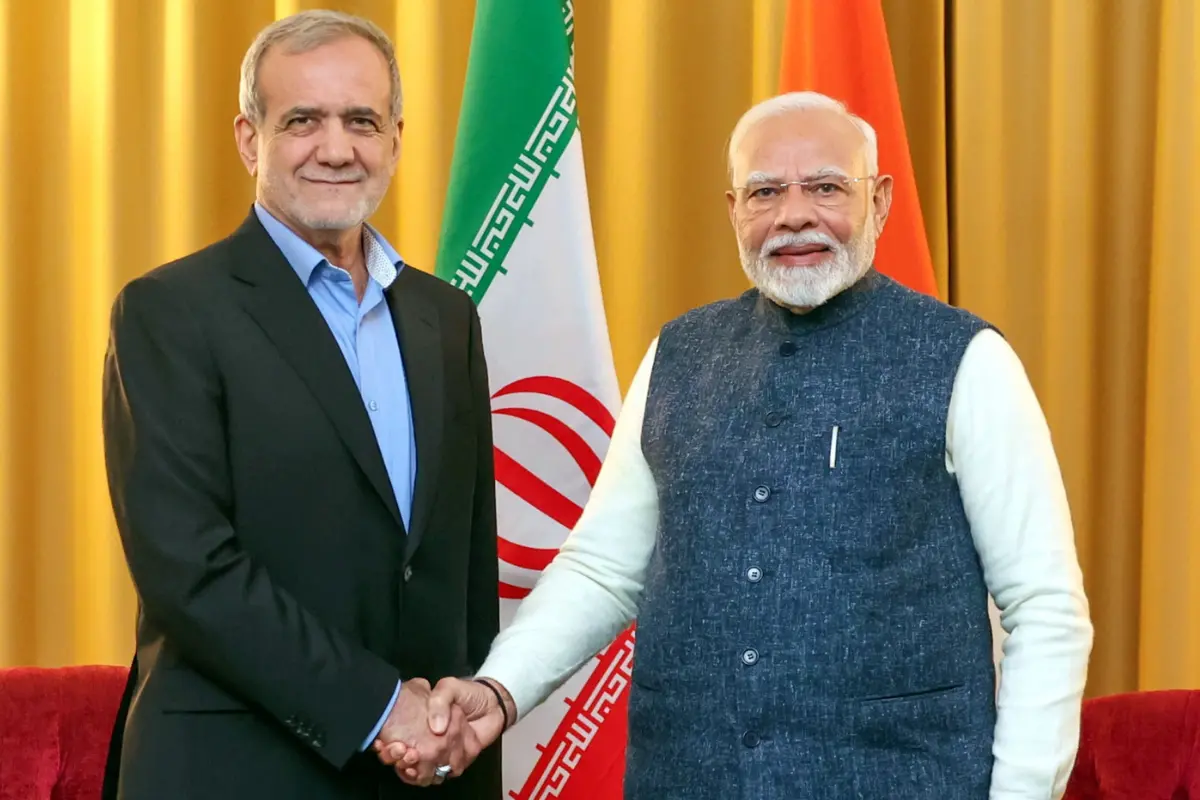
New Delhi: Iranian President Masoud Pezeshkian is expected to visit New Delhi in September for the 18th BRICS Summit, according to Iranian sources. His visit comes as India-Iran ties gain significance amid ongoing tensions in West Asia.
India will host the BRICS Summit on September 12 and 13 as part of its 2026 chairmanship of the grouping. The presidency is centred on the theme “Building for Resilience, Innovation, Cooperation and Sustainability”. The summit is expected to bring together leaders of major BRICS countries, including Russian President Vladimir Putin, providing a platform for discussions on global economic issues, geopolitical developments and cooperation among member states.
Pezeshkian-Modi talks likely
Pezeshkian’s expected visit could also lead to bilateral discussions with Prime Minister Narendra Modi on India-Iran relations and developments in West Asia. The two leaders last met on the sidelines of the BRICS Summit in Kazan, Russia, in October 2024, where they discussed bilateral and regional issues.
Iran became a full member of BRICS in 2024 along with Egypt, Ethiopia and the United Arab Emirates. Indonesia joined the grouping in 2025, taking the number of full members to 11.
Since joining the bloc, Tehran has sought a greater role for BRICS in addressing international conflicts and strengthening economic cooperation. At the 2024 BRICS Summit, Pezeshkian urged member countries to use their influence to help end conflicts in Gaza and Lebanon.
West Asia crisis adds significance
The Iranian president’s proposed visit comes against the backdrop of continuing tensions in West Asia and sustained diplomatic engagement between New Delhi and Tehran.
Iran has sought stronger support from BRICS on the regional crisis, including efforts to build consensus on a collective position. However, differences among member countries have made it difficult for the grouping to reach a unified response, with an earlier meeting of BRICS special envoys resulting in a chair’s statement rather than a joint declaration.
India has maintained contact with Iran while also engaging with other regional powers and Western countries, reflecting New Delhi’s effort to pursue an independent diplomatic approach to the crisis.
Jaishankar-Araghchi engagement
The proposed visit follows several rounds of contact between External Affairs Minister S Jaishankar and his Iranian counterpart, Abbas Araghchi.
Araghchi travelled to New Delhi for the BRICS Foreign Ministers’ Meeting earlier this year, where he held discussions with Jaishankar on regional developments, bilateral relations and BRICS-related issues.
During his visit, Araghchi said India could play a greater role in efforts to de-escalate tensions in West Asia. He also said Tehran did not see a military solution to the crisis and believed that a negotiated settlement was necessary.
Araghchi indicated that Iran would welcome a constructive role by India in diplomatic efforts. He also highlighted the importance of security around the Strait of Hormuz, a key route for global energy and commercial shipping.
Why Hormuz and Chabahar matter to India
The security of the Strait of Hormuz is particularly important for India because of the waterway’s role in global energy supplies. Any prolonged disruption in the region could have implications for oil and gas shipments, shipping costs and wider trade.
Chabahar Port is another important element of India-Iran relations. India has been involved in developing the Shahid Beheshti terminal at the Iranian port, which provides an alternative route to Afghanistan and Central Asia without relying on transit through Pakistan.
Chabahar is also linked to the broader International North-South Transport Corridor, a multimodal trade route connecting India with Iran, Russia and markets in Europe.
However, India-Iran economic ties have had to navigate international sanctions on Tehran. Direct commercial oil imports from Iran remain constrained by US sanctions, even as the two countries continue engagement in trade, connectivity and regional cooperation.
Putin among leaders expected in Delhi
Pezeshkian is expected to join other prominent leaders at the September summit, including Russian President Vladimir Putin. The presence of leaders from the expanded BRICS membership is likely to make the New Delhi meeting an important platform for discussions on geopolitical tensions and cooperation among emerging economies.
For India, hosting the summit also provides an opportunity to reinforce its diplomatic position as it engages simultaneously with Iran, Russia, China, the Gulf countries and Western powers.
Pezeshkian’s visit could therefore give the India-Iran relationship renewed visibility while placing New Delhi at the centre of discussions on how BRICS can respond to a rapidly changing geopolitical landscape.