Those who want 100% petrol will have to pay more: Gadkari defends Ethanol blending
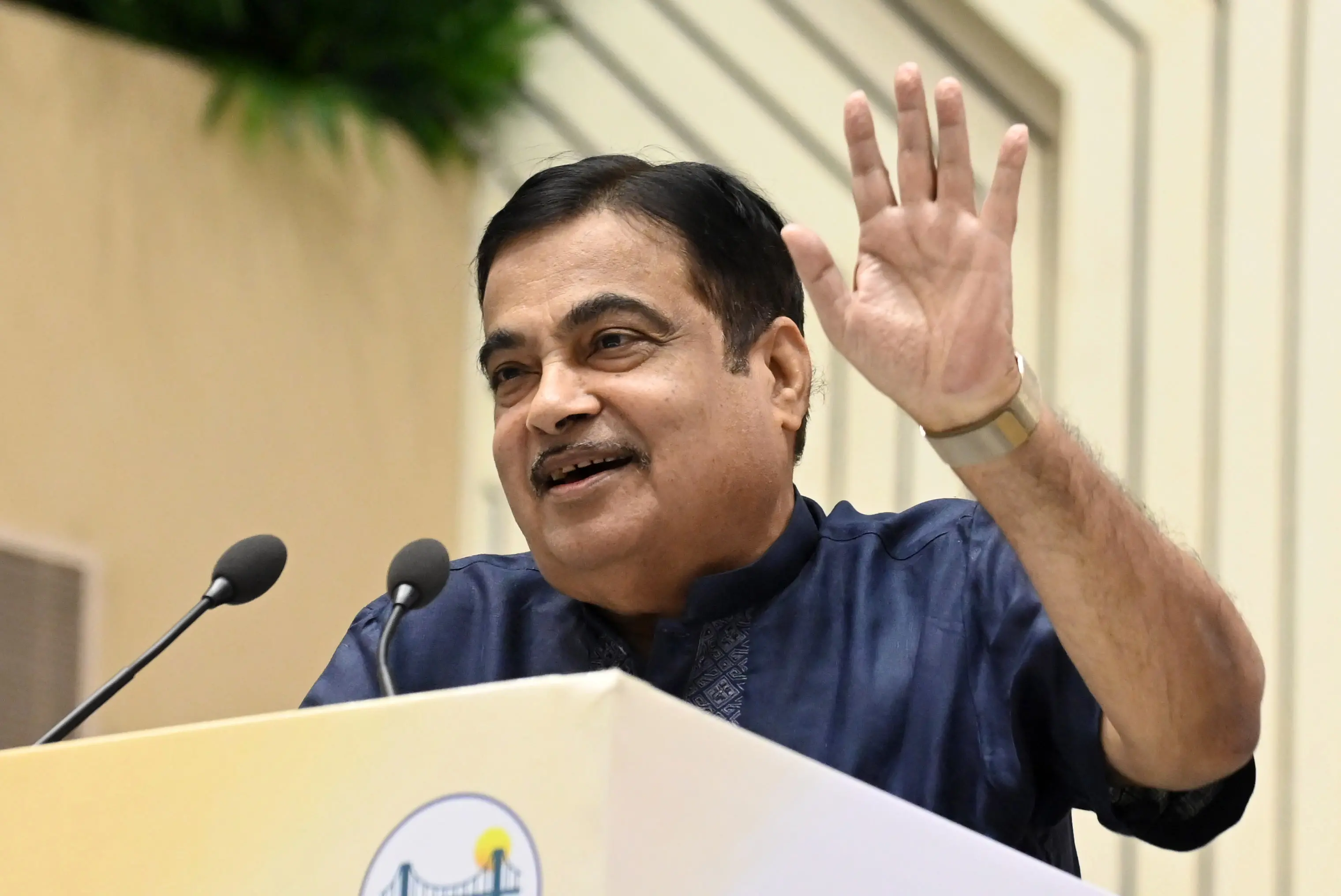
New Delhi: Union Road Transport and Highways Minister Nitin Gadkari has strongly rejected allegations of a conflict of interest over his advocacy of India’s ethanol blending programme, describing the accusations as “politically motivated” and asserting that he has consistently promoted alternative fuels to reduce vehicular pollution and cut the country’s dependence on imported crude oil.
Responding to criticism over his family’s business interests, Gadkari told The Times of India that his sons’ company accounts for only a small share of the ethanol sector and that he has no role in its operations or government decision-making.
He stressed that his sons’ business had a limited presence in ethanol production and its contribution to the overall market was “meagre.”
He also said the company carries a debt of around Rs 1,600 crore and stressed that he is “in no way associated with it or in fixing the price or its procurement.”
The minister maintained that India’s ethanol blending programme predates the current government, noting that it was initiated during the Atal Bihari Vajpayee-led NDA government and later received support from the UPA government as well. He said former petroleum minister Mani Shankar Aiyar had backed the initiative in Parliament.
Gadkari also rejected suggestions that he had promoted only sugarcane-based ethanol, saying he has consistently supported ethanol production from maize, crop stubble and bamboo, while advocating other clean-energy alternatives such as methanol, hydrogen and electric vehicles.
“How is it possible when we have achieved 20% ethanol blending, and E20 fuel is available at every fuel station in the country? People who do not want ethanol blended fuel can go for 100% petrol, but they will have to pay more,” he said when asked whether there is any way E10 fuel can be available at petrol pumps.
Congress general secretary Randeep Surjewala on Friday accused the Centre of displaying “false bravado” and presenting “half-baked truths” on ethanol-blended fuel, alleging that significant policy gaps remain in the implementation of E20 petrol and the proposed rollout of 15 per cent methanol-blend diesel.
In a post on X, Surjewala claimed Gadkari’s recent interviews and press conferences had exposed what he described as the Modi government’s attempt to confuse the public over ethanol-blended fuel. He said the issue had raised genuine concerns among India’s 36 crore registered vehicle owners.
Citing the NITI Aayog’s 2021 roadmap on ethanol blending, Surjewala argued that rubber and plastic components in many existing petrol vehicles may not be compatible with E20 fuel without changes to materials and engine tuning.
“Niti Aayog 2021 roadmap also says that we should roll out E20 material compliant vehicles from April 2023 and E20 engine compliant vehicles from April 2025,” Surjewala wrote, questioning whether the government had ignored its own policy recommendations.
He also referred to an unpublished report by the Automotive Research Association of India (ARAI), claiming it concluded that E20 fuel accelerates deterioration of rubber fuel system components such as hoses, gaskets, seals and O-rings. Surjewala further alleged that Gadkari himself had acknowledged this issue.
“Why is the Modi government, then, pushing through E20 fuel blend in petrol, without ensuring that every petrol vehicle is ‘materially compliant’ and ‘engine compliant’ for consumption of E20 petrol,” he asked.
Surjewala also alleged that E20 petrol reduces vehicle fuel efficiency.
“Even the Government of India admits to a 5 per cent drop in fuel mileage. In reality, the drop in fuel mileage is over 15 per cent as reported by users,” he wrote, questioning why the government had not clearly communicated the impact of E20 fuel on mileage.