‘Talks anytime, anywhere’: Govt's open invitation faces CJP's ‘not without Pradhan's exit’ stand
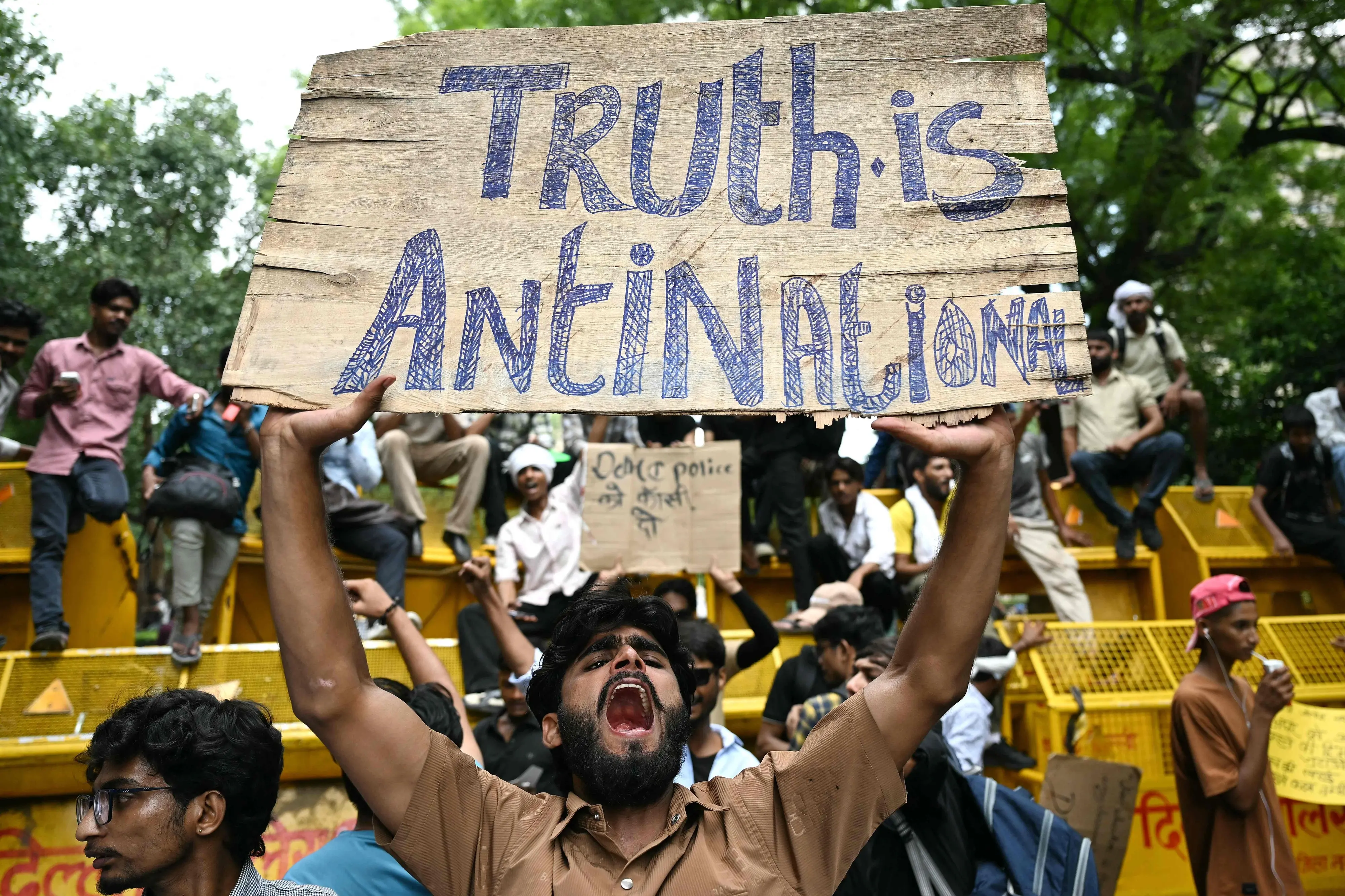
New Delhi: The Centre on Thursday made another attempt to break the deadlock with the Cockroach Janata Party (CJP), which has been leading nationwide protests over the alleged NEET paper leak and examination irregularities.
Union Minister Jitendra Singh announced that the government had formally invited the student group for talks, saying it was ready to discuss all issues related to the agitation. However, the CJP rejected the offer, insisting that any dialogue would only be meaningful after Union Education Minister Dharmendra Pradhan resigned.
The development comes after several days of protests, clashes and political confrontation over the NEET controversy, with the Opposition also stepping up pressure on the government inside Parliament.
Centre says four formal proposals were sent for talks
Addressing the media, Union Minister Jitendra Singh said the government had made four formal proposals to the CJP leadership over the previous 24 hours in an effort to begin dialogue. He appealed to the protesting students to accept the invitation, stressing that the government was prepared to hold discussions at any time and for as long as necessary.
Singh said Union Health Minister JP Nadda and he would personally participate in the talks and were willing to meet the CJP either at Nadda's official residence or office. According to the minister, the government had no issue with the duration or agenda of the meeting and wanted to discuss both the immediate concerns that triggered the agitation and broader issues related to examination reforms. He maintained that the Centre was not treating the matter as a question of prestige and was committed to finding a solution through dialogue.
PM Modi announces fast-track courts for paper leak cases
The government's renewed outreach came shortly after Prime Minister Narendra Modi announced a series of measures aimed at strengthening action against examination-related fraud.
In a post on X, the Prime Minister said fast-track courts would be established to ensure swift and stringent punishment for those responsible for paper leaks. He directed the concerned authorities to take all necessary steps to safeguard the interests of students, stating that protecting the future of young people remained the government's priority and warning that those responsible for compromising examination integrity would not be spared.
The announcement formed part of the Centre's broader response to mounting public anger over alleged irregularities in competitive examinations.
CJP refuses to meet ministers at official residence
Despite the government's invitation, the CJP declined to attend talks at the residence or office of Union Health Minister JP Nadda.
Chief spokesperson Saurav Das said the police had informed the organisation about the government's proposal but made it clear that the movement would not visit any minister's residence. He argued that the protest itself represented a "Janata Darbar" where thousands of citizens had gathered and that ministers should instead come to Jantar Mantar if they genuinely wished to engage with the protesters.
Das said the CJP remained open to dialogue but suggested that, if security concerns prevented ministers from visiting the protest site, discussions could instead take place at a neutral venue close to Jantar Mantar.
Student group says resignation must come before negotiations
The CJP maintained that discussions without concrete action from the government would serve little purpose.
According to Das, the organisation's principal demand remains the resignation of Union Education Minister Dharmendra Pradhan over the alleged NEET paper leak and examination irregularities. He questioned whether the government genuinely intended to address the protesters' demands or merely wanted symbolic meetings.
The student leader also pointed out that thousands of people continued to participate in the ongoing agitation, making it necessary for the organisation to focus on managing the protest while awaiting a clear response from the Centre.
Monday's talks failed to end the standoff
Thursday's invitation followed an earlier round of discussions held on Monday between government representatives and CJP delegates. Those talks ended without any agreement, with both sides failing to bridge differences over the protesters' key demands.
Since then, demonstrations have continued at Delhi's Jantar Mantar and in several other parts of the country, with students demanding accountability for the alleged paper leak, greater transparency in recruitment and entrance examinations, and action against those responsible.
The continuing protests have also led to heightened security arrangements and repeated appeals from the government for dialogue.
Opposition links Parliament proceedings to Pradhan's resignation
The issue has also become a major flashpoint during the Monsoon Session of Parliament.
Congress leader K C Venugopal said Opposition parties had decided not to participate in discussions until Union Education Minister Dharmendra Pradhan resigned. According to the Opposition, fixing accountability for the alleged examination irregularities is a prerequisite for any meaningful debate.
The government rejected the Opposition's position, with Parliamentary Affairs Minister Kiren Rijiju reiterating that it was prepared for a full discussion on the NEET issue in Parliament. BJP leaders also accused Opposition parties of avoiding debate despite repeatedly demanding answers on the matter.
Background: Why the protests began
The CJP-led movement began after allegations of irregularities and paper leaks in the NEET examination triggered widespread concern among students and parents. Protesters have accused the government of failing to protect the integrity of competitive examinations and have demanded institutional reforms, accountability for officials responsible for lapses, and the resignation of Education Minister Dharmendra Pradhan.
What initially began as demonstrations over examination irregularities has since evolved into a broader nationwide movement demanding transparency in public examinations and stronger safeguards against paper leaks.
Deadlock continues despite renewed outreach
The Centre's latest offer indicates that it is attempting to resolve the crisis through negotiations after days of protests and political pressure. However, the CJP has made it clear that it is unwilling to enter formal talks unless the government first addresses its central demand for the resignation of the Education Minister.
With the government continuing to advocate dialogue and the protesters refusing negotiations without prior action, the standoff remains unresolved, even as Parliament and the streets continue to witness intense political and public mobilisation.