First flights set to take off from Navi Mumbai International Airport in December
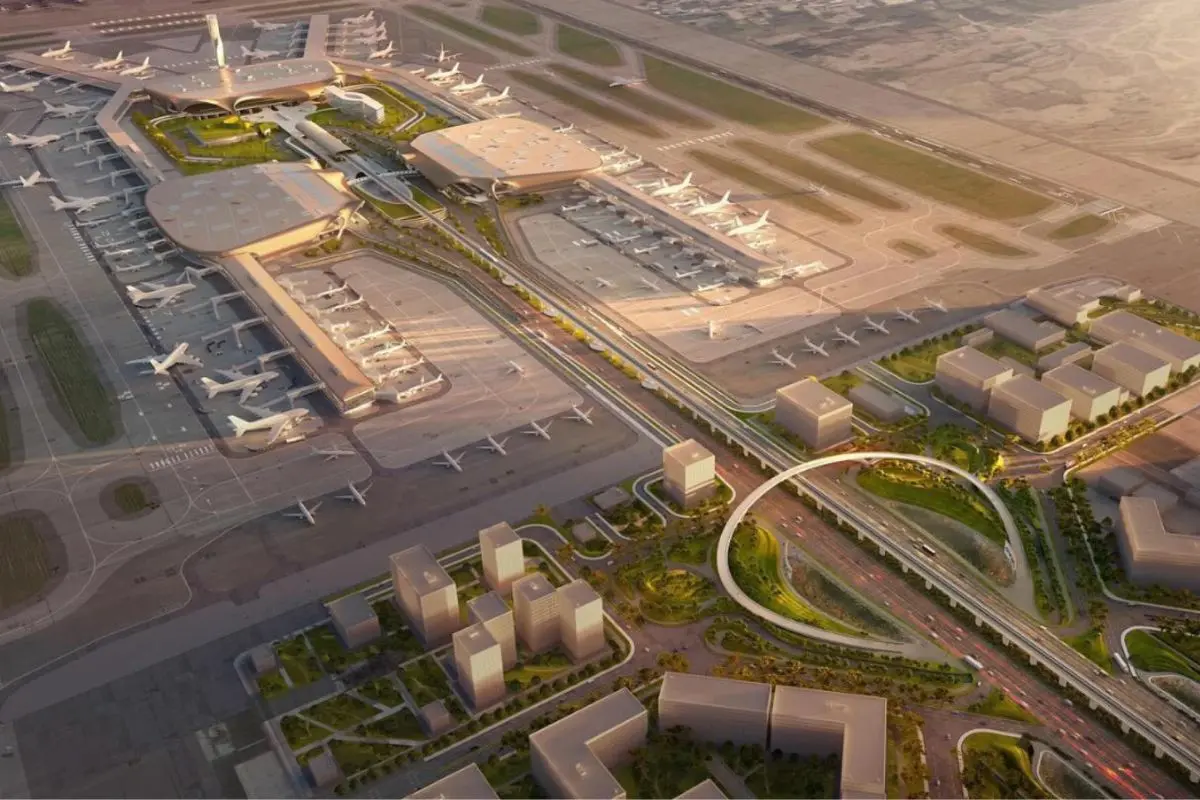
The much-awaited Navi Mumbai International Airport (NMIA) is all set to open its doors, promising to change the face of air travel in India’s financial capital, on October 8, 2025. According to Arun Bansal, CEO of Adani Airports, the first passenger flights are expected to take off in mid-December 2025, although the airline to operate the inaugural flight has not yet been finalised. “We are friends with all carriers,” Bansal said, highlighting the airport’s commitment to working with every airline. IndiGo, Akasa Air, and Air India Express are among the carriers ready to begin operations from Day 1.
The airport, developed under a public-private partnership between the Adani Group (74% stake) and CIDCO (26%), is scheduled to be inaugurated by Prime Minister Narendra Modi on October 8, 2025, at 2:40 PM.
Ticketing and flight operations
Ticket sales for NMIA are expected to begin towards the end of October 2025. Initial flight operations will feature 8 to 10 flights every morning, with capacity scaling up to 20–30 flights per hour as passenger demand grows. While domestic airlines will lead the initial operations, international carriers are expected to join in phases once night operations are permitted.
Bansal also indicated that the airport aims to become a hub for international passenger travel, underscoring the strategic vision of NMIA as more than just an alternative to Mumbai’s Chhatrapati Shivaji Maharaj International Airport (CSIA).
Seamless transition and expansion plans
The transition from Mumbai’s Terminal 1 to NMIA will be carefully managed. The demolition of Terminal 1 will take place only after Terminal 2 at NMIA is completed by 2029, ensuring a phased transfer of flights.
Looking ahead, Bansal said the company plans to start design work for the next phase in this fiscal year, with the second terminal expected to be ready by 2029. Once fully operational, NMIA will have the capacity to handle 90 million passengers annually and manage 3.5 million tonnes of cargo, making it twice the size of CSIA.
Airport facilities and features
The airport’s infrastructure reflects a modern, passenger-focused approach:
- An Automated People Mover system will connect all terminals via underground tunnels, allowing passengers to check in at any terminal with luggage automatically routed to the right one.
- NMIA will be well-connected through multiple modes of transport like road, rail, and waterways.
- Water taxis will operate from Targhar, and road access will be temporarily available through the Belapur-Ulwe route until major highways are completed.
- The planned ‘Gold Line’ metro will provide a direct connection to Mumbai’s CSIA.
Passengers from Mumbai, Thane, Palghar, Raigad, and surrounding suburbs can access NMIA via the Eastern Motorway (Mulund → Airoli → Belapur-Ulwe) – 35–40 km – or western expressway (via JVLR → eastern expressway → Vashi Creek Bridge) – 40–45 km.
Additionally, once completed, the Atal Setu bridge and Thane Unnat Marg and Metro-8 routes will further improve connectivity.
The first phase of NMIA has cost an estimated INR 19,646 crore and features a runway capable of handling all types of aircraft. The airport currently handles 20 million passengers annually in Phase 1, with plans to scale to 90 million upon completion of all four terminals.
NMIA has recently received its aerodrome licence from the Directorate General of Civil Aviation (DGCA). After the inauguration, the Central Industrial Security Force (CISF) will take over security clearance checks before the Airports Authority of India (AAI) grants final approval for operations.
The airport is expected to generate over 2 lakh jobs across sectors including aviation, logistics, IT, hospitality, and real estate, further boosting the economic profile of Navi Mumbai and surrounding areas.
Spread over 1,160 hectares, NMIA is being developed in four phases, reflecting careful planning and long-term vision. It is not just a second international airport for Mumbai; it is a strategic infrastructure project designed to ease congestion, support international operations, and meet the growing air travel demands of India’s financial hub.
With its state-of-the-art facilities, strategic connectivity, and phased expansion plan, the Navi Mumbai International Airport is poised to become a world-class aviation hub, connecting India to the world and setting a new benchmark in passenger experience.