'Stop Amit Shah’: Mamata Banerjee accuses Centre of fuelling communal divide
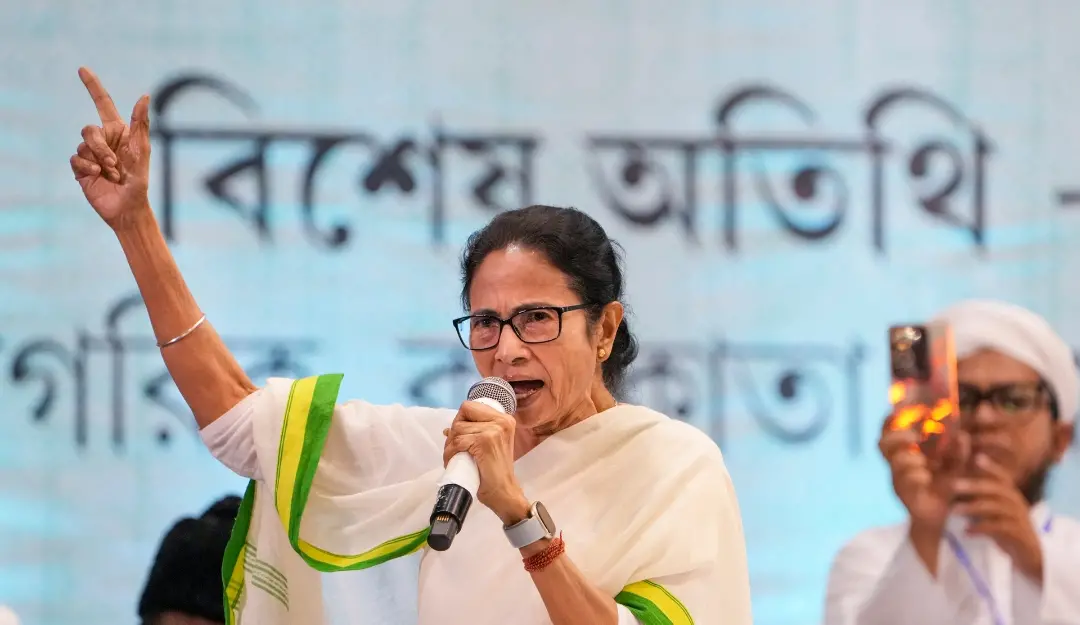
Kolkata: West Bengal Chief Minister Mamata Banerjee on Wednesday levelled serious allegations against the Bharatiya Janata Party (BJP), suggesting it was behind the recent communal violence in Murshidabad. Addressing Muslim religious leaders in Kolkata, Banerjee said the violence over the newly enacted Waqf Amendment Act was “pre-planned” and involved cross-border infiltration from Bangladesh.
She accused certain Border Security Force (BSF) personnel of facilitating the unrest by paying local youths to pelt stones. “Is it not the role of the BSF to guard the border? The BSF is under the Ministry of Home Affairs (MHA). The state government does not guard the international border,” Banerjee said.
She added, “I will find out who the BSF had financed in the border areas by paying money to local youths to pelt stones during the violence.”
Banerjee criticised the BJP for allegedly allowing “goons from outside” to enter and incite communal tensions in the region. “They want to polarise and divide Hindus and Muslims. They want their Jumla government,” she stated.
The chief minister also slammed the Centre over the Waqf Amendment Act, calling it unconstitutional and divisive. She urged Prime Minister Narendra Modi not to implement the “atrocious” law and warned that it could cause widespread social unrest.
Banerjee didn’t spare Union Home Minister Amit Shah either, claiming he was "harming the country the most" in pursuit of political power. “He will never become the Prime Minister, and what will he do once Modi-ji leaves?” she said, accusing Shah of misusing central agencies for political objectives.
Reinforcing her appeal for opposition unity, Banerjee called on the INDIA bloc to stand together against the Waqf law. “Today, they are targeting one group. Tomorrow, it could be another. After this, they are even talking about a Uniform Civil Code,” she warned.
The controversy follows violent clashes in Murshidabad over the Waqf Amendment Act, a law that critics argue undermines the rights of religious endowments and could fuel communal tensions in the lead-up to national elections.