‘The SIR process has to stop’: Mahua Moitra demands Gyanesh Kumar’s resignation at Jantar Mantar
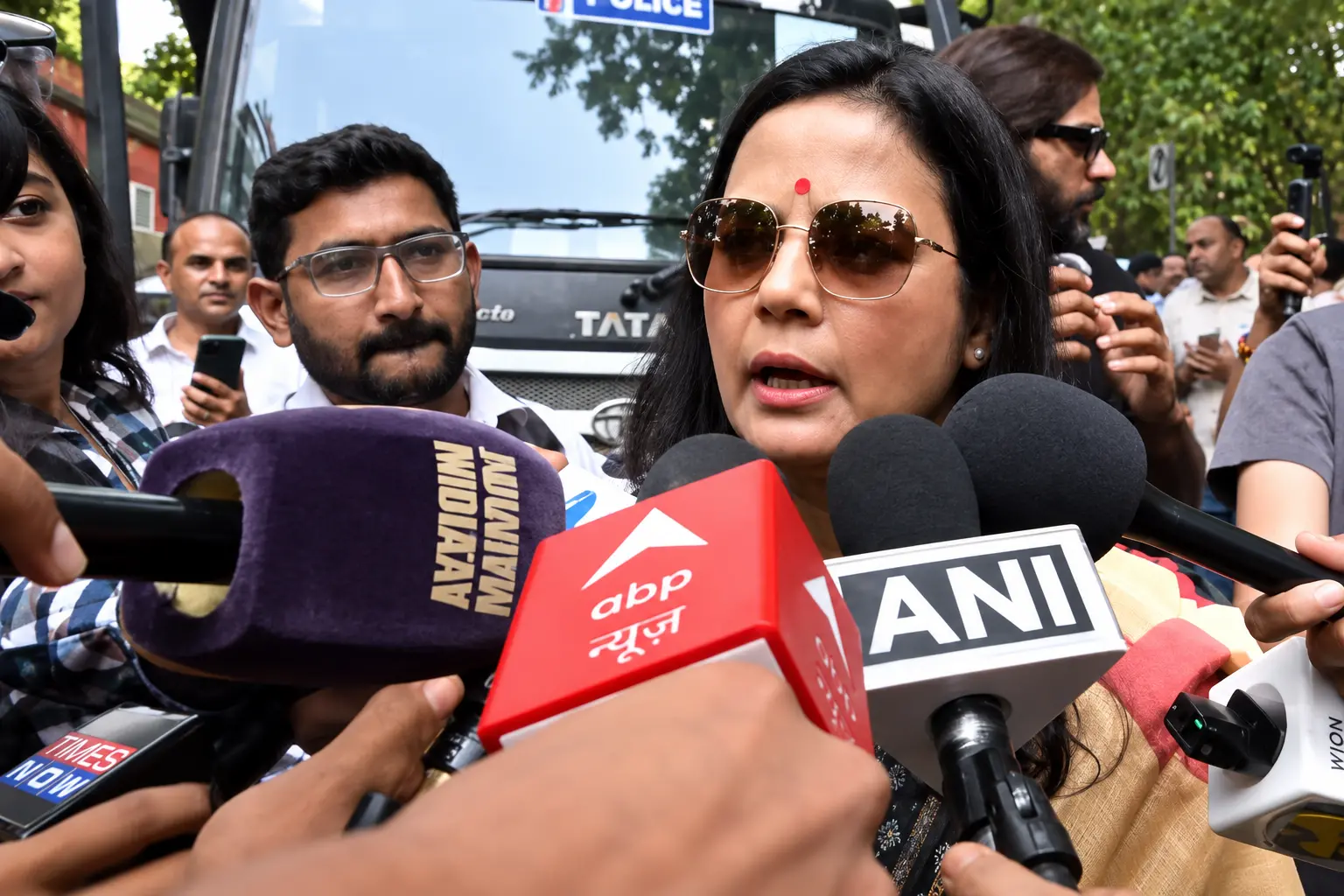
The confrontation over the Election Commission’s Special Intensive Revision (SIR) of electoral rolls moved from the police station to the streets of Delhi on Friday, with TMC MP Mahua Moitra joining an agitation at Jantar Mantar and demanding the resignation of Chief Election Commissioner Gyanesh Kumar.
A day after filing a formal complaint against Kumar at the Parliament Street Police Station, Moitra appeared at the protest organised by the Indian Youth Congress.
The IYC had marched from Raisina Road to Jantar Mantar, where demonstrators demanded Kumar’s resignation.
Speaking to reporters, Moitra launched a sharp attack on the CEC, alleging that he was a 'criminal' and should be prosecuted.
'Gyanesh Kumar is a criminal and he needs to be prosecuted. He needs to resign,' Moitra said.
She also hit out at the police deployment around the demonstration, saying it would not deter protesters and insisting that the SIR exercise should be stopped.
'The police is going to stop the protestors... The SIR process has to stop,' she said.
The latest protest comes against the backdrop of an escalating political dispute over the functioning of the Election Commission.
The controversy intensified after an Indian Express investigation reported that Election Commissioners Sukhbir Singh Sandhu and Vivek Joshi had formally raised objections at least 14 times over 10 months regarding decisions and procedures connected with electoral rolls and access to the voter database.
The reported objections have become a central point of the Opposition's criticism of the poll panel, particularly in the context of SIR.
The Election Commission, however, has rejected the portrayal of the objections as evidence of institutional dissent and maintained that operational queries, internal feedback and administrative suggestions are part of the normal functioning of a multi-member constitutional body. The ECI has also maintained that decisions relating to SIR were unanimous.
Moitra's protest appearance came a day after she lodged her complaint against Kumar, alleging procedural violations, unilateral decision-making and manipulation of electoral rolls.
The agitation was not confined to Delhi. In Patna, Bihar, police used water cannons to disperse Congress workers protesting against Kumar and demanding his resignation.
Similar scenes unfolded in Chandigarh, Punjab, where police deployed water cannons against protesting Congress workers, with some demonstrators climbing onto police vans.
Congress workers also held demonstrations in Jammu and Kashmir, Assam, Uttarakhand, West Bengal, Uttar Pradesh, Himachal Pradesh and Manipur.
The Opposition's campaign against Kumar could also move into Parliament.
The Congress has indicated that opposition parties may consider an impeachment motion against the CEC, with the issue expected to come up for discussion at the Congress Working Committee meeting scheduled for September 29 in New Delhi.
With protests spreading across states and fresh allegations being levelled against the poll panel, the SIR controversy has now widened into a broader political confrontation over the Election Commission's functioning and the conduct of the electoral-roll revision exercise.