Nearly 18 years after 26/11, Maharashtra changes Force One command as Rana case moves ahead
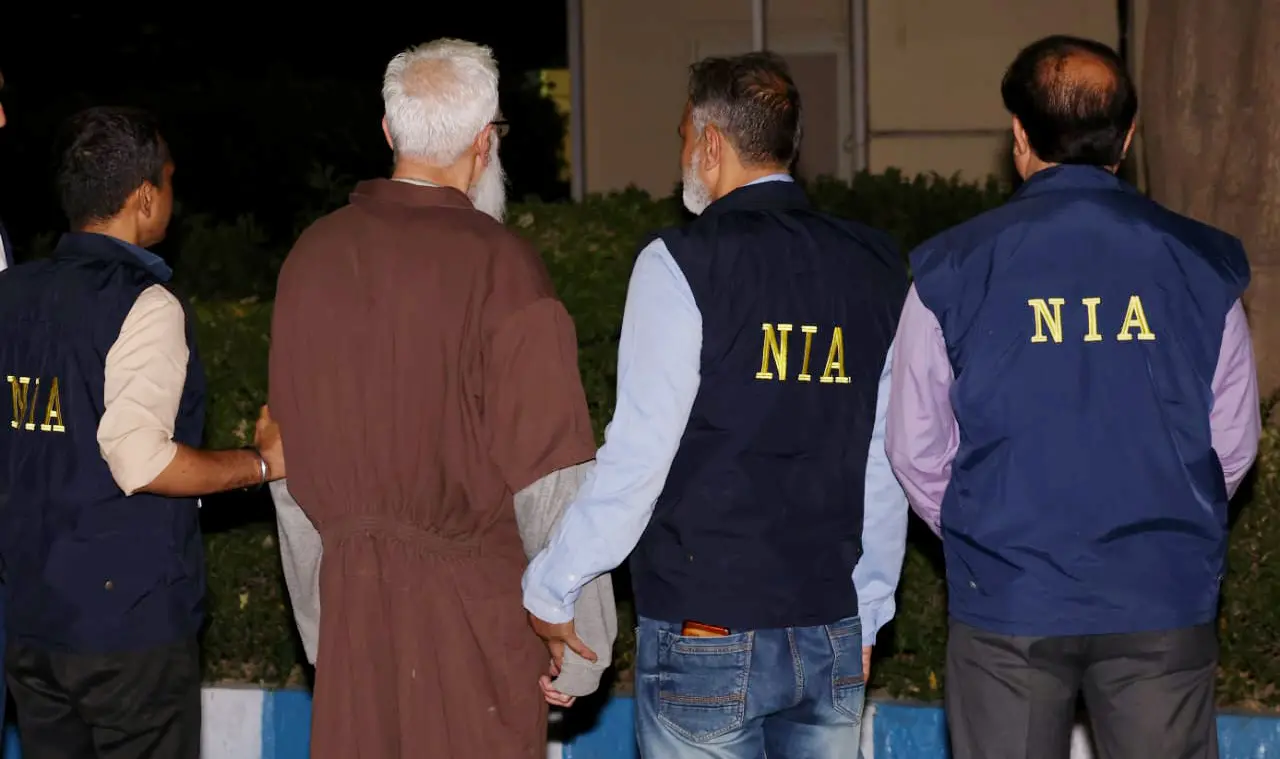
Mumbai: Nearly 18 years after the 26/11 Mumbai terror attacks, the legal proceedings against alleged conspirator Tahawwur Hussain Rana are moving ahead, while Maharashtra has made a significant change to the command structure of its counter-terrorism forces.
In the latest development in the Rana case, a special National Investigation Agency (NIA) court in New Delhi on Monday allowed an application seeking the supply of unrelied documents filed by the investigating agency along with the chargesheet. The court gave the NIA two weeks to provide the list of these documents to Rana.
Separately, the Maharashtra government has placed Force One, the specialised commando unit established after the 2008 attacks, under the administrative and operational control of the state's Anti-Terrorism Squad (ATS).
The two developments concern different aspects of India's response to the attacks: the ongoing legal process to establish accountability and changes to the state's counter-terrorism command structure.
NIA court gives two weeks to supply documents to Tahawwur Rana
Special NIA Judge Prashant Sharma granted the agency two weeks to supply the list of unrelied documents to Rana. Some documents were provided on Monday, according to the proceedings.
The case is currently at the stage of arguments on the framing of charges. Advocate Nishant Singh, appointed as amicus curiae to assist the court, sought three weeks to present arguments on the charges.
The court has scheduled the next hearing for December 18.
Rana has been lodged in Tihar Jail since his extradition from the United States to India in April 2025. He is accused of being involved in the conspiracy behind the November 26, 2008, Mumbai terror attacks.
The latest order concerns the supply of documents to the accused. It does not amount to a decision on whether charges will be framed against him.
Rana's medical treatment and legal requests
The latest hearing follows other directions issued by the special court on November 14.
The court directed Tihar Jail authorities to ensure that Rana received complete medical treatment and arrange an examination at the All India Institute of Medical Sciences (AIIMS). He had approached the court citing medical problems related to ENT and orthopaedics.
The court also allowed his request for access to legal reference books, including the Criminal Law Manual, Bharatiya Nyaya Sanhita (BNS) and Evidence Act, in accordance with the jail manual.
Rana had additionally sought access to his complete medical records, including documents relating to treatment received during his detention in the United States.
Maharashtra brings Force One under ATS control
In a separate development, the Maharashtra Home Department issued a Government Resolution (GR) on November 16, placing the state's elite Force One commando unit under the administrative and operational control of the Anti-Terrorism Squad.
The decision brings two specialised counter-terrorism units under a unified command structure. The government said the arrangement would improve coordination, enable integrated planning and speed up decision-making during terrorist emergencies.
Until now, Force One and the ATS operated under the administrative control of separate senior officers. According to the government, this could create practical difficulties in ensuring unified leadership and coordination during counter-terrorism operations.
The latest order extends an existing operational arrangement. Under guidelines issued in June 2009, the ATS chief was already responsible for calling in Force One during a terrorist attack and coordinating the overall response. The new decision brings the commando unit's administrative and operational control under the ATS as well.
What do the ATS and Force One do?
The two units have different but complementary responsibilities.
Anti-Terrorism Squad (ATS): Responsible for gathering and analysing intelligence, preventing terrorist activities, taking preventive action and investigating terror-related offences.
Force One: A specially trained commando unit equipped to respond to high-risk terrorist incidents, conduct specialised counter-terrorism operations, rescue hostages and protect important installations.
By bringing both units under one leadership, the Maharashtra government aims to connect intelligence gathering and investigation more closely with the armed response to terrorist threats.
Will Force One's strength or structure change?
The government has clarified that the transfer of control will not change Force One's existing organisational structure, sanctioned posts, manpower, financial allocations or service conditions.
The Maharashtra Director General of Police has been directed to issue the necessary administrative orders and complete the transfer immediately.
The GR does not announce an increase or reduction in the unit's strength. Its stated objective is to improve coordination and operational efficiency rather than expand or restructure the commando force.
Why was Force One established after 26/11?
The November 26, 2008, Mumbai terror attacks exposed serious weaknesses in the city's ability to respond to a coordinated, large-scale terrorist assault.
Ten heavily armed terrorists carried out attacks at several locations, including the Taj Mahal Palace Hotel, Oberoi-Trident Hotel, Chhatrapati Shivaji Terminus and the Chabad House. The attacks continued for nearly three days, killing 166 people and injuring hundreds.
Following the attacks, Maharashtra established Force One in 2009 as a specially trained commando unit capable of responding quickly to major terrorist incidents. Its responsibilities include neutralising armed threats, rescuing hostages and protecting critical installations.
The unit was created to strengthen Maharashtra's ability to respond to attacks without depending entirely on forces from outside the state.
Two 26/11 legacies — the pursuit of justice and the restructuring of security
The latest developments highlight two different ways in which the 2008 Mumbai attacks continue to shape India's security and legal landscape.
The proceedings against Rana are part of the continuing effort to examine the wider conspiracy behind the attacks. His extradition from the United States in April 2025 followed years of legal proceedings. The NIA subsequently filed a supplementary chargesheet containing extradition-related documents and additional evidence.
The current stage of the case is important because the court is examining the material and hearing arguments before deciding on the framing of charges. The supply of unrelied documents is part of the disclosure process and allows the accused access to material submitted by the investigating agency but not relied upon by it. The court has not yet made a decision on the charges.
Maharashtra's Force One restructuring addresses a different lesson from 26/11: the need for coordination between intelligence, investigation and armed response during a terrorist emergency.
Although the ATS chief already had a role in mobilising Force One during attacks, the two units had separate administrative leadership. Bringing them under one command is intended to reduce coordination difficulties and establish clearer operational accountability.
However, a change in reporting structure does not automatically establish how effectively the units will respond during an actual emergency. Its impact will depend on implementation, training, intelligence-sharing, preparedness and the speed with which personnel and resources can be deployed.
Nearly 18 years after the attacks, the Rana proceedings and Maharashtra's decision to unify the command of its specialised counter-terrorism units show how the legal and institutional consequences of 26/11 continue to unfold.