Why Aadhaar is no longer valid for delayed birth certificates in Maharashtra?
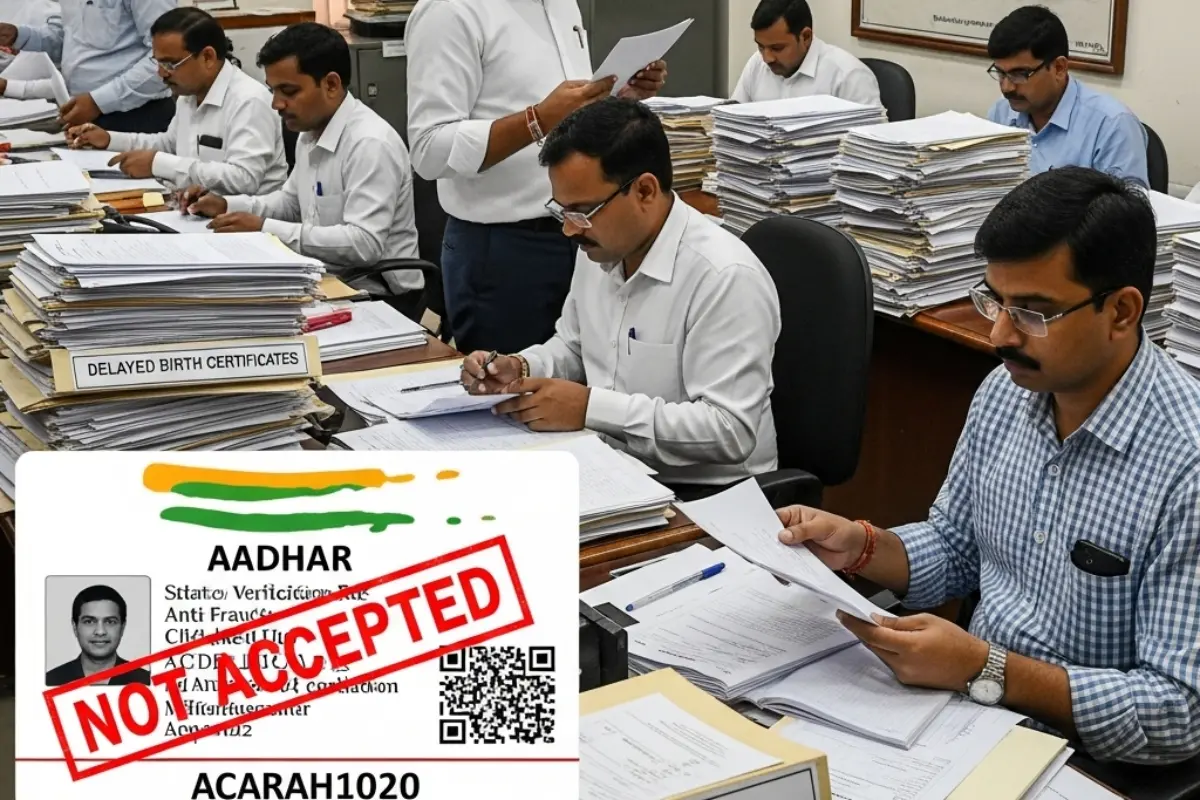
Mumbai: The Maharashtra Revenue Department has announced that Aadhaar will no longer be accepted as a document for issuing delayed birth certificates in the state. All delayed birth certificates created using only an Aadhaar card after the introduction of the Births and Deaths Registration (Amendment) Act, 2023, will be cancelled. The decision follows increasing cases of fake birth and death certificates being used for illegal activities.
Revenue Minister Chandrashekhar Bawankule has directed officials to cancel all suspicious certificates issued through Aadhaar-based applications and to initiate action against officers responsible for approving them. A 16-point verification guideline has been issued to Tehsildars, Sub-Divisional Officers, District Collectors and Divisional Commissioners to strengthen scrutiny.
According to the revised guidelines, any orders issued by Deputy Tehsildars after the August 11, 2023 amendment must be withdrawn and re-verified by the competent authority or the District Collector. Pending applications under suspension must be examined immediately, and any certificate not compliant with the Public Health Department’s rules or the new SOP must be cancelled. Entries uploaded on the Civil Registration System (CRS) portal should also be deleted.
The notice further clarifies that Aadhaar cannot be accepted as evidence in any case. If discrepancies are found between the Aadhaar details and the date of birth mentioned in the application, officials must file a police complaint. Fourteen regions have been flagged for a large number of unauthorised cases, including Amravati, Sillod, Akola, Sambhajinagar City, Latur, Anjangaon Surji, Achalpur, Pusad, Parbhani, Beed, Gevrai, Jalna, Ardhapur and Parli. Tehsildars and police stations in these areas have been instructed to conduct serious investigations.
Municipal bodies have been directed to reconcile all delayed birth records issued after Tehsildar orders. The notice states that some offices issued certificates without any authorised order or supporting documents such as school records or proof of place of birth. Such approvals are deemed erroneous, and Executive Magistrates and Tehsildars must review and correct them.
A detailed list of discrepancies is to be prepared by Executive Magistrates and Sub-Divisional Officers and forwarded to the police, with FIRs to be registered wherever fraud or falsification is detected. Tehsildars must also provide police with names of applicants whose birth certificates were issued using only Aadhaar or whose submitted information contradicts other evidence.
Applicants whose certificates are cancelled will be required to return the original documents, and local police assistance may be sought if they fail to comply. Divisional Commissioners have been instructed to hold a one-day coordination meeting with District Collectors, Tehsildars, municipal authorities, Zilla Parishads and police officials to ensure consistent implementation across the state.