‘This is just the first step’: JSSC-CGL cancelled, but CBI probe remains
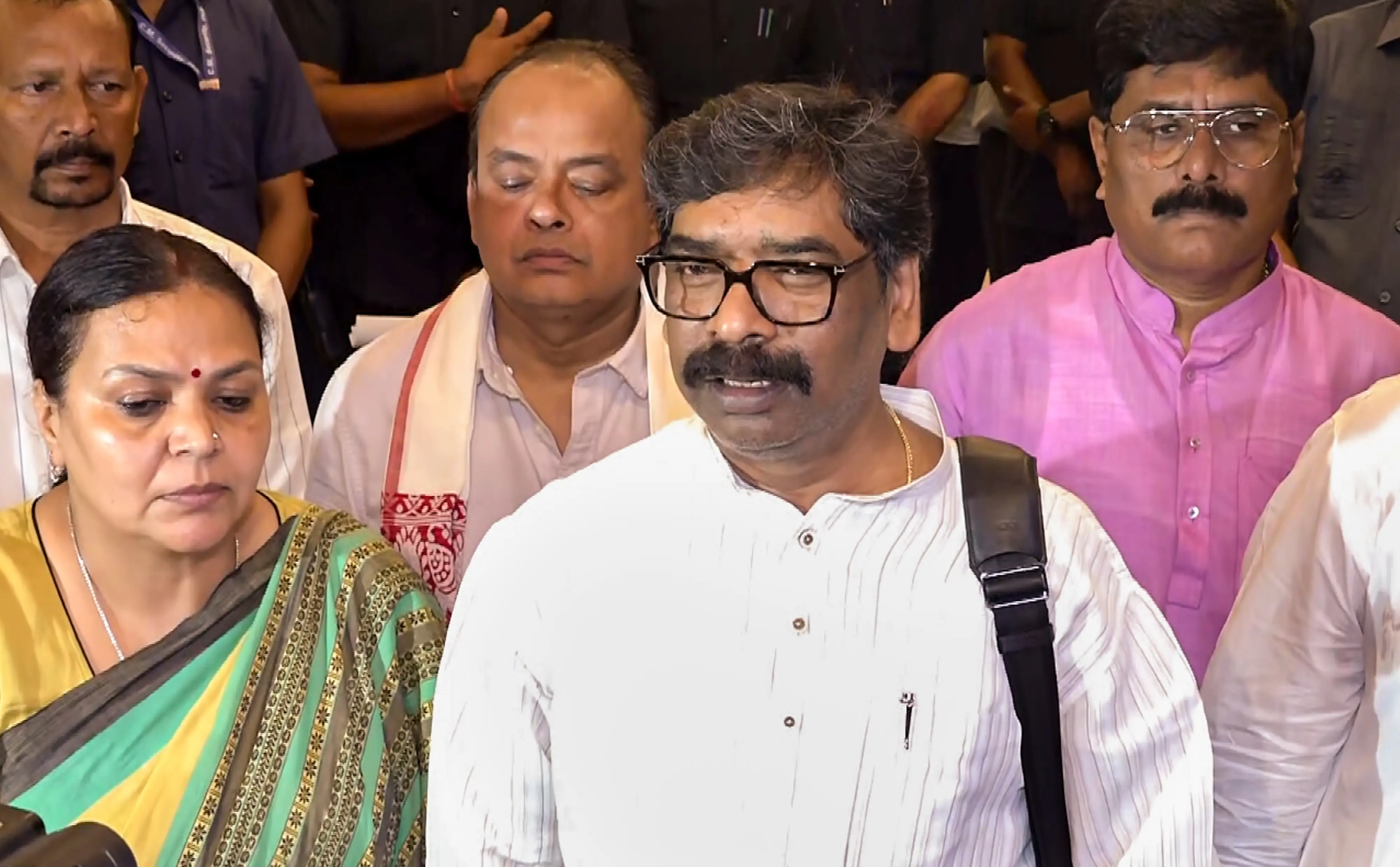
Ranchi: Jharkhand's prolonged student agitation has reached a major turning point after Chief Minister Hemant Soren announced the cancellation of the JSSC-CGL examination and examinations and recruitment processes conducted through TSR Data Processing Private Limited (TDPL).
Student leader Devendra Nath Mahato and other hunger strikers have ended their fast, but the dispute is not completely over: a section of protesters is still demanding a CBI investigation, while the state government has opted for a CID probe and promised wider examination reforms.
What happened in Jharkhand?
The dispute centres on allegations of irregularities and paper leaks in recruitment examinations conducted in Jharkhand, particularly the Jharkhand Staff Selection Commission Combined Graduate Level (JSSC-CGL) examination and examinations linked to TDPL.
The issue developed into a wider student movement demanding action against alleged examination irregularities, cancellation of affected examinations, an impartial investigation and reforms to prevent paper leaks and manipulation in future recruitment tests.
Student leader Devendra Nath Mahato went on an indefinite hunger strike and continued it for 16 days before ending the fast after the government announced the cancellation of the JSSC-CGL examination and TDPL-linked examinations.
The broader student agitation had continued for several weeks.
What did Hemant Soren announce?
Chief Minister Hemant Soren announced that:
The JSSC-CGL examination would be cancelled.
Examinations conducted through TSR Data Processing Private Limited (TDPL) would be cancelled.
Results published through TDPL would also be cancelled.
Candidates selected through the affected TDPL processes would be covered by the cancellation.
Examinations conducted through TDPL since 2014 would be investigated by the CID.
The government would work towards reforms in the examination system.
Soren's announcement was the immediate reason the hunger strike was called off.
The decision is particularly significant because the JSSC-CGL recruitment process had already progressed to the appointment and joining stage, according to Mahato.
That means cancellation is not simply a decision affecting candidates waiting to sit for an examination. It potentially affects candidates who had already moved through the recruitment process.
Why did students protest in the first place?
The students' central concern was the integrity of government recruitment examinations.
Their allegations centred on issues including:
alleged paper leaks;
irregularities in examination processes;
concerns over recruitment results;
alleged manipulation of examination systems;
and the need for accountability when recruitment examinations are compromised.
The movement gradually expanded beyond one examination.
Students began demanding structural changes so that future candidates would not have to repeatedly face cancelled examinations, disputed results or alleged paper leaks after spending years preparing for government jobs.
That is why Mahato has repeatedly framed the movement as a fight for long-term examination reform, rather than merely the cancellation of one examination.
Why was the JSSC-CGL cancellation such a major decision?
The JSSC-CGL examination is a major recruitment examination for government posts in Jharkhand.
Cancelling an examination after the recruitment process has progressed creates a difficult situation for everyone involved.
Candidates who believed they had secured jobs face uncertainty, while candidates who alleged irregularities want the process reset so that they are not disadvantaged by a compromised examination.
Mahato acknowledged this difficulty after the government announcement.
He said: “It was not an easy call, given that the recruitment process for the JSSC CGL examination had already reached the joining stage.”
He nevertheless described the government's decision as a major step in the students' interest.
Why did Devendra Nath Mahato end his hunger strike?
Mahato said the demands connected to the cancellation of the affected examinations had been met, so he suspended the hunger strike.
He said: “Today marks a huge victory for Jharkhand. While I am now suspending my protest, my struggle for reform will continue.”
He also called for legislation to protect students from examination fraud and demanded a system in which examinations are independently monitored and audited.
His longer-term demand is not simply another examination.
He wants a system in which students can have confidence that an examination will not later be cancelled because of paper leaks or other irregularities.
He said: “Every examination must be monitored, every examination must be audited, and there must be a clear certificate for every examination and at every stage.”
So, has the entire student protest ended?
The hunger strike has ended, but the wider dispute has not been completely resolved.
This is the most important distinction.
Devendra Nath Mahato and other hunger strikers ended their fast following the government's announcement. However, student leaders including Ravindra Paswan and Piyush Kumar have maintained that some demands remain unresolved.
The biggest unresolved issue is the demand for a CBI investigation.
Paswan said:
“Our demand regarding the cancellation of the exams has been fulfilled, but the CBI investigation has not been done yet.”
Piyush Kumar similarly described the cancellation as only the “first step” and said the issue referred to as the “11th to 13th” matter remained unresolved.
This means the immediate confrontation has eased, but another round of negotiations or protest remains possible.
CBI vs CID: the key dispute now
This is now the central issue in the Jharkhand exam controversy.
What students want
A section of the student movement wants the alleged examination irregularities to be investigated by the Central Bureau of Investigation (CBI).
Their argument is that an investigation by a central agency would provide greater independence and credibility, particularly where allegations may involve officials or institutions connected with the state system.
What the Jharkhand government has offered
The government has chosen a CID investigation.
Soren announced that examinations conducted through TDPL since 2014 would be investigated by the state CID.
The government has also said that the investigation would be impartial and that people found responsible would face action.
Why is the government refusing the CBI demand?
Jharkhand Minister Dipika Pandey Singh has argued that a CBI investigation is unnecessary because the state CID can conduct the investigation.
She also questioned the effectiveness of the CBI in previous paper-leak cases.
She said: “There must be a limit to stubbornness.”
She claimed that the CBI has 17 pending paper-leak cases and argued that central agencies have not produced sufficient results in previous cases.
The government has instead proposed a timeline for the CID investigation, with the minister saying the charge sheet should be filed within 90 days and the case moved towards a fast-track court.
The minister's comments have, however, ensured that the CBI issue remains politically and administratively contentious.
What happens to the cancelled JSSC-CGL exam?
The cancellation means the existing examination/recruitment process cannot simply continue as before.
The government will have to determine the practical mechanism for conducting a fresh recruitment process, including:
how the cancelled examination will be replaced;
how eligible candidates will be treated;
how vacancies will be carried forward;
how candidates who had already been selected or joined will be affected;
when a fresh examination will be held;
and how the new process will be protected from the allegations that led to the cancellation.
The details of the replacement process will therefore be crucial for thousands of candidates.
The cancellation itself resolves one demand but creates a major administrative task.
What happens to TDPL examinations?
This is broader than JSSC-CGL.
The government has said all examinations conducted through TDPL and the results published by it are cancelled, and that examinations conducted through the company since 2014 will be investigated.
This potentially makes the government's decision much wider than the immediate JSSC-CGL controversy.
The authorities will now have to identify the affected examinations, recruitment processes and candidates and determine what corrective action is required in each case.
What is the '11th to 13th' issue?
Student leader Piyush Kumar referred to the “11th to 13th” issue as another unresolved matter.
Based on the statements supplied in the reports, student leaders continue to treat this as a separate outstanding issue alongside the CBI probe.
The government has not resolved that demand through the announcement cancelling JSSC-CGL and TDPL examinations.
Therefore, it remains part of the next stage of discussions between the government and student representatives.
What reforms has the government promised?
The government says it does not want the JSSC-CGL controversy to end simply with cancellation.
Minister Dipika Pandey Singh said a reform process would be developed after consultations with students and other stakeholders.
She said:
“The reforms we will bring after consultation and taking suggestions from students will be a model for the entire nation.”
The government has also announced a committee headed by IAS officer Amitabh Kaushal to examine the reforms sought by students.
The proposed reform exercise could address issues such as examination monitoring, paper security, agency selection, digital systems, auditing and accountability.
The exact reforms will matter more than the announcement itself.
What does Mahato want beyond the current decision?
Mahato has made it clear that he sees the cancellation as only one stage of a larger campaign.
He wants a system in which:
every examination is monitored;
examination procedures are audited;
responsibility is fixed at every stage;
paper leaks are prevented;
agencies conducting examinations are held accountable;
and students have safeguards when an examination is compromised.
He has also called for legislation to protect students from fraud.
His broader argument is that students should not have to spend years preparing for competitive examinations only to see recruitment processes disrupted by alleged malpractice.
What happened to the hunger strikers?
Mahato, Umme Habiba and Rahul Kranti ended their hunger strikes following the government's announcement.
The ministers present helped them break their fast with juice.
They subsequently underwent medical examinations.
Minister Irfan Ansari said the three were found to be healthy and were discharged from hospital.
The end of the hunger strike removed the immediate health crisis surrounding the protest.
What did Sonam Wangchuk say?
Activist Sonam Wangchuk spoke with Mahato after the government's announcement and congratulated the student leaders for their commitment to the movement.
Wangchuk also praised Chief Minister Hemant Soren for accepting the students' demands.
His intervention gave the movement wider visibility, particularly because the protest had been framed by its leaders as a broader campaign for examination reform and student rights.
What happens next?
The next phase is likely to centre on implementation rather than the cancellation announcement itself.
1. The cancelled examinations will need replacement
The government will need to establish how and when fresh examinations or recruitment processes will be conducted.
For candidates, this is likely to be the most immediate practical concern.
2. The CID investigation will come under scrutiny
The state has committed to investigating TDPL-linked examinations dating back to 2014.
The credibility of that investigation will depend on whether allegations are examined independently, whether evidence is collected properly and whether those found responsible are prosecuted.
The government's proposed 90-day charge-sheet timeline will also be closely watched.
3. Students will continue demanding a CBI probe
Although Mahato has ended his hunger strike, other student leaders have not withdrawn the CBI demand.
If the government does not change its position, the issue could become the focus of renewed protests.
4. The reform committee will have to produce concrete proposals
The committee headed by Amitabh Kaushal is expected to examine the students' concerns.
The critical question will be whether the exercise results in enforceable reforms rather than broad assurances.
5. The '11th to 13th' issue remains
Student leaders have explicitly said that this matter has not been resolved.
Its handling could influence whether the wider student movement remains dormant or becomes active again.
6. Legal and administrative complications could follow the cancellations
Because some recruitment processes had progressed to selection and joining, the government may face difficult questions about candidates who have already entered service.
The precise legal consequences will depend on the government's formal notifications and subsequent decisions.
Why this matters beyond Jharkhand
The Jharkhand dispute reflects a much wider problem affecting competitive-examination aspirants across India.
Government recruitment examinations can determine whether young people obtain stable public-sector employment after years of preparation.
When allegations of paper leaks or manipulation emerge, the consequences extend beyond the examination itself.
Candidates may lose time, money and employment opportunities, while governments face the difficult choice of either allowing a disputed process to continue or cancelling it after thousands of candidates have already invested in it.
Jharkhand's decision therefore creates an important test:
Can cancelling a compromised examination be followed by a recruitment process that is demonstrably more transparent and secure?
That will determine whether the government's decision is viewed as the end of the controversy or merely the beginning of a much larger reform process.
The bigger picture: Victory for students, but not the end of the row
The immediate outcome is clear: the students achieved the cancellation of the JSSC-CGL examination and TDPL-linked examinations, and the hunger strike has ended.
But calling the entire dispute resolved would be premature.
The government and protesters still disagree over the CBI investigation, while the 11th to 13th issue and several proposed student-rights and protest-related demands remain part of the wider discussion.
The state has offered a CID investigation, a 90-day charge-sheet target and a reform committee.
The students, meanwhile, want stronger guarantees that examination irregularities will not recur.
The next major test will therefore be whether the government can translate the cancellation into a transparent investigation, accountability for proven wrongdoing, a credible replacement examination and enforceable examination reforms.
For candidates, the most important question is no longer simply whether the JSSC-CGL examination was cancelled.
It is what happens to their careers after the cancellation — and whether the next examination can command their trust.