Inside the Black Box: How the Boeing 787 records flight data and what happens when power fails
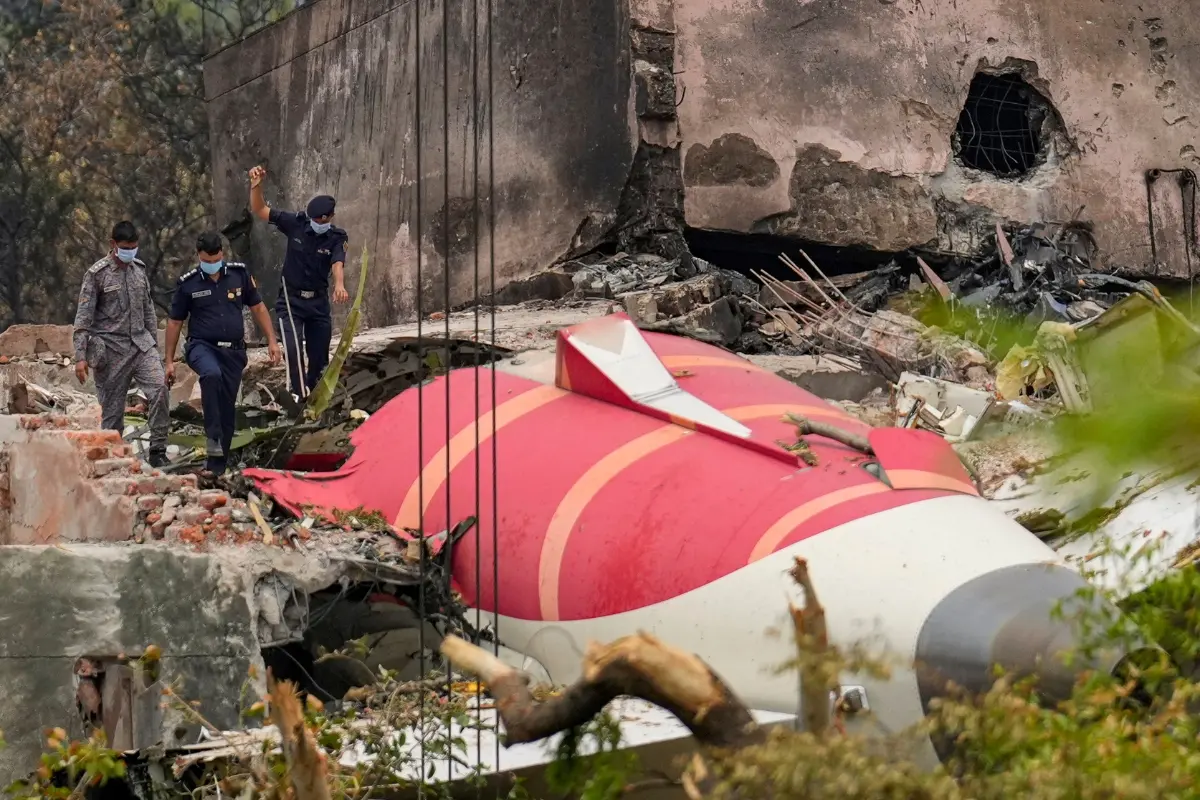
In the wake of the recent Air India Boeing 787 crash, global attention has turned once again to the aircraft’s "black boxes", a misnomer for the orange-coloured flight data and voice recorders that are critical in piecing together what went wrong. While recovery efforts are underway, aviation experts are focusing on the aircraft's Enhanced Airborne Flight Recorder (EAFR) System, a sophisticated suite of sensors, recorders, and power redundancy mechanisms built to withstand extreme crash forces.
So, how exactly does the Boeing 787 Dreamliner record and preserve crucial flight data? And what happens if all power sources fail during a catastrophic event?
The anatomy of a Boeing 787 flight recorder system
The Boeing 787 is equipped with two flight recorders—a Forward Flight Recorder (FWD FR) and an Aft Flight Recorder (AFT FR). Each unit stores up to 25 hours of aircraft systems and datalink information, two hours of cockpit voice recordings and mandatory flight data parameters, cockpit area microphone recordings, and ATC communication logs.
The EAFR system integrates these recorders with a flight deck area microphone to capture ambient cockpit audio, a Core Network and Data Acquisition Software (FDAF) to determine what data is stored, and a Maintenance Laptop (ML) interface to download recorded data post-flight.
Each recorder also includes an Underwater Locator Beacon (ULB), crucial for locating wreckage underwater.
What happens in a crash?
Under normal operations, the FWD and AFT recorders are powered by separate 28V DC buses. But in the event of a total electrical failure, such as during a crash, the system has a vital safeguard: the Recorder Independent Power Supply (RIPS).
As per Boeing documentation, the RIPS can supply emergency power to the forward recorder for 10 minutes if all other power sources are lost. This critical window is designed to capture the final moments of flight, even in the most extreme conditions. The 10-minute buffer often proves pivotal in accident reconstruction, helping investigators determine aircraft configuration, crew responses, and last system alerts.
What triggers recording?
The flight recorders begin logging data when:
•The flight plan is entered
•Any engine is started
•The aircraft is airborne
•A test mode is enabled
These triggers ensure the system is operational well before take-off and continues through landing and shutdown.
Air/Ground Sensing: The role of Weight-on-Wheels (WOW) sensors
One of the less discussed but critically important components in this system is the air/ground sensor, commonly referred to as the Weight-on-Wheels (WOW) switch. These sensors detect whether the aircraft is on the ground or airborne.
Located on the main landing gear struts, WOW sensors:
•Activate or deactivate systems based on aircraft status (air or ground)
•Control recorder logic (when to start/stop recording)
•Influence flight control laws, pressurisation modes, anti-skid braking, and engine idle settings
If these sensors malfunction or, worse, provide incorrect data, they can mislead automated systems into believing the aircraft is airborne when it is not, or vice versa. In previous global accidents, WOW sensor failures have contributed to incorrect thrust reverser deployment, failure of autobrake activation, and even compromised data recording.
Why this matters now
With the DGCA initiating a formal investigation into the Air India 787 crash, the functionality of the EAFR system, RIPS, and air/ground sensing logic will be closely scrutinised. Investigators will assess whether:
•The recorders were powered during the final phase of flight
•The RIPS functioned as designed after the power loss
•The WOW sensors accurately triggered air/ground status transitions
Any discrepancy could affect how much useful data is recoverable from the wreckage.
As aircraft become increasingly reliant on automated systems and data-driven diagnostics, the accuracy and survivability of flight recorders remain non-negotiable. The Boeing 787's flight recording architecture is among the most advanced in commercial aviation, yet the system is only as reliable as the integrity of its power sources and sensors.
In the coming weeks, as black box data is analysed and preliminary findings emerge, the world will learn not just what happened to Air India’s Dreamliner but also how well its technological backbone stood up to disaster.