India's homegrown Saras MK II takes big leap
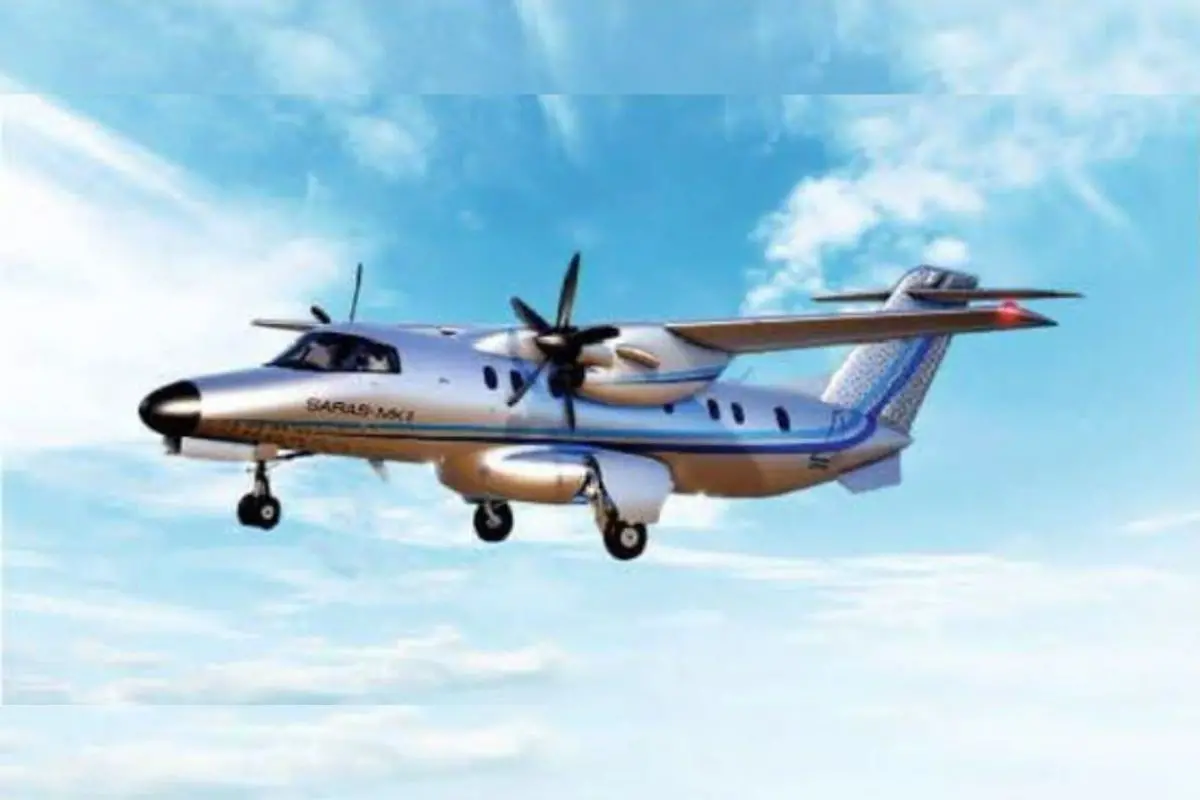
India's ambition to build its own regional passenger aircraft has taken a major step forward with the successful completion of the design phase of the Saras MK II, a 19-seater indigenous aircraft being developed by the CSIR-National Aerospace Laboratories (CSIR-NAL) in Bengaluru. With the aircraft's design now officially frozen, the project enters its next crucial stage, namely prototype manufacturing, followed by ground testing and flight trials.
The milestone marks one of the most significant achievements in India's civil aviation sector and is expected to strengthen the country's 'Make in India' initiative while supporting the government's vision of improving air connectivity to smaller cities and remote regions.
Also read: Sarla Aviation flies India's largest electric aircraft, air taxi dream inches closer
A new chapter for India's regional aviation
The Saras MK II has been designed specifically to serve routes that are currently underserved by larger commercial aircraft. With seating for 19 passengers, the aircraft is expected to operate efficiently from short runways and smaller airports, making it an ideal solution for regional connectivity under the Government of India's UDAN (Ude Desh ka Aam Nagrik) scheme.
Unlike larger turboprop aircraft that require higher passenger numbers to remain commercially viable, the Saras MK II is intended to connect smaller towns and remote destinations where demand is relatively low but air connectivity is essential.
If successful, the aircraft could play a transformative role in bringing affordable air travel to many parts of the country that currently have limited or no scheduled airline services.
Design phase completed, manufacturing begins
According to Mohan Naik C, Chief Scientist at CSIR-NAL, the aircraft's engineering design has now been finalised after extensive research, simulations and testing. Before reaching this stage, engineers carried out detailed wind tunnel tests and validated the aircraft's major onboard systems to ensure aerodynamic stability and overall safety. With the design now locked, CSIR-NAL will begin manufacturing the first prototypes while simultaneously working with industry partners for large-scale production.
The organisation is currently in discussions with both public and private aerospace companies to support aircraft assembly, system integration and metallic component manufacturing.
Also read: NASA opens its powerful simulation tool ‘LAVA’ to the world | VIDEO
Build an aircraft in India, for India
One of the most significant aspects of the Saras MK II programme is its emphasis on indigenous manufacturing. CSIR-NAL has developed strong expertise in producing advanced composite materials that form a major part of the aircraft's structure. However, specialised metallic airframe components will be manufactured with the support of industrial partners.
The programme is expected to create opportunities for Indian aerospace manufacturers, suppliers and engineering companies by increasing local production of aircraft components and reducing dependence on imported technology.
Organisations such as Hindustan Aeronautics Limited (HAL) are expected to play an important role in supporting the aircraft's manufacturing ecosystem.
Advanced technology
Although designed as a regional aircraft, the Saras MK II incorporates several modern technologies commonly found in larger commercial aircraft. The aircraft will be powered by two Pratt & Whitney Canada PT6A-67A turboprop engines, each producing around 1,200 horsepower. It will feature a pressurised cabin, allowing passengers to travel comfortably at higher altitudes, along with a fully digital glass cockpit, advanced avionics, autopilot and modern flight management systems.
The aircraft will also incorporate command-by-wire flight controls, an advanced technology that helps reduce aircraft weight while improving efficiency and handling. These features are expected to make the aircraft safer, more fuel-efficient and easier to operate compared to older regional aircraft.
'Make in India' vision
The Saras MK II is more than just an aircraft development programme, it represents India's growing capability to design and manufacture complex civil aircraft domestically. For decades, India's commercial aviation sector has depended almost entirely on imported aircraft. The successful development of Saras MK II could mark the beginning of a new chapter where Indian companies participate more actively in designing, manufacturing and supporting indigenous aircraft.
Union Minister of State for Science and Technology Dr Jitendra Singh described the achievement as a major milestone for India's aviation sector and said it reflects the country's increasing capability in indigenous aerospace development.
Civil Aviation Minister Ram Mohan Naidu Kinjarapu also hailed the project as an important breakthrough that aligns with the government's broader vision of strengthening domestic aerospace manufacturing.
The project is expected to contribute significantly to the Atmanirbhar Bharat (Self-Reliant India) mission by reducing dependence on foreign aircraft in the regional aviation segment.
UDAN mission
The government believes the Saras MK II can become an important enabler of the UDAN regional connectivity programme. Many airports developed under UDAN currently face challenges because larger aircraft are not economically viable on routes with lower passenger demand.
The 19-seater Saras MK II is specifically designed to address this gap by offering lower operating costs while maintaining reliable connectivity between smaller cities, remote towns and high-altitude regions.
If introduced successfully, the aircraft could help expand India's regional air network while making flying accessible to a much larger section of the population.
Although primarily developed as a civilian regional transport aircraft, the Saras MK II has also attracted interest from the Indian Air Force (IAF). According to programme officials, the IAF has indicated an initial requirement for at least 15 aircraft, subject to successful testing and certification. Its ability to operate from shorter airstrips and remote locations makes it suitable for multiple applications, including logistics, personnel transport and special missions.
This dual-use potential could further strengthen the aircraft's commercial viability and support long-term production.
Road to certification
CSIR-NAL plans to build two flying prototypes to accelerate the testing and certification process. Ground testing will begin once prototype manufacturing is completed, followed by extensive flight trials. The aircraft's maiden flight is currently targeted for December 2027. Following successful certification, the focus will shift towards commercial production and entry into service. While certification remains a challenging process, completing the design phase represents one of the most important milestones in the aircraft's development journey.
Why Saras MK II could be a game changer
India is today one of the world's fastest-growing aviation markets, but much of its growth has been concentrated around major metropolitan cities. Large parts of the country still lack regular and affordable air connectivity because existing aircraft are often too large and expensive to operate on regional routes and Saras MK II has the potential to bridge this gap.
By combining indigenous technology, lower operating costs and the ability to operate from smaller airports, the aircraft could open up entirely new regional markets, improve connectivity for remote communities and encourage greater participation of Indian companies in aircraft manufacturing.
Beyond commercial aviation, the programme also strengthens India's capabilities in aerospace engineering, composite manufacturing, avionics and aircraft design, areas traditionally dominated by a handful of global aerospace manufacturers.
If the programme progresses successfully through testing and certification, the Saras MK II could become much more than India's first indigenous regional passenger aircraft. It could become a symbol of the country's growing confidence in designing, building and operating world-class civil aircraft under the Make in India initiative while transforming the future of regional air travel across the nation.