India's EV charging stations grew 5x in 3 years, but still fall short of demand
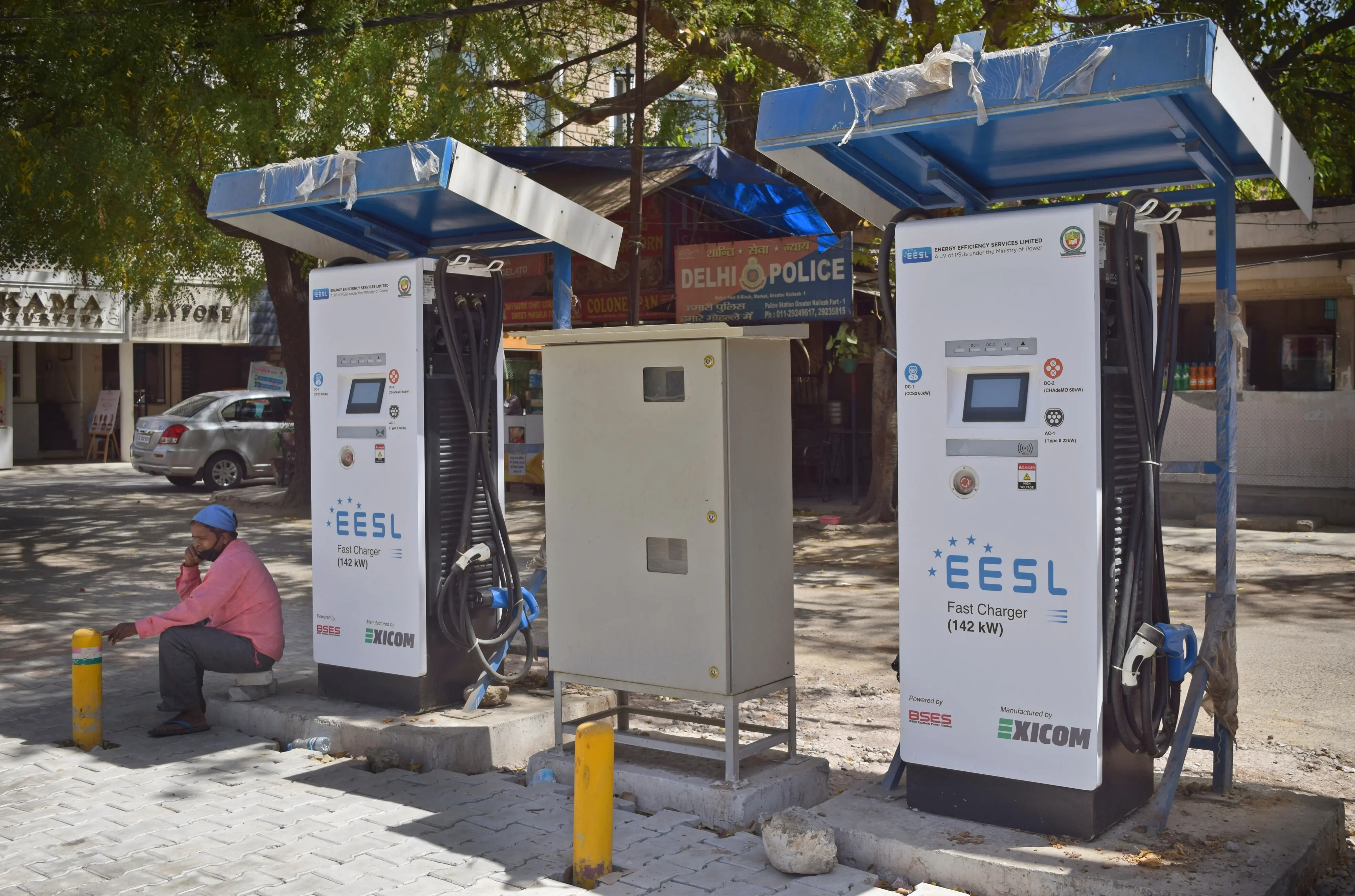
India’s electric vehicle (EV) charging network has witnessed an impressive expansion over the past three years, but the pace of infrastructure growth still trails the rapid adoption of EVs.
A recent report by CareEdge Ratings highlights that although public charging stations have increased fivefold, India continues to face a stark imbalance—one public charging station currently serves 235 electric vehicles.
How many public charging stations are there?
According to the CareEdge report, public EV charging stations (EVPCS) grew from 5,151 in calendar year (CY) 2022 to 11,903 in CY 2023. The number rose further to 25,202 by the end of FY24, and reached 26,367 in early FY25, registering a compound annual growth rate (CAGR) of 72% over the FY22–FY25 period.
This sharp growth, the report said, was driven by government-backed initiatives at both central and state levels, aimed at accelerating the adoption of EVs and creating the infrastructure backbone necessary for clean mobility.
What are government policies fueling EV growth?
The Centre’s push for the electrification of transport has included a mix of regulatory support and financial incentives. Production Linked Incentive (PLI) schemes for battery manufacturing, combined with customs duty exemptions on key minerals, are expected to cut import dependency by up to 20% by FY27, thereby lowering production costs and making EVs more affordable for Indian consumers.
Meanwhile, state-level EV policies are helping attract investments from private firms and public sector undertakings, further adding to the infrastructure pipeline.
One charger per 235 EVs: The infrastructure bottleneck
Despite the aggressive rollout of charging stations, the infrastructure is still not keeping pace with EV adoption. The report noted that, with just 26,367 public charging points across the country, India now has one public charger for every 235 EVs on the road.
This ratio presents a significant challenge for EV owners, especially in Tier 2 and Tier 3 cities, where charging deserts—regions with minimal to no access to charging stations—are common.
What’s next?
While the surge in infrastructure reflects commendable policy momentum, analysts argue that a more balanced and inclusive approach is essential to fully support India’s transition to clean mobility.
Experts call for:
- Faster rollout of fast-charging stations
- Focus on rural and underserved urban areas
- Greater involvement of private players
- Integrated EV policies with city-level planning
As India works toward its ambitious EV penetration targets for 2030, the alignment of vehicle sales and charging station availability will remain a critical metric of success.
(With ANI inputs)