HAL imposes penalty on GE Aerospace as engine delays hit Tejas program
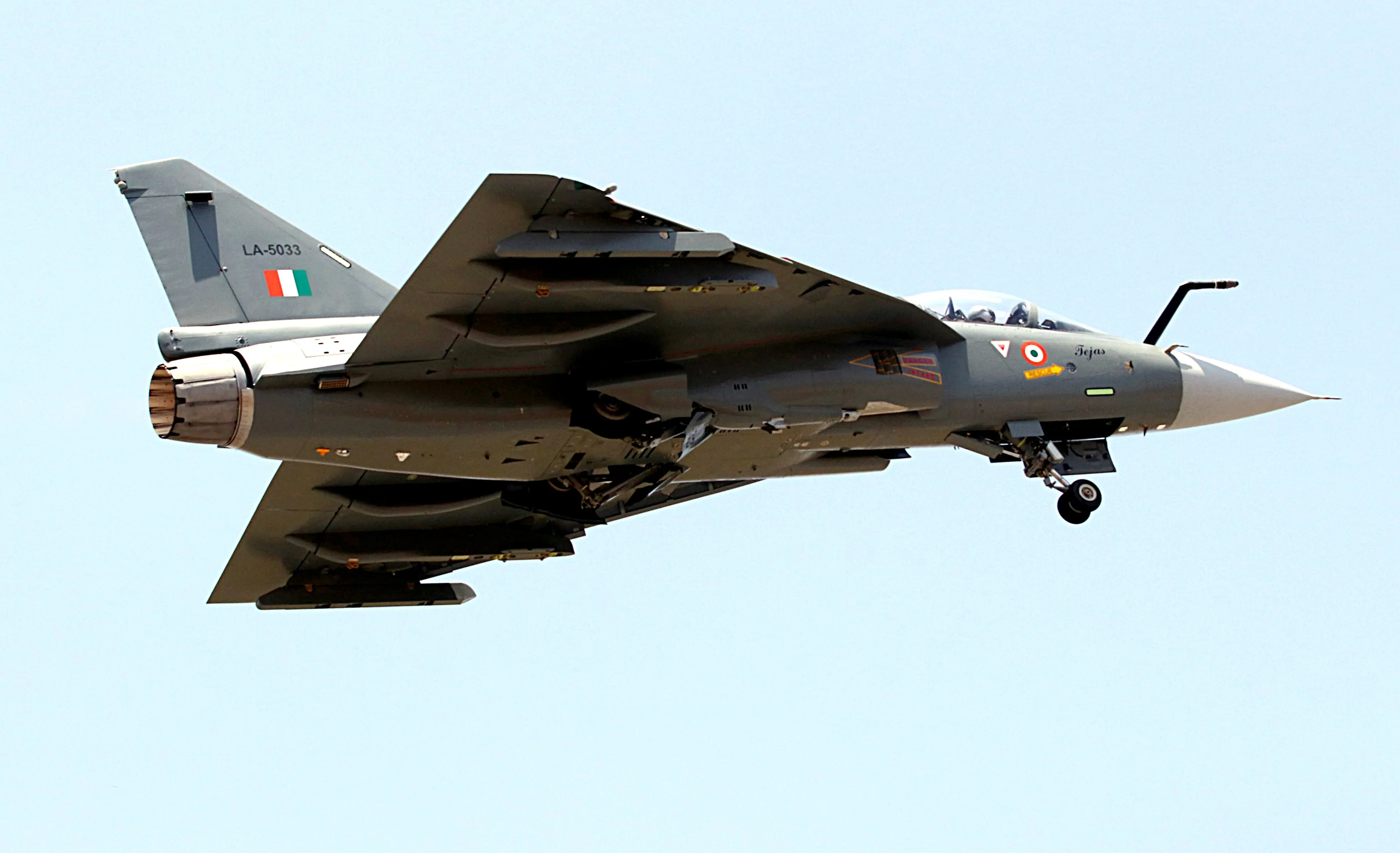
Light Combat Aircraft (LCA) Tejas programme has run into fresh delays due to the slow supply of engines, with Hindustan Aeronautics Limited (HAL) now imposing penalties on GE Aerospace for missing delivery deadlines.
HAL Chairman and Managing Director D K Sunil confirmed that the company has invoked the “liquidated damages” clause in its contract with GE Aerospace, following repeated delays in the supply of F404-IN20 engines. The contract, signed in 2021, covers the delivery of 99 engines valued at $716 million. It includes provisions to penalise delays, which HAL has now begun enforcing.
So far, only six engines have been delivered, with the first shipment arriving in March 2025. HAL has stated that the penalties are being applied strictly in accordance with the agreement.
GE Aerospace has attributed the delays to ongoing global supply chain constraints. The company has said it is working to increase production and has committed to delivering 20 engines by the end of this year. From 2027 onwards, it plans to maintain an annual delivery rate of 20 engines.
These engines are critical for powering the 83 Tejas Mk-1A fighter jets ordered by the Indian Ministry of Defence in 2021 at a cost of ₹48,000 crore.
Despite the engine shortage, HAL has already manufactured 20 Tejas Mk-1A aircraft. Of these, five have been fitted with engines and are ready for delivery, pending final clearances.
D K Sunil said that the Indian Air Force (IAF) is expected to review the programme in May. Deliveries will begin only after the completion of certain final steps, including trials of the ASRAAM (Advanced Short-Range Air-to-Air Missile) and upgrades to radar software.
HAL currently has the capacity to produce up to 24 Tejas Mk-1A aircraft annually. However, delays in engine supply have slowed the overall pace of the programme, raising concerns within the IAF about its operational readiness. Separately, Sunil confirmed that the Tejas Mk-1 fleet, which had been grounded for nearly two months, will return to service next week.
The grounding was caused by a software issue in the aircraft’s brake system. The problem has now been fixed and cleared by a local modification committee, allowing flying operations to resume.
In a related development, HAL signed another agreement with GE Aerospace in November 2025 for the supply of 113 additional F404-IN20 engines. These engines will power 97 more Tejas Mk-1A aircraft ordered in September for ₹62,370 crore. The new deal is estimated to be worth around $1 billion.
GE Aerospace has reiterated its commitment to the programme, stating that it continues to work closely with HAL to streamline production schedules and meet delivery targets.
HAL had earlier indicated that deliveries of the Tejas Mk-1A would begin by the end of the financial year 2025–26. However, given the continuing engine supply challenges, this timeline now appears uncertain.
The delays highlight the broader impact of global supply chain disruptions on India’s defence manufacturing programmes, particularly those dependent on foreign suppliers for critical components.