FAA orders Boeing 737 MAX seat inspections over possible installation issue
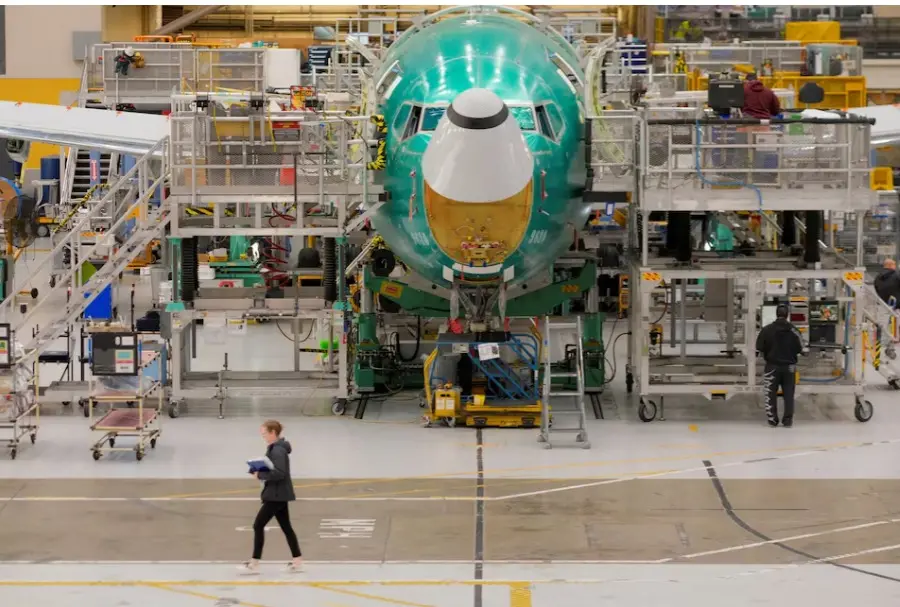
Looks like Boeing is in trouble again, just as Boeing was working to rebuild public confidence following a series of manufacturing and safety concerns over the past two years, the aircraft manufacturer has once again come under the spotlight. This time, the issue is not related to engines or aircraft structure but to something passengers use on every flight, their seats.
The US Federal Aviation Administration (FAA) has proposed mandatory inspections of passenger seats on hundreds of Boeing 737 MAX aircraft after reports that some seats may not have been installed correctly during production. While the problem may sound minor, aviation regulators say it could become a serious safety risk during turbulence or an emergency landing if left uncorrected.
Although there have been no reported accidents or injuries linked to this issue, the FAA has stepped in before any such incident occurs, highlighting the aviation industry's emphasis on preventive safety.
What exactly is the problem?
According to the FAA, some passenger seat assemblies on certain Boeing 737 MAX aircraft may not have been properly locked into the seat tracks fixed to the aircraft floor. These seat tracks are designed to keep seats firmly secured, even during heavy turbulence or emergency landings. If a seat is not correctly attached, it could become loose under sudden force. In a worst-case scenario, the seat could shift or detach, potentially injuring passengers or cabin crew.
Another concern is that a loose seat could block the aircraft aisle during an emergency evacuation, making it harder for passengers to leave the aircraft quickly.
How many aircraft affected?
The FAA's proposed directive currently applies to 453 Boeing 737 MAX aircraft registered in the United States. Globally, however, nearly 2,300 Boeing 737 MAX aircraft are in service with airlines across the world.
Although the FAA's order applies only to US registered aircraft, aviation experts expect many international regulators to study the findings carefully. Airlines outside the United States may also carry out similar inspections if required by their national aviation authorities.
Boeing facing scrutiny again?
The latest development comes at a time when Boeing is still working to restore confidence in its manufacturing processes.
The company has faced a series of high-profile quality and safety challenges over recent years. These include the worldwide grounding of the 737 MAX following two fatal crashes in 2018 and 2019, and more recently, the January 2024 Alaska Airlines incident, where a door plug panel detached from a Boeing 737 MAX shortly after take-off. That event triggered extensive investigations into Boeing's manufacturing quality and production oversight.
Since then, Boeing has introduced several measures to improve quality control and strengthen manufacturing standards under Chief Executive Officer Kelly Ortberg.
The latest FAA proposal does not indicate a design flaw in the aircraft but instead points to a possible installation issue during production or assembly, once again drawing attention to the importance of manufacturing quality and inspection procedures.
Should passengers be concerned?
For most travellers, the immediate answer is no. The FAA's action is a proposed Airworthiness Directive, which is part of the aviation industry's proactive safety system. Regulators routinely require inspections whenever a potential issue is identified, even before it leads to an incident. In this case, the inspections are intended to identify and correct any improperly installed seats before they pose a safety risk.
Experts note that the aviation industry operates on the principle of preventing problems rather than reacting to accidents. That is why airlines regularly inspect aircraft and comply with directives issued by aviation regulators.
The FAA estimates that each affected Boeing 737 MAX aircraft could have up to 69 passenger seat assemblies that need to be inspected. The inspection itself is relatively straightforward and is expected to take about one hour per seat assembly. If a seat is found to be incorrectly installed, technicians can reinstall it properly without replacing any parts.
Many airlines are expected to complete these inspections during scheduled maintenance checks to minimise disruption to flight operations. Boeing has said it had already issued guidance to airlines on the issue in December 2025 and supports the FAA's move to make those inspections mandatory.
Will air travel be impacted?
Passengers flying on Boeing 737 MAX aircraft should not expect immediate changes to their travel plans. Flights are continuing to operate normally, and there has been no grounding of aircraft related to the issue.
However, the latest directive serves as another reminder of the intense regulatory oversight Boeing continues to face as it works to restore confidence in its manufacturing standards. For passengers, it also highlights the strength of the aviation safety system. Even relatively small issues are investigated thoroughly and corrected before they can develop into larger problems.
Conclusion
The FAA's latest action is about more than inspecting passenger seats. It reflects the aviation industry's commitment to ensuring that every component inside an aircraft, whether an engine, a cockpit instrument or a passenger seat meets strict safety standards.
For Boeing, it represents another challenge in its ongoing efforts to rebuild trust after years of quality-related setbacks.
For passengers, however, the development should also provide reassurance. It shows that aviation regulators continue to monitor aircraft closely and intervene early whenever potential safety concerns emerge. That constant oversight is one of the key reasons why commercial aviation remains one of the safest forms of transport in the world.