Domestic Violence Act applies to all women irrespective of religion or social background: SC
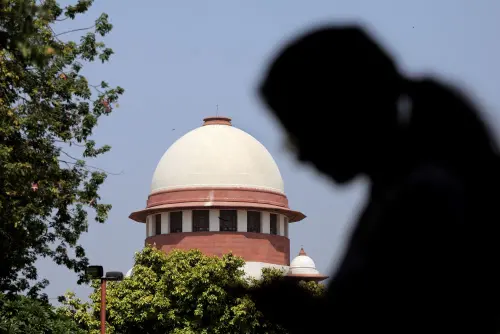
New Delhi: The Supreme Court of India has clarified that the Protection of Women from Domestic Violence Act, 2005, is a civil law that applies to every woman in India, regardless of her religion or social background.
A bench comprising Justice B V Nagarathna and Justice N Kotiswar Singh highlighted that the Act was designed to ensure more effective protection of women's rights, as guaranteed under the Constitution. The Supreme Court was delivering its decision on a case where a woman challenged a Karnataka High Court order regarding maintenance and compensation.
"The Act is a piece of civil code which is applicable to every woman in India irrespective of her religious affiliation and or social background for a more effective protection of her rights guaranteed under the Constitution and in order to protect women victims of domestic violence occurring in a domestic relationship," the bench said.
In February 2015, a magistrate had granted the woman Rs 12,000 as monthly maintenance and Rs 1 lakh as compensation. The woman's husband had appealed against this decision, but his appeal was initially dismissed due to a delay. He later filed another application under Section 25 of the Domestic Violence Act, which allows for changes in orders based on changed circumstances.
Key takeaways from the verdict
The Supreme Court referred to Section 25 of the Act, explaining that either the affected woman or the respondent (the husband, in this case) can request a change in the order if circumstances change. This can include changes in financial situations, like an increase or decrease in income, or other relevant factors.
"The phrasing of the provision is wide enough to cover factors like the cost of living, income of the parties, etc. Further, a change in the circumstances need not just be of the respondent but also of the aggrieved person," the top court said.
However, the court made it clear that any changes would only apply from the date of the new order going forward, not retroactively. The husband, therefore, could not request a refund of any amount already paid as per the original court order.
The Supreme Court set aside the previous orders of the Karnataka High Court and the first appellate court, dismissing the husband’s application. However, it granted him the option to file a fresh application under Section 25 if needed in the future.
PTI